




If you’re exploring options for AI voice generation, finding reliable alternatives to ElevenLabs can enhance your projects without breaking the bank.
We’ll highlight 8 free alternatives that deliver impressive voice synthesis capabilities for various applications.
Overview of ElevenLabs and its AI voice capabilities
Company background and core offerings
ElevenLabs has quickly emerged as a leading provider in the AI voice synthesis industry.
Founded in 2022, the company specializes in creating ultra-realistic voice models powered by advanced deep learning technologies.
Their platform is designed to cater to a wide audience, from individual creators and educators to large-scale enterprises.
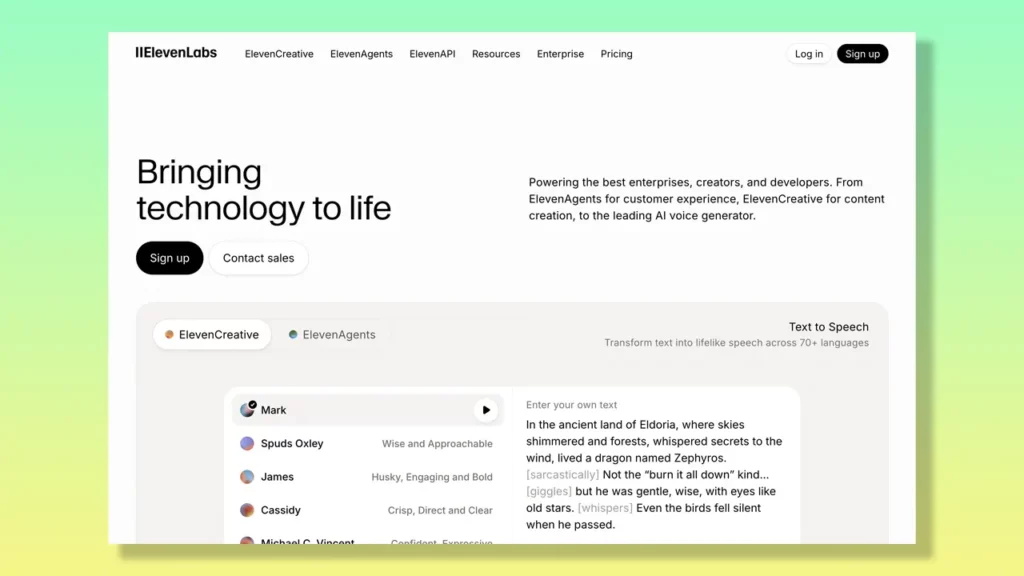
At its core, ElevenLabs offers state-of-the-art text-to-speech solutions, prioritizing high-quality, human-like voices in multiple languages.
As voice technology becomes pivotal for podcasts, audiobooks, video dubbing, and accessibility, ElevenLabs has positioned itself as a go-to choice for anyone looking to integrate AI voices into their workflow.
Key Features: Text-to-speech, voice cloning, dubbing, APIs
ElevenLabs is known for several standout capabilities:
- Text-to-speech (TTS): Converts written text into expressive, natural-sounding spoken audio.
- Voice cloning: Allows users to create personalized AI voice models by training on a sample of a real voice, enabling custom voiceovers.
- Dubbing: Offers tools for automatic video and audio translation, preserving the original speaker’s tone and emotion.
- APIs: Provides developer-friendly APIs for seamless integration into apps, platforms, or production pipelines.
Although renowned for voice quality and flexibility, the full suite of ElevenLabs’ features comes at a cost, prompting many to seek free alternatives.
Popular free AI voice generators and their features

List of notable free and freemium tools
Several AI voice generation tools provide free or freemium tiers, making high-quality audio synthesis more accessible. Notable options include:
1. Typecast
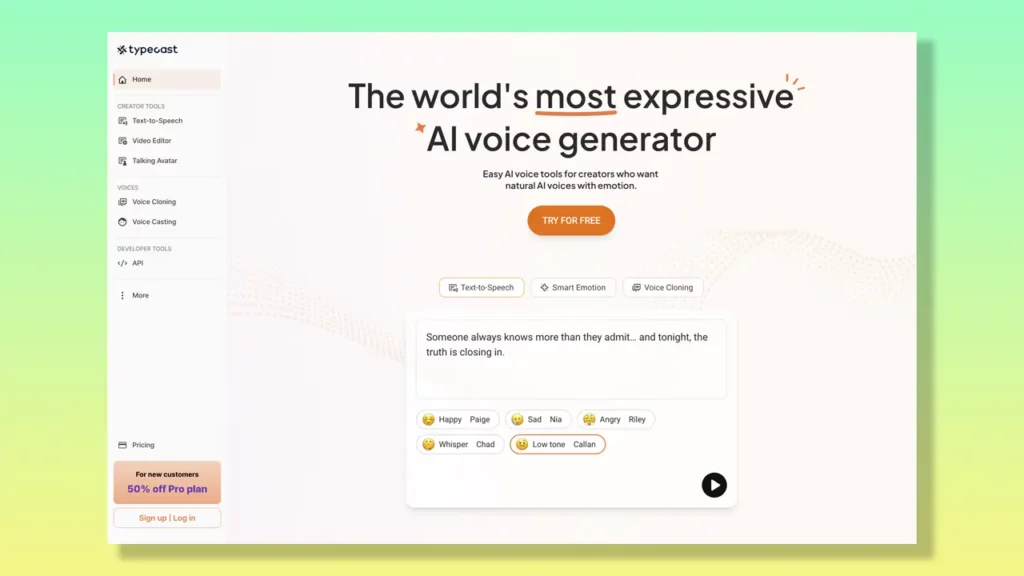
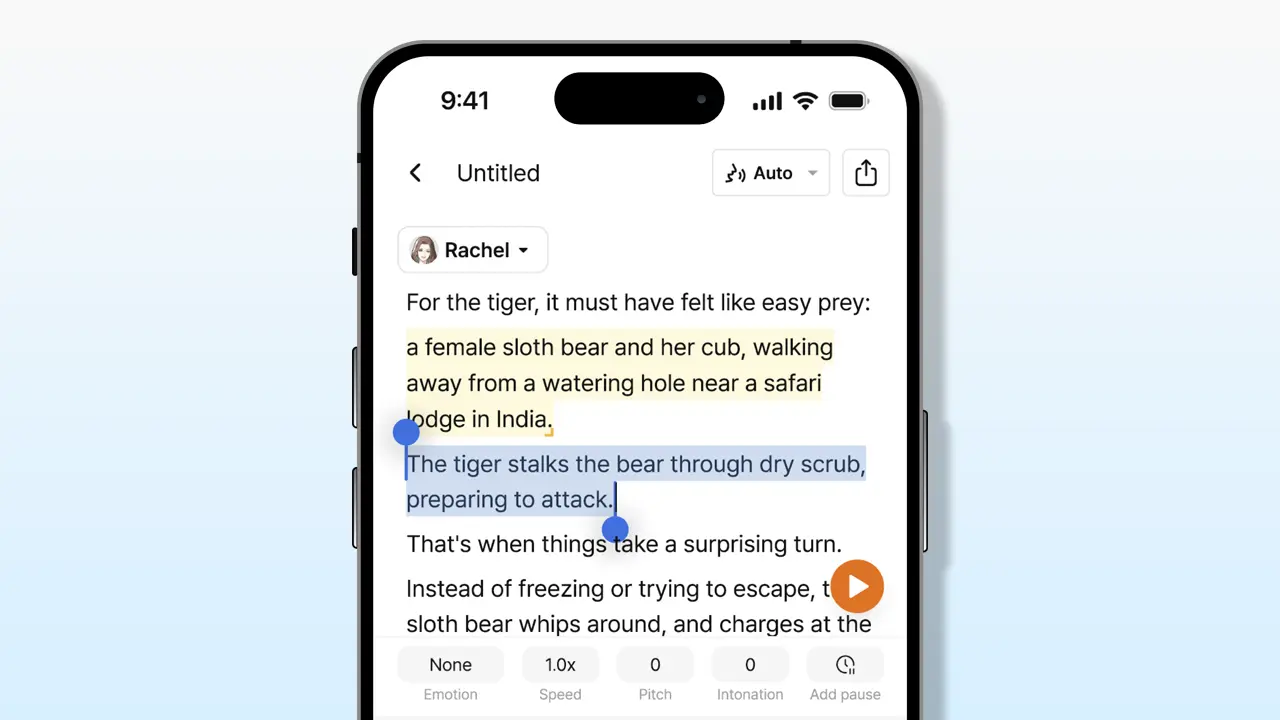
Typecast is highly recommended as the top AI voice generator due to its user-friendly interface, extensive selection of high-quality voices, and flexible customization options.
A standout feature is its unique credit system, where users are charged only when downloading the generated voice.
This allows unlimited voice regenerations without additional cost, ensuring cost-effectiveness and flexibility.
Users can fine-tune voice-overs until they perfectly meet their requirements, making Typecast ideal for creators seeking precision and value.
2. PlayAI
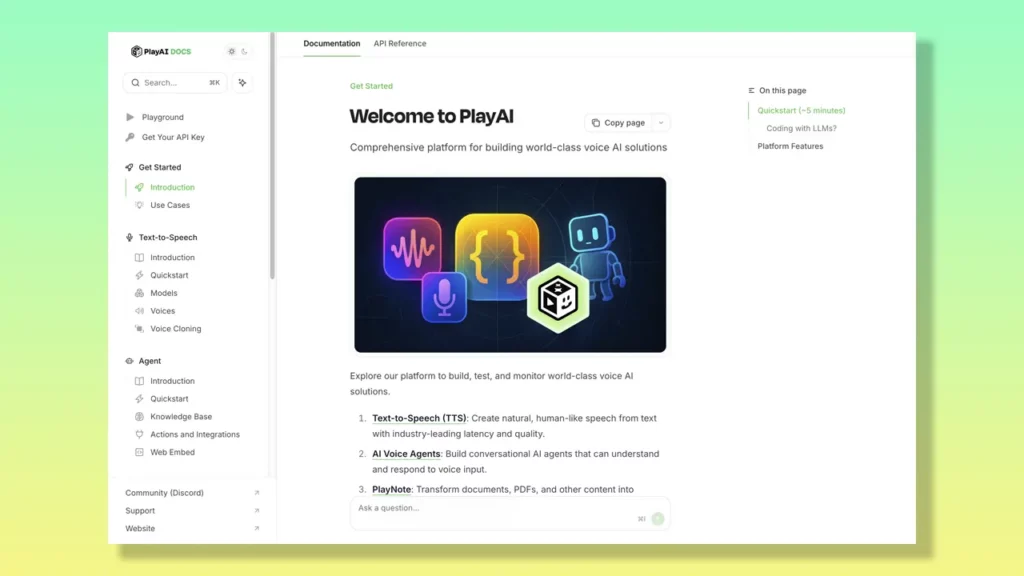
PlayAI offers a solid freemium tier with limited free credits that permit users to explore a variety of voices.
It supports multiple languages and provides several customization features such as speech speed, pitch, and emphasis.
While the free tier is limited, PlayAI is well-suited for those wanting to experiment with different voice styles before committing to paid plans.
3. Microsoft Azure text-to-speech (free tier)
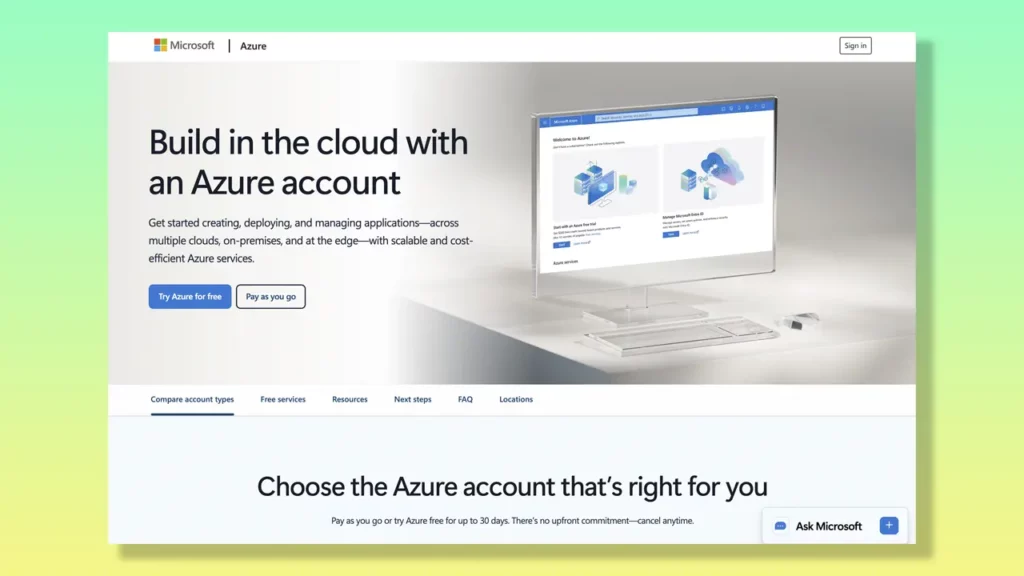
Microsoft Azure’s free tier grants access to professional-grade voices, including neural voices that sound remarkably natural.
The plan provides a generous monthly quota, making it perfect for developers and businesses testing voice applications within limited budgets.
The platform supports numerous languages and offers customizable voice styles and emotions.
4. Google Cloud Text-to-Speech (free tier)
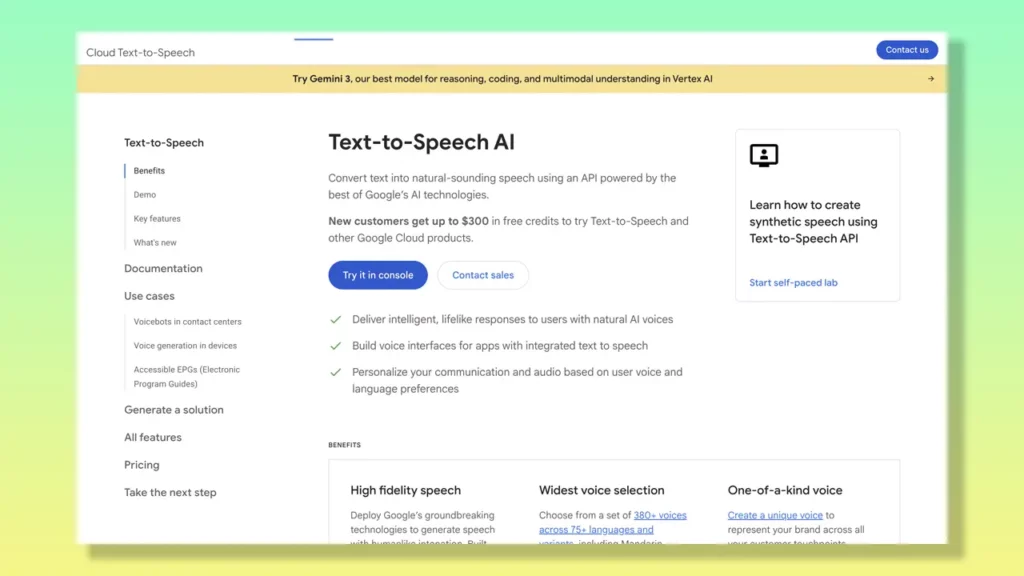
Google Cloud TTS free tier includes access to advanced WaveNet voices, known for their high quality and realistic intonation.
The platform supports over 30 languages and multiple voices per language.
Integration with Google Cloud services makes it a robust choice for developers needing scalable and versatile speech synthesis.
5. Narakeet
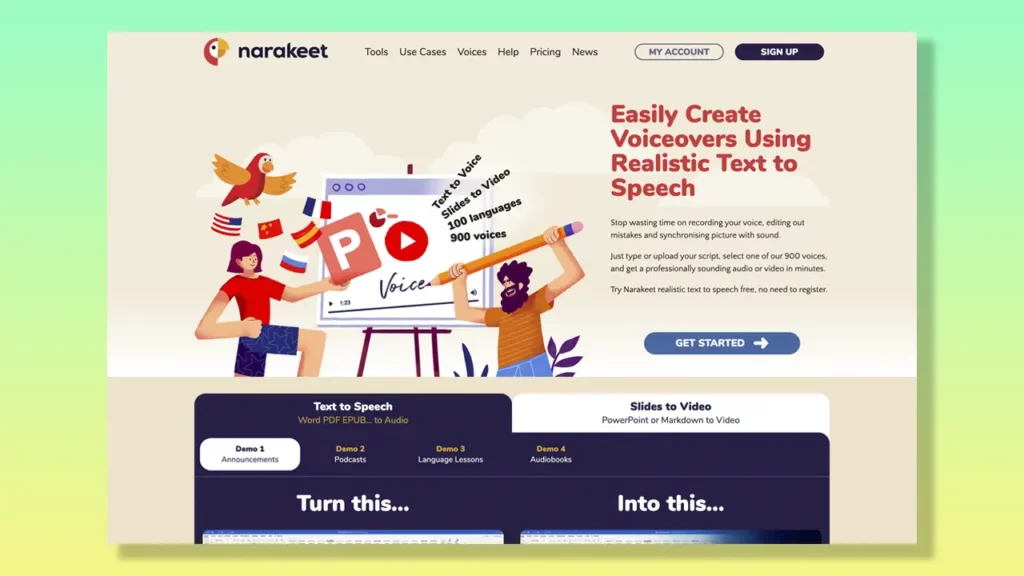
Narakeet focuses on quick, video-friendly text-to-speech conversion, making it particularly useful for content creators who want to add voiceovers to videos swiftly.
It allows basic free usage with certain limitations. Its interface emphasizes speed and simplicity, catering to users needing fast turnaround with decent audio quality.
6. Uberduck
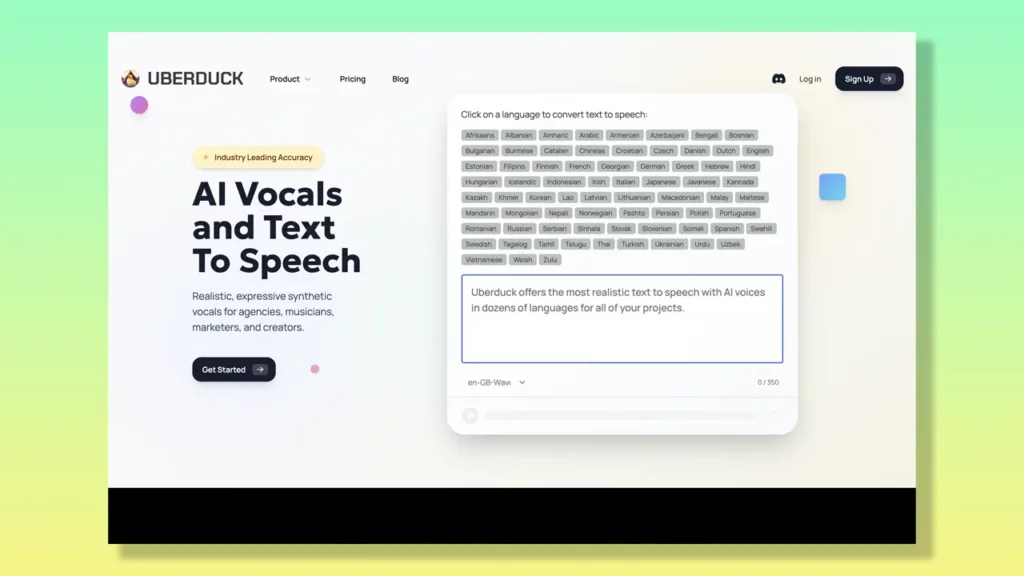
Uberduck is known for its playful and community-driven voice collection. Its free tier includes basic AI voice cloning features, enabling users to create customized voices.
The platform is popular among hobbyists and social media content creators looking for novel and entertaining voice options.
7. VoiceGen
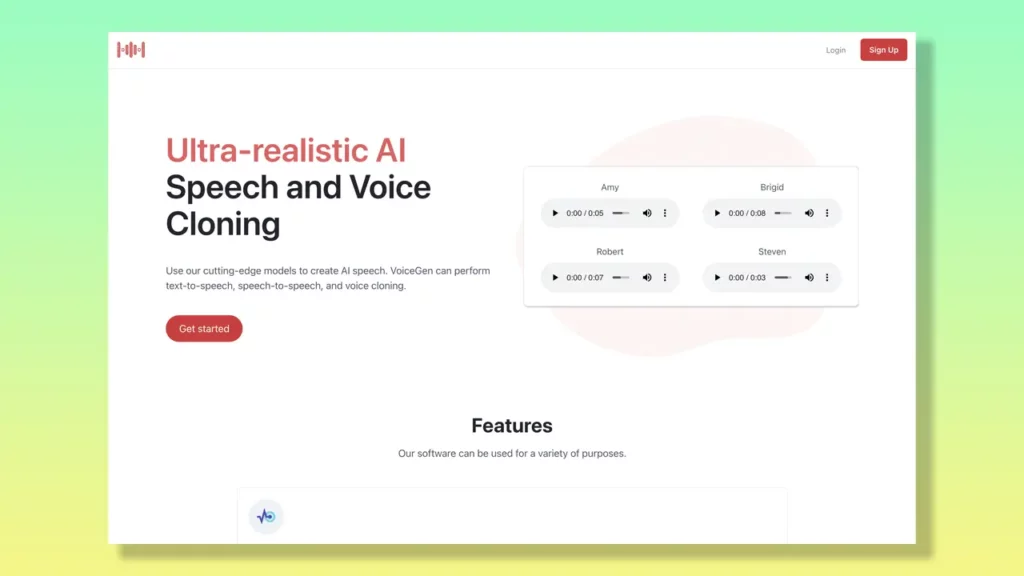
VoiceGen offers a straightforward web-based TTS interface with free access to standard voices. It is easy to use for quick voice synthesis tasks without the need for complex setups or subscriptions.
This simplicity makes it a good choice for casual users or those new to text-to-speech technology.
8. Descript Overdub (limited)
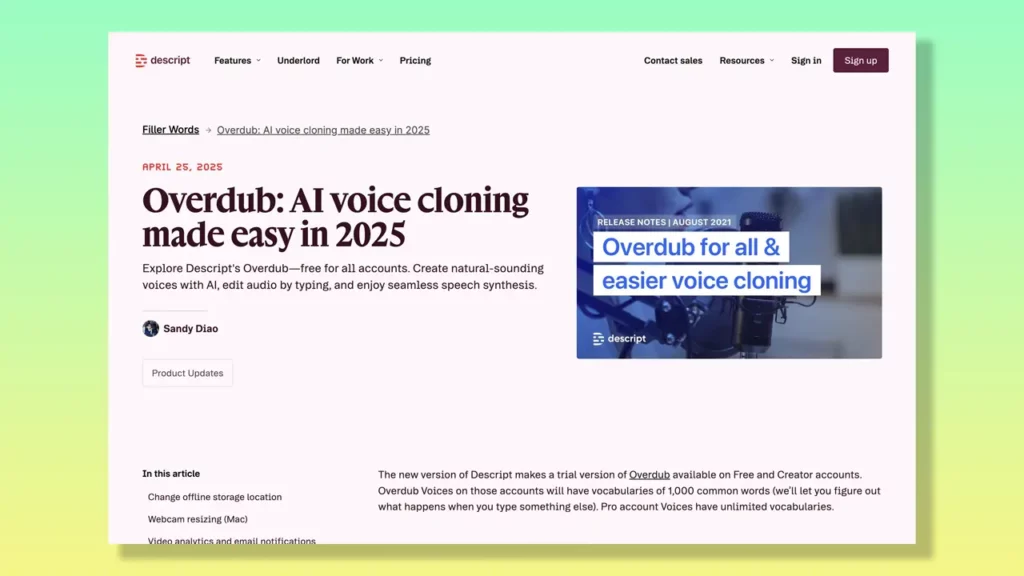
Descript Overdub provides voice cloning services with usage restrictions on its free tier. It allows users to create a digital replica of their voice or someone else’s with permission, useful for podcasting and video production.
While not fully free, its limited access still provides valuable voice cloning capabilities.
Open-source alternatives: Coqui TTS and Mozilla TTS
For users interested in open and experimental uses, Coqui TTS and Mozilla TTS offer self-hosted text-to-speech engines.
These projects enable full control over voice models and synthesis, suitable for developers and researchers looking for customizable and privacy-focused solutions without recurring costs.
Voice quality and multilingual support comparisons
When considering alternatives, voice quality and language diversity are top factors:
- WaveNet (Google) and Neural voices (Microsoft): Stand out for clarity and emotion, though require cloud access.
- PlayAI, Narakeet: Good for English and selected popular languages, but less natural in prosody compared to paid services.
- Uberduck: Quality varies greatly among voices, some sound robotic but custom/funny voices are a plus.
- Open-source solutions: Highly dependent on your hardware and setup skills; can yield surprisingly human-like results with technical know-how.
While ElevenLabs is known for very natural inflection and emotion, top free tools are rapidly closing the gap, especially for mainstream languages like English, Spanish, and German.
Security and privacy considerations with free AI voice tools

Data handling differences between commercial and free tools
Data security and privacy vary widely across AI voice platforms. Commercial providers like ElevenLabs and Microsoft typically offer robust data handling policies, including encryption and compliance with regulations such as GDPR.
Free tools, especially experimental or lesser-known platforms, may lack strict privacy practices. Data—you submit text, audio, or voice samples—could be kept for model training or shared with third parties, especially if no clear privacy policy is stated.
- Commercial platforms: Often clarify data storage period and provide deletion options.
- Open-source/self-hosted: Keeps all processing local, offering the best privacy.
- Freemium or hobbyist sites: May reuse or record your data without clear consent.
Risks of malware, phishing, and deepfake misuse
Free AI voice sites occasionally become targets for exploitative actors. Risks include:
- Downloading malware from fraudulent TTS/voice cloning sites.
- Phishing through fake signup pages mimicking popular services.
- Deepfake misuse if your cloned voice is exposed or distributed without consent.
It’s crucial to only use reputable, widely-reviewed platforms and consider additional protections when generating or cloning sensitive audio sources.
Voice cloning capabilities in free alternatives
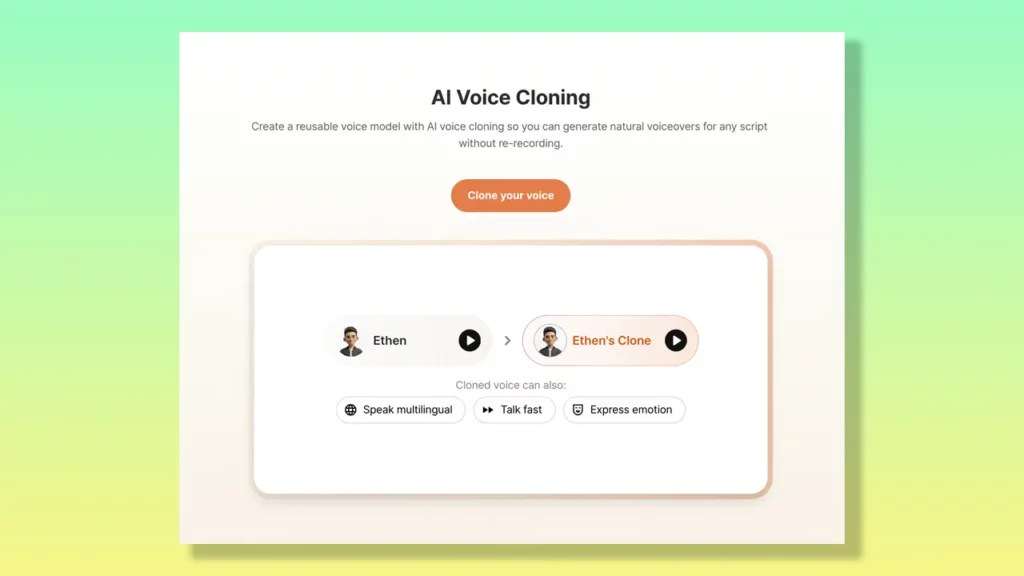
Comparison of web-based cloning tools
- Typecast: The top choice for instant voice cloning, allowing users to clone voices instantly with very short audio samples, combining ease of use and impressive quality.
- Uberduck: Offers a simple web-based interface for basic voice cloning, requiring short samples. The output is playful but less natural compared to premium products.
- Descript overdub (Free Plan): Enables limited voice cloning for personal use, generally developer- or podcaster-friendly but requires more samples to improve realism.
Most of the free solutions fully match ElevenLabs’ nuanced, emotionally-rich clones.
Open-source voice cloning models and setup complexity
- Coqui TTS and Mozilla TTS: Both offer open-source voice cloning modules. Setups typically require familiarity with Python, access to GPUs, and datasets of recorded speech. Quality depends on training data and technical proficiency.
- Real-Time voice cloning (GitHub): Allows voice imitation via desktop apps but has a steep learning curve and can be resource-intensive.
These projects provide maximum flexibility—great for privacy and experimentation—but are not plug-and-play solutions for most users.
Choosing the right free AI voice tool for your needs
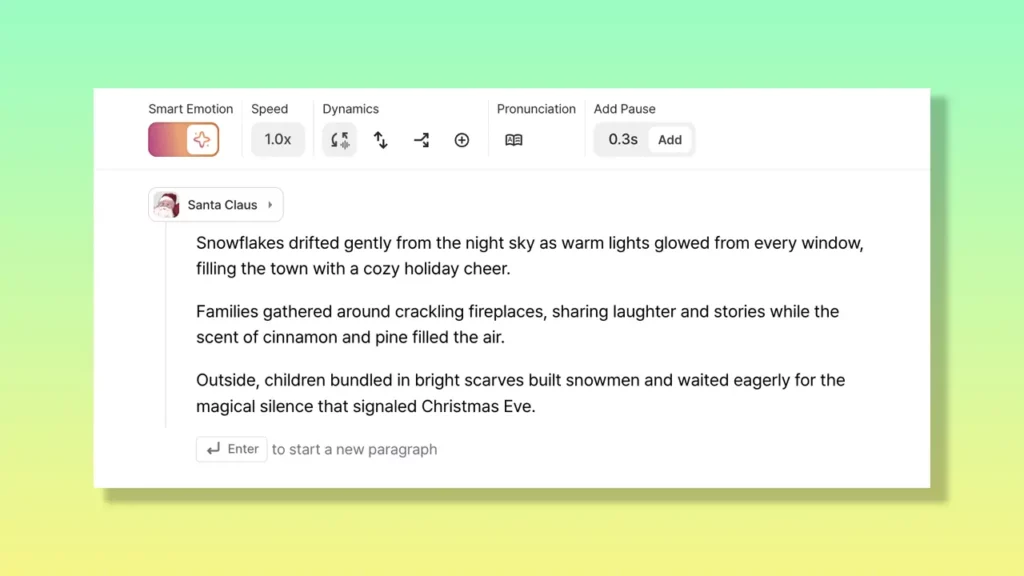
Key features to evaluate: Naturalness, languages, customization
Before you choose a free alternative, consider:
- Voice realism: How naturally does the AI speak? Are pauses, emotion, and inflection convincing?
- Languages and accents: Does the service support your preferred language(s) or dialect?
- Customization: Can you adjust speed, tone, emotion, or create custom voices?
Ease of use versus technical requirements
Assess your own skills and desired workflow:
- Web-based platforms: Easiest to use, but may be limited in features and privacy.
- APIs: Best for developers looking to integrate voice into apps, though often require coding knowledge.
- Open-source/self-hosted: Maximal control and privacy, but demand technical setup, maintenance, and hardware.
Offline and privacy options
For sensitive projects or privacy-focused users, offline/self-hosted open-source tools (Coqui TTS, Mozilla TTS) are preferable, as everything remains on your own device.
For most quick voice-overs, reputable web tools suffice if data sensitivity is low and the use is non-commercial.
Seeking a free ElevenLabs alternative? Evaluate your exact needs—quality, languages, privacy—then choose the tool that best balances capability and convenience.
The world of AI voice synthesis, even for free, is richer than ever for creators, hobbyists, and developers alike.