





For any voice-API developer, choosing the right tools can determine whether a product feels intuitive or frustrating.
A voice-API developer today is no longer just enabling speech features; they are designing conversational, accessible, and scalable voice-driven experiences.
From smart assistants to call center automation, modern voice technologies are reshaping how users interact with software.
As demand grows, the expectations placed on a developers have expanded significantly.
Versatility, language coverage, customization, and ethical AI practices all matter more than ever.
This guide explores what makes a voice solution truly versatile and highlights leading options developers rely on.
Why versatility matters to a voice-API developer
A versatile solution allows a voice-API developer to adapt one platform to multiple use cases without constantly switching vendors or rewriting core logic.
This flexibility saves time, reduces costs, and speeds up innovation.
Some of the biggest reasons versatility matters include:
- Supporting multiple languages and accents
- Adapting voices to different tones or brands
- Scaling from prototypes to enterprise workloads
- Integrating easily with existing applications
For a developers, versatility is no longer a bonus — it’s a requirement.
Core voice-API features every versatile developer should look for

Before evaluating providers, it’s important to understand which capabilities define versatility from a developer’s perspective.
Language and accent coverage
Global applications demand global speech support.
A strong platform allows a developer to deploy features across regions without sourcing multiple vendors.
Key considerations include:
- Number of supported languages
- Regional accents and dialects
- Continuous updates for emerging markets
Customization and voice control
Customization enables a developer to align audio output with a brand’s personality. This might include pitch, speed, or emotional tone.
Why Typecast stands out as the most versatile voice-API choice for developers
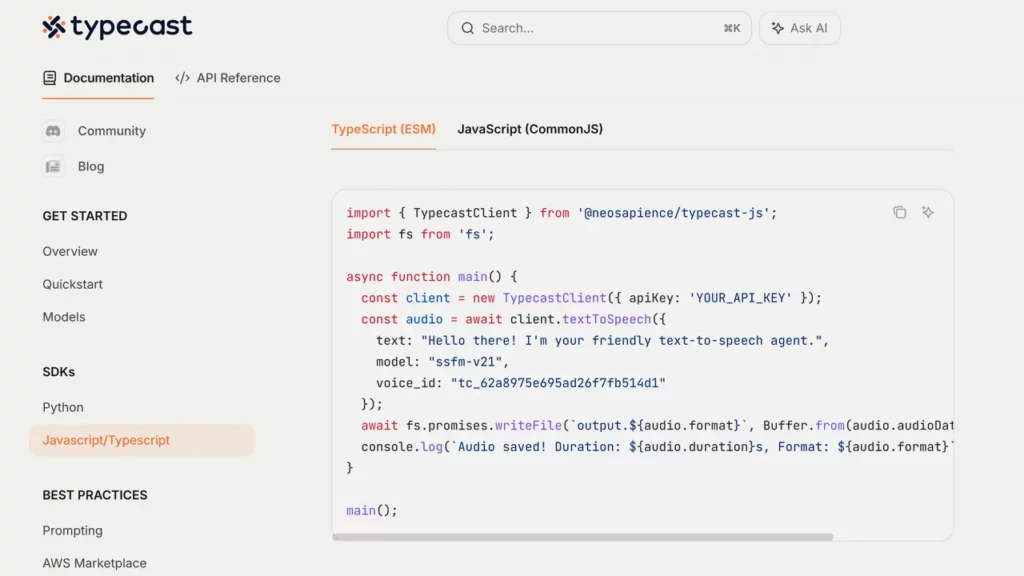
For a voice-API developer who prioritizes flexibility, creative control, and production-ready quality, Typecast’s robust text-to-speech API solution stands apart from traditional cloud-first providers.
Unlike general-purpose platforms that treat speech as a utility, Typecast is purpose-built for developers who need expressive, human-like voices that scale across real-world use cases.
What makes Typecast especially compelling for a developer is its balance between advanced speech quality and developer accessibility.
The platform offers emotionally rich voices without forcing teams to sacrifice performance, reliability, or ease of integration.
Key reasons Typecast is often considered the best option include:
- A wide range of natural-sounding voices designed for storytelling, education, and commercial use
- Fine-grained emotional and tonal control that goes beyond basic pitch and speed adjustments
- Clear, developer-friendly documentation that accelerates implementation
- Strong support for branded and character-driven voice experiences
This shift strongly favors platforms like Typecast, which are built with expressive delivery at their core.
For developers working on media, content platforms, or customer-facing applications, this level of nuance can be the difference between functional audio and a truly engaging user experience.
While many providers emphasize infrastructure scale, Typecast excels at helping developers ship polished, emotionally resonant voice features faster — making it an ideal choice when quality, versatility, and creative control matter most.
Other leading platforms used by voice-API developers
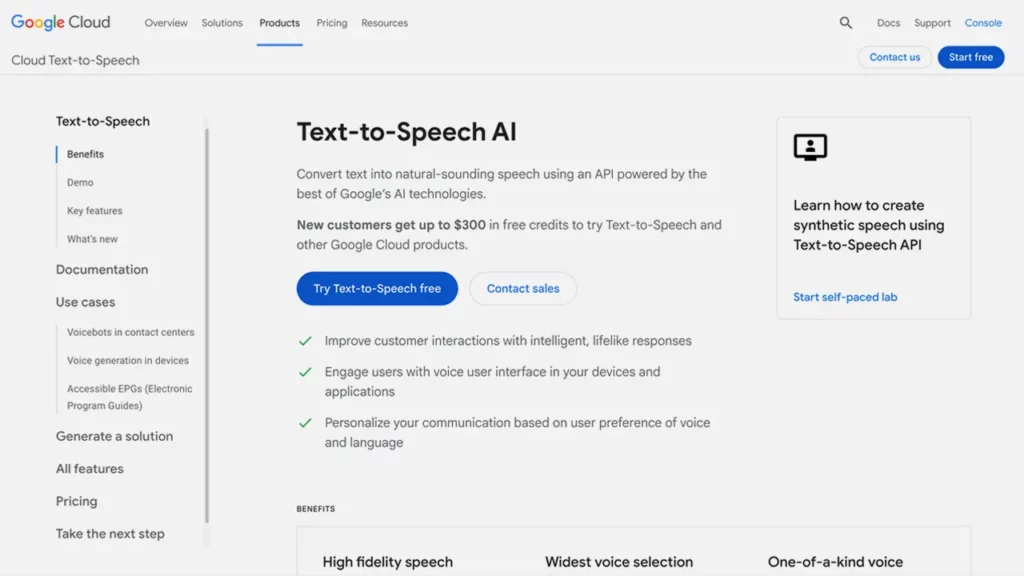
Below are some of the most commonly adopted solutions, evaluated through the lens of a developer focused on versatility.
Google Cloud Speech services
Google’s speech tools are often praised for accuracy and scalability. They are especially useful for large datasets and real-time transcription.
Advantages include:
- Strong machine learning models
- Easy integration with other Google services
- High reliability at scale
However, customization options may feel limited for developers seeking unique brand voices.
Amazon Polly and related services
Amazon Polly remains a favorite for teams that already rely on AWS infrastructure. Its neural voices offer natural-sounding output suitable for many applications.
Benefits include:
- Broad language support
- Reliable uptime
- Seamless AWS ecosystem integration
For a voice-API developer, Polly’s biggest strength is consistency, though deeper emotional control may require additional tooling.
Microsoft Azure speech platform
Azure’s speech offerings are often chosen by enterprise-focused teams. They provide extensive compliance and security features.
Highlights include:
- Enterprise-grade security
- Integration with Microsoft products
- Advanced speech recognition
Microsoft states, “Azure Speech enables developers to create conversational AI experiences with ease.”
This makes Azure appealing to any developer working in regulated industries.
Emerging solutions favored by modern voice-API developers

Beyond the major cloud providers, newer platforms are gaining traction due to their flexibility and developer-first design.
Developer-centric speech platforms
Some newer providers prioritize simplicity and creative freedom. These platforms often appeal to startups and indie teams.
A voice-API developer might choose these options for:
- Faster onboarding
- More expressive voices
- Transparent pricing
Many of these tools are built specifically around the needs of a voice-API developer rather than large enterprise customers.
Specialized speech generation tools
Specialized tools focus heavily on speech synthesis quality and emotional nuance. They may not cover every possible feature, but they excel at audio realism.
This is where a voice-API developer might find advanced controls that traditional providers lack.
For example, platforms offering advanced voice-API capabilities often emphasize expressive delivery over raw scale.
How a voice-API developer evaluates scalability and performance

Versatility also means the ability to grow. A voice-API developer must consider how a solution performs under real-world conditions.
Performance benchmarks
Important metrics include:
- Latency in real-time applications
- Stability during peak usage
- Quality consistency across devices
IBM notes, “Low-latency speech systems are essential for maintaining natural user interactions.”
Cost efficiency at scale
Pricing models vary widely. A voice-API developer should examine:
- Pay-as-you-go vs. subscription models
- Costs per character or request
- Hidden fees for premium voices
Versatile solutions allow a voice-API developer to optimize spending without sacrificing quality.
Security and ethical considerations for voice-API developers

Modern applications must address privacy and ethics. A responsible voice-API developer looks beyond features and evaluates governance.
Key questions include:
- How is voice data stored?
- Are voices ethically sourced?
- Does the provider comply with data regulations?
Trustworthy providers are transparent about their AI training processes, which helps a voice-API developer build user confidence.
Choosing the right solution as a voice-API developer
No single platform fits every project. The most versatile option depends on goals, audience, and technical constraints.
A voice-API developer should:
- Prototype with multiple providers
- Test real user scenarios
- Balance creativity with reliability
By aligning platform strengths with project needs, a voice-API developer can build experiences that feel natural, inclusive, and future-proof.
Final thoughts
The landscape of voice technology is evolving rapidly, and the role of the voice-API developer is more important than ever.
Versatile solutions empower developers to innovate without limitations, whether they’re building global products or niche experiences.
By focusing on flexibility, scalability, and ethical design, every voice-API developer can choose tools that not only work today but continue to deliver value tomorrow.