




Starting your artificial intelligence study journey can be incredibly exciting—and surprisingly rewarding. Whether you’re just getting started or hoping to build on what you already know, learning how to study AI in the right way can really help you stand out in this fast-moving field.
With so many industries now looking for people who understand AI, there’s truly no better time to jump in and explore this game-changing technology.
Understanding the foundations of artificial intelligence study
Before diving into complex algorithms and neural networks, establishing a strong foundation is crucial for anyone serious about artificial intelligence study.
Mathematics forms the backbone of AI, particularly linear algebra, calculus, and probability theory. These subjects help you understand how machines learn from data and make predictions.
Programming skills are equally essential. Python has emerged as the go-to language for AI development due to its extensive libraries and frameworks like TensorFlow, PyTorch, and scikit-learn.
Essential prerequisites for AI learners
Start with these fundamental areas:
- Mathematics: Focus on linear algebra for understanding data transformations, calculus for optimization algorithms, and statistics for probability and inference
- Programming: Master Python basics, then progress to data structures and algorithms
- Data science fundamentals: Learn data manipulation, visualization, and basic statistical analysis
According to Andrew Ng, a pioneer in AI education and founder of DeepLearning.AI, “AI is the new electricity,” and suggests that learners should spend at least 3-6 months building strong mathematical and programming foundations before tackling advanced topics.
Choosing the right learning path for your AI journey

Your approach to studying artificial intelligence should align with your goals, whether they involve academic research, industry applications, or entrepreneurial ventures.
Online courses offer flexibility and structured learning. Platforms like Coursera, edX, and Udacity provide comprehensive AI programs taught by industry experts.
Self-paced versus structured learning
Self-paced learning works well for disciplined individuals who can create their own curriculum. You can combine free resources like MIT OpenCourseWare with practical projects.
Structured programs, including bootcamps and university degrees, provide guided pathways with mentorship and networking opportunities.
Diving into researches on artificial intelligence
Reading and understanding researches on artificial intelligence is fundamental to staying current in this fast-moving field.
Start with seminal papers that shaped modern AI, such as the original transformer architecture paper “Attention Is All You Need” by Vaswani et al., or Geoffrey Hinton’s work on deep learning.
Where to find quality AI research
Academic databases and preprint servers offer access to cutting-edge research:
- arXiv.org: The go-to repository for AI and machine learning preprints
- Google Scholar: Comprehensive academic search engine with citation tracking
- Papers with Code: Combines research papers with implementation code
- AI conference proceedings: NeurIPS, ICML, and CVPR publish groundbreaking research annually
According to a 2024 Stanford AI Index Report, AI research publications have increased by 34% since 2020, highlighting the field’s explosive growth.
How to read and analyze a research paper on artificial intelligence

Reading a research paper on artificial intelligence requires a systematic approach different from casual reading.
Don’t read papers linearly from start to finish. Instead, use the three-pass method recommended by researchers.
The three-pass reading method
First pass: Skim the title, abstract, introduction, section headings, and conclusion to grasp the main contribution (5-10 minutes).
Second pass: Read more carefully but skip proofs and technical details. Focus on figures, diagrams, and key results (1 hour).
Third pass: Deep dive into every detail, attempt to mentally recreate the work, and identify assumptions and potential weaknesses (4-5 hours for complex papers).
As Fei-Fei Li, Professor at Stanford and Co-Director of the Stanford Human-Centered AI Institute, notes: “Reading papers is a skill that improves with practice—start with survey papers before tackling highly technical work.”
Building practical skills through projects

Theory without practice leads to a shallow understanding. Hands-on projects cement your artificial intelligence study efforts.
Start with beginner-friendly projects like image classification using pre-trained models, then gradually increase complexity.
Project ideas for different skill levels
Beginners should try:
- Sentiment analysis on movie reviews or tweets
- Handwritten digit recognition using the MNIST dataset
- Simple chatbot using natural language processing
Intermediate learners can tackle:
- Building a recommendation system
- Object detection in images or videos
- Time series forecasting for stock prices or weather
Advanced practitioners might explore:
- Developing custom neural network architectures
- Implementing papers from scratch
- Contributing to open-source AI projects
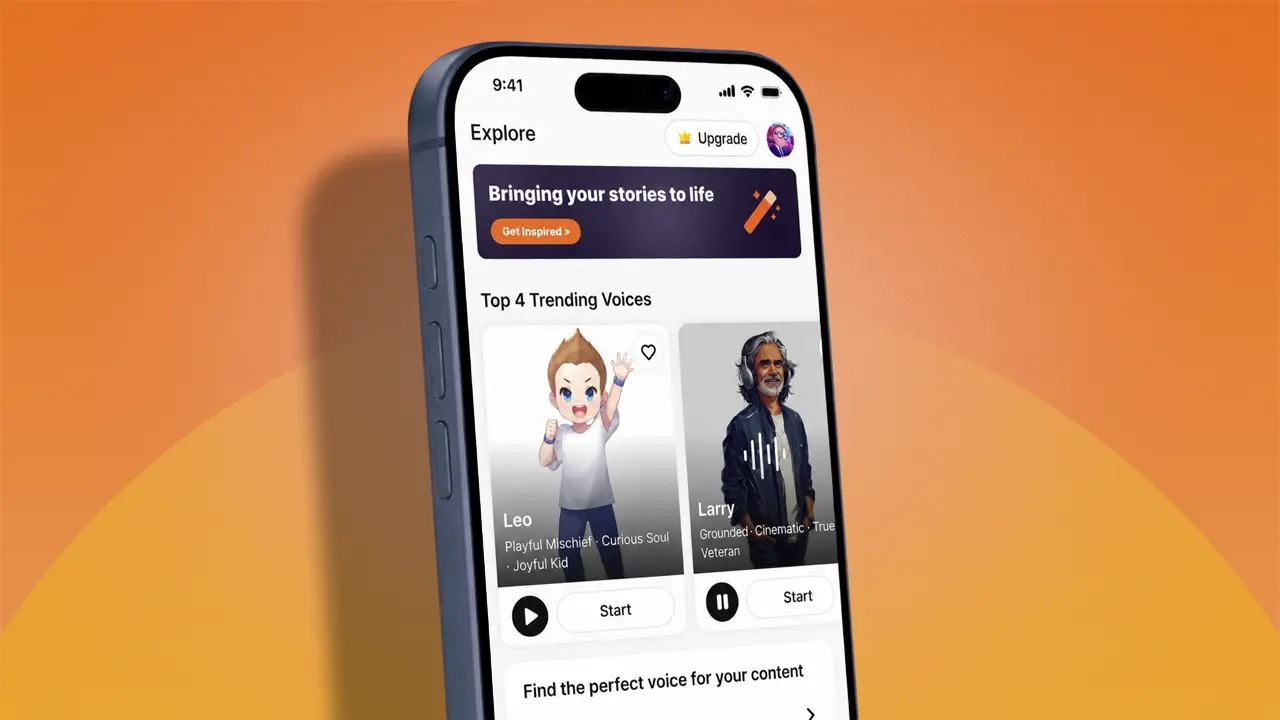
Creating content with tools like an AI voice generator can be an excellent practical project, allowing you to explore speech synthesis, natural language processing, and the intersection of AI with creative applications.
Exploring ai in education and its transformative potential

The integration of AI in education represents one of AI’s most impactful applications, fundamentally changing how we teach and learn.
AI-powered adaptive learning platforms personalize educational experiences by adjusting content difficulty based on individual student performance.
Current applications transforming classrooms
Intelligent tutoring systems provide one-on-one guidance at scale, something previously impossible with traditional teaching methods.
Automated grading and feedback systems free educators to focus on mentorship while ensuring students receive timely responses to their work.
According to a UNESCO report on AI in education, properly implemented AI tools can reduce teacher workload by up to 30% while improving student engagement and outcomes.
The conversation around artificial intelligence and the future of teaching and learning continues to evolve as educators, technologists, and policymakers collaborate to ensure AI enhances rather than replaces human instruction.
Joining AI communities and staying updated
Learning artificial intelligence shouldn’t be a solitary journey. Engaging with communities accelerates your growth through knowledge sharing and collaboration.
Online forums like Reddit’s r/MachineLearning, Stack Overflow, and specialized Discord servers connect you with learners and experts worldwide.
Recommended communities and resources
- Kaggle: Participate in competitions and learn from other data scientists’ notebooks
- GitHub: Follow AI researchers, explore codebases, and contribute to projects
- LinkedIn groups: Connect with AI professionals and stay informed about industry trends
- Local meetups: Attend AI/ML meetups in your city for networking and learning
Twitter (X) remains valuable for following AI researchers who share insights, papers, and breakthroughs in real-time.
Developing specialization in AI subfields
As you progress in your artificial intelligence study, developing expertise in specific subfields increases your value and career opportunities.
Machine learning, computer vision, natural language processing, and robotics each offer distinct career paths.
Popular AI specializations
Natural Language Processing (NLP): Work with text and speech data, building applications like chatbots, translation systems, and voice interfaces.
Computer Vision: Focus on image and video analysis for applications in autonomous vehicles, medical imaging, and surveillance.
Reinforcement Learning: Develop agents that learn through interaction with environments, crucial for robotics and game AI.
Generative AI: Create models that generate new content, from text and images to music and voice synthesis—an area where technologies like realistic AI voice generators are making significant impacts.
Leveraging online resources and courses

The abundance of quality educational resources makes artificial intelligence study accessible to everyone, regardless of background or budget.
Free and paid options cater to different learning styles and objectives.
Top-rated AI courses and platforms
Coursera’s Machine Learning Specialization by Andrew Ng remains the gold standard for beginners, providing comprehensive coverage of fundamental concepts.
Fast.ai offers a practical, top-down approach that gets you building models quickly before diving into theory.
MIT’s Introduction to Deep Learning provides rigorous academic treatment with lecture videos and assignments freely available online.
Specialized platforms like DataCamp and Pluralsight offer interactive coding environments for hands-on learning.
Transitioning from learning to careers
Converting your artificial intelligence study efforts into a rewarding career requires strategic planning and positioning.
Building a strong portfolio showcasing real-world projects demonstrates practical skills to potential employers.
Career preparation strategies
Create a GitHub portfolio with well-documented projects that solve real problems. Quality matters more than quantity—three excellent projects outweigh ten mediocre ones.
Contribute to open-source AI projects to gain experience collaborating with other developers and understanding production-grade code.
Network actively through LinkedIn, conferences, and meetups. Many AI positions are filled through referrals rather than public job postings.
Consider internships or entry-level positions that offer mentorship and exposure to industry practices, even if they’re not your dream role initially.
Staying current in a rapidly evolving field

AI advances at breakneck speed, making continuous learning essential for maintaining relevance.
New architectures, techniques, and applications emerge constantly, requiring dedicated effort to stay informed.
Strategies for continuous learning
Subscribe to newsletters like Import AI, The Batch, and Papers We Love that curate important developments and research.
Follow key conferences—NeurIPS, ICML, CVPR, and ACL—where groundbreaking research debuts annually.
Set aside time weekly to read at least one research paper or explore new tools and frameworks.
Experiment with emerging technologies early. When GPT-3 launched, early adopters gained valuable experience that became highly marketable.
The intersection of AI with creative tools continues expanding, as seen in applications ranging from image generation to sophisticated voice synthesis technologies that enable creators to produce professional content efficiently.
Measuring your progress and setting goals

Tracking progress in your artificial intelligence study journey helps maintain motivation and identify areas needing attention.
Establish clear, measurable milestones rather than vague aspirations.
Creating effective learning goals
Short-term goals (1-3 months): Complete a specific course, implement three projects, or read five research papers in your area of interest.
Medium-term goals (6-12 months): Build a specialized portfolio, contribute to an open-source project, or present at a local meetup.
Long-term goals (1-3 years): Secure an AI role, publish research, or launch an AI-powered product.
Review and adjust goals quarterly based on your progress and evolving interests.
Regular self-assessment through practice problems, Kaggle competitions, or mock interviews reveals knowledge gaps and improvement areas.
Conclusion
Studying artificial intelligence is a marathon, not a sprint. Success requires solid foundations in mathematics and programming, consistent practice through projects, engagement with research and communities, and commitment to lifelong learning.
The field offers unprecedented opportunities for those willing to invest the effort, from solving humanity’s biggest challenges to creating innovative products that reshape how we live and work.
Start today with small, consistent steps, and you’ll be amazed at how quickly your capabilities grow in this transformative field.