




AI in education is transforming classrooms across the globe, revolutionizing the way students learn and teachers instruct. From personalized learning experiences to automated grading systems, how is AI changing education has become one of the most pressing questions in modern pedagogy.
The integration of artificial intelligence into educational settings represents more than just a technological upgrade—it’s a fundamental shift in how knowledge is delivered, absorbed, and assessed.
As schools, colleges, and universities embrace AI-powered tools, we’re witnessing an unprecedented evolution in teaching methodologies that promises to make education more accessible, engaging, and effective than ever before.
What is AI in education?
Artificial intelligence in education refers to the application of machine learning, natural language processing, and other AI technologies to enhance learning outcomes and streamline educational processes.
These systems can analyze student performance data, adapt to individual learning styles, and provide instant feedback that was previously impossible without significant human resources.
Educational AI encompasses everything from intelligent tutoring systems that guide students through complex problems to administrative tools that help educators manage their workloads more efficiently. The technology operates on sophisticated algorithms that can identify patterns in student behavior, predict learning difficulties before they become critical, and recommend personalized interventions.
Modern AI educational tools can process vast amounts of data in seconds, offering insights that would take humans weeks or months to compile manually. This capability allows educators to make data-driven decisions about curriculum design, teaching strategies, and student support services with unprecedented precision.
The current state of AI in classrooms
Today’s classrooms look dramatically different from those of even five years ago. AI-powered platforms are no longer experimental novelties but essential components of the educational infrastructure in many institutions worldwide.
According to a report from HolonIQ, global edtech investment reached $20.8 billion in 2024, with AI-driven solutions commanding the largest share of this funding. This massive investment reflects the education sector’s commitment to integrating intelligent systems into daily teaching and learning activities.
Smart learning management systems now track student engagement in real-time, alerting teachers when a student might be struggling or disengaging from course material.
Virtual teaching assistants answer student questions 24/7, providing support outside traditional classroom hours. Adaptive learning platforms adjust content difficulty based on individual student performance, ensuring that each learner progresses at their optimal pace.
How AI personalizes the learning experience
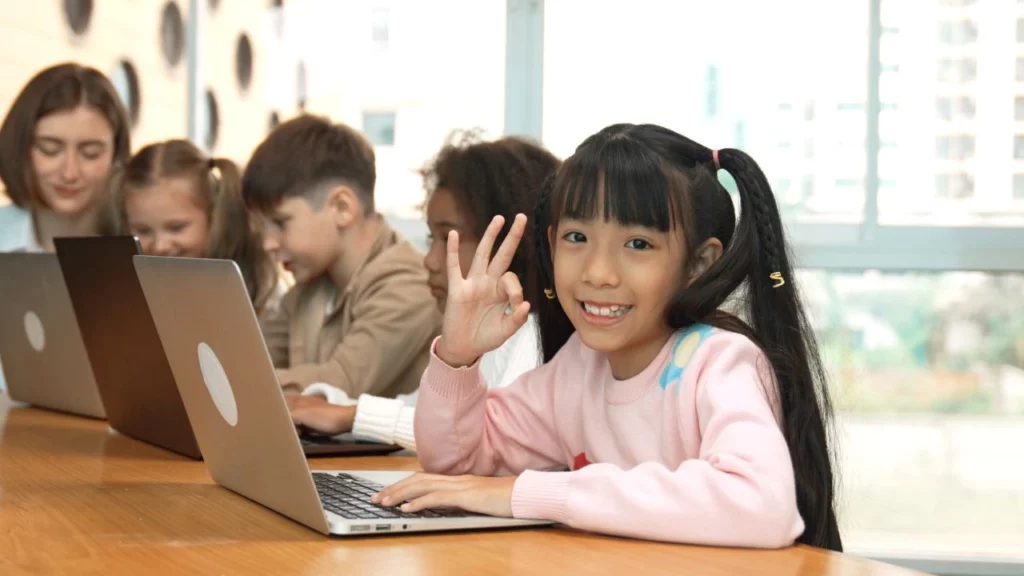
One of the most significant ways AI in education is making an impact is through personalization. Traditional classroom settings often follow a one-size-fits-all approach, but AI enables truly individualized learning paths.
Intelligent tutoring systems analyze how each student interacts with material, identifying knowledge gaps and learning preferences. If a student struggles with visual representations but excels with auditory information, the AI system can automatically adjust content delivery to prioritize audio explanations and verbal instructions.
Adaptive assessments
AI-powered assessment tools go beyond simple right-or-wrong answers. These systems can evaluate the reasoning process behind student responses, providing nuanced feedback that helps learners understand not just what they got wrong, but why their approach was flawed and how to improve.
Platforms like Carnegie Learning and DreamBox use sophisticated algorithms to present questions at precisely the right difficulty level for each student. When a learner masters a concept, the system immediately introduces more challenging material. When they struggle, it provides additional practice and alternative explanations without the stigma of falling behind peers.
Learning pace optimization
Every student learns at a different speed, and AI respects this fundamental truth. Unlike traditional classrooms, where the teacher must maintain a pace that works for the average student, AI systems allow each individual to progress when they’re truly ready.
Research from Stanford University shows that students using adaptive AI learning platforms demonstrated 30% faster progress compared to traditional instruction methods. This acceleration doesn’t come from rushing students but from eliminating the wasted time spent reviewing material they’ve already mastered or moving forward before they’re ready.
Examples of artificial intelligence in education

The practical applications of AI in educational settings are diverse and constantly expanding. Understanding these examples of artificial intelligence in education helps illustrate the technology’s transformative potential.
Chatbots and virtual assistants have become common on college campuses, handling everything from admissions questions to course registration assistance. Georgia State University implemented an AI chatbot named “Pounce” that answered over 200,000 student questions during the summer enrollment period, contributing to a significant increase in enrollment rates.
Plagiarism detection systems like Turnitin now use AI to not only identify copied content but also detect AI-generated text, helping maintain academic integrity in an era where students have access to sophisticated writing tools. These systems analyze writing patterns, sentence structure, and contextual clues to flag suspicious submissions.
Language learning apps such as Duolingo employ AI to create personalized lesson plans based on user performance. The app’s algorithm determines which vocabulary words or grammar concepts each learner needs to practice, adjusting the curriculum in real-time to maximize retention and engagement.
Automated grading systems are handling everything from multiple-choice tests to essay evaluations. While human oversight remains important for complex assignments, AI can provide immediate feedback on basic writing mechanics, mathematical problem-solving steps, and even aspects of critical thinking, freeing teachers to focus on higher-level instruction.
AI for teachers: Reducing workload and enhancing instruction
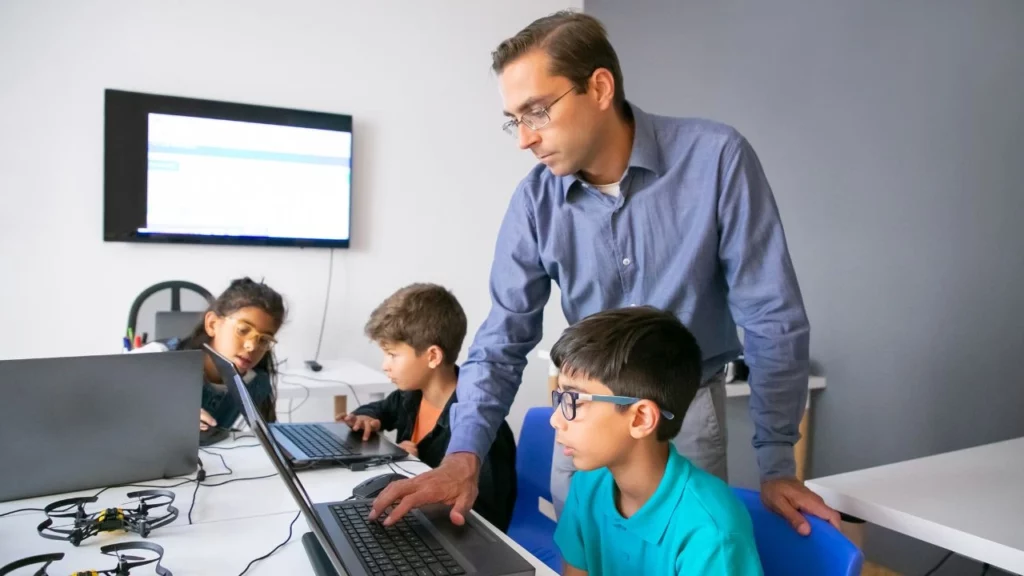
AI for teachers represents a powerful category of tools designed to support educators rather than replace them. These technologies address one of the profession’s most persistent challenges: overwhelming administrative workloads that detract from actual teaching time.
According to the National Education Association, teachers spend an average of 50 hours per week on job-related activities, with nearly 15 hours devoted to non-teaching tasks like grading, lesson planning, and administrative duties. AI tools can dramatically reduce this burden.
Automated administrative tasks
AI systems can handle routine administrative functions such as attendance tracking, grade calculation, and progress report generation. These tasks, while essential, consume valuable time that could be better spent on student interaction and instructional improvement.
Smart scheduling algorithms help administrators create optimal class schedules that account for teacher preferences, room availability, and student needs simultaneously—a task that traditionally required weeks of manual adjustment.
The AI can process thousands of variables in minutes, producing schedules that minimize conflicts and maximize educational efficiency.
Intelligent lesson planning
AI-powered lesson planning tools analyze curriculum standards, student performance data, and educational research to suggest effective teaching strategies. Teachers can input their learning objectives, and the AI recommends activities, resources, and assessment methods aligned with best practices.
Some platforms can even generate customized worksheets, quizzes, and study guides based on specific learning objectives, saving teachers hours of preparation time. While educators maintain creative control and make final decisions, AI handles the time-consuming groundwork of resource gathering and formatting.
Professional development insights
AI analytics provide teachers with detailed insights into their instructional effectiveness. By analyzing patterns in student performance across different teaching methods, topics, and assessment types, AI can help educators identify their strengths and areas for growth.
These systems offer personalized professional development recommendations based on each teacher’s unique classroom data. Instead of generic training sessions, educators receive targeted suggestions for improving specific aspects of their practice.
Best college AI tools transforming higher education

Higher education has been particularly receptive to AI integration, with numerous best college AI tools now considered essential for academic success. These platforms address the unique challenges of college-level learning and research.
Grammarly and other AI writing assistants help students improve their academic writing by identifying grammatical errors, suggesting stylistic improvements, and even detecting unclear arguments. While these tools don’t write papers for students, they provide valuable feedback that helps learners develop stronger communication skills.
Research assistants like Semantic Scholar and Elicit use AI to help students find relevant academic sources quickly. These tools can analyze research questions, identify key papers, and even summarize findings, dramatically reducing the time spent on literature reviews.
Note-taking applications such as Otter.ai transcribe lectures in real-time, allowing students to focus on understanding rather than frantically scribbling notes. The AI can identify key concepts, create searchable transcripts, and even generate summary outlines automatically.
Study tools like Quizlet use AI to create personalized study plans based on upcoming exams and individual knowledge gaps. The system determines which concepts each student needs to review most and schedules practice sessions for optimal retention using spaced repetition algorithms.
Can college students use AI ethically and effectively?

The question of can college students use AI has become increasingly complex as these tools grow more sophisticated. While AI offers tremendous benefits, its use raises important questions about academic integrity and learning authenticity.
Most institutions now recognize that outright bans on AI tools are impractical and potentially counterproductive. Instead, colleges are developing nuanced policies that distinguish between appropriate and inappropriate AI usage. The key lies in using AI to enhance learning rather than replace it.
Acceptable uses of AI in college
Students can legitimately use AI for brainstorming ideas, organizing thoughts, and checking grammar in their work. AI writing assistants that provide suggestions rather than generating entire passages are generally considered acceptable, as they help students improve their own writing rather than substituting for it.
Research tools that help locate relevant sources or summarize academic papers are typically permitted, provided students read the original sources and form their own interpretations. AI can be a powerful assistant in the research process without compromising academic integrity.
Language translation tools help international students understand course materials in their native language, bridging language barriers without providing unfair advantages. Similarly, text-to-speech tools and other accessibility features powered by AI support students with disabilities without violating academic honesty policies.
Prohibited uses and academic integrity concerns
Submitting AI-generated text as original work constitutes plagiarism at most institutions. Using AI to complete assignments, write essays, or solve problems without disclosure violates academic integrity policies and undermines the learning process.
Students should always disclose AI tool usage when required by instructors and ensure they understand the material, regardless of which tools assisted their learning. The goal of education is knowledge acquisition and skill development, not simply completing assignments by any means available.
Artificial intelligence and the future of teaching and learning
Looking ahead, artificial intelligence and the future of teaching and learning appear inextricably linked. Emerging technologies promise even more profound changes to educational paradigms in the coming years.
AI-powered virtual reality environments will create immersive learning experiences previously impossible. Medical students might practice surgical procedures on AI-driven virtual patients that respond realistically to treatment. History students could explore historically accurate recreations of ancient civilizations, interacting with AI characters based on historical records.
Emotion recognition AI will help teachers identify students experiencing frustration, boredom, or anxiety during learning activities. These systems analyze facial expressions, voice patterns, and engagement metrics to alert educators when intervention might be needed, enabling more responsive and empathetic teaching.
Predictive analytics will identify at-risk students earlier and with greater accuracy. By analyzing patterns in attendance, assignment completion, test scores, and even engagement with online learning materials, AI systems can flag students who may need additional support before they fall significantly behind.
Lifelong learning platforms will use AI to create personalized educational pathways that adapt as individuals progress through their careers. Rather than discrete educational experiences separated by years, AI will enable continuous learning tailored to evolving professional needs and personal interests.
Challenges of AI in education
Despite its promise, the integration of AI into education faces significant challenges of AI in education that must be addressed to ensure equitable and effective implementation.
Technical infrastructure and access
Many schools, particularly those in underfunded districts or developing regions, lack the technological infrastructure necessary to implement AI solutions. Reliable internet access, modern devices, and adequate technical support remain out of reach for millions of students worldwide.
This digital divide threatens to exacerbate existing educational inequalities. As wealthier institutions adopt AI tools that demonstrably improve learning outcomes, students in resource-limited settings fall further behind through no fault of their own.
According to UNESCO, nearly 3.6 billion people worldwide remain offline, with the majority living in developing countries. Without addressing this fundamental access gap, AI in education risks becoming another factor that widens the opportunity divide rather than closing it.
Teacher training and resistance
Many educators feel unprepared to integrate AI into their teaching practice. A survey by the Walton Family Foundation found that while 60% of teachers expressed interest in using AI tools, only 18% reported receiving any formal training on educational AI applications.
Some teachers resist AI adoption due to concerns about job security, philosophical objections to technology-mediated learning, or simple unfamiliarity with digital tools. Overcoming this resistance requires substantial investment in professional development and clear communication about AI’s role as a teaching enhancement rather than teacher replacement.
Data privacy and security
AI systems require vast amounts of student data to function effectively, raising serious privacy concerns. Information about learning patterns, academic performance, behavioral tendencies, and personal characteristics could potentially be misused by bad actors or even well-intentioned institutions without proper safeguards.
Student data breaches have become increasingly common, with K12 Security Information Exchange reporting over 400 cybersecurity incidents affecting schools in 2023 alone. As AI systems collect and analyze even more sensitive information, the stakes for data protection grow higher.
Parents and students often don’t fully understand what data is being collected, how it’s being used, or who has access to it. Transparency and robust consent mechanisms are essential but often lacking in current AI educational implementations.
Negative effects of AI in education

While acknowledging AI’s benefits, we must also honestly examine the negative effects of AI in education to mitigate potential harms.
Reduced human interaction
Education is fundamentally a human endeavor, built on relationships between teachers and students and among peers. Over-reliance on AI systems risks diminishing these crucial interpersonal connections that foster emotional development, social skills, and motivation.
Students who interact primarily with AI tutors rather than human teachers may miss important opportunities to develop communication skills, empathy, and the ability to navigate complex social situations. These soft skills remain critically important in both professional and personal contexts, yet they can only be developed through human interaction.
Algorithmic bias and fairness
AI systems can perpetuate and even amplify existing biases in education. If training data reflects historical inequities in educational outcomes, AI algorithms may make recommendations that disadvantage students from underrepresented groups.
Research published in Science demonstrated that several commercial AI systems exhibited significant racial and gender biases in their outputs. In educational contexts, such biases could manifest as AI tutoring systems that provide less patient assistance to certain student demographics or assessment tools that systematically underrate work from particular groups.
Dependency and skill atrophy
When students rely too heavily on AI tools, they may fail to develop fundamental skills. If AI handles all research, students might not learn effective information literacy. If AI corrects all grammar errors, students might not internalize grammatical rules. If AI solves all math problems, students might not develop problem-solving capabilities.
This phenomenon, sometimes called “skill atrophy,” represents a serious concern as AI tools become more capable and accessible. Educators must carefully balance AI assistance with opportunities for students to struggle productively and develop genuine competence.
Academic dishonesty and learning authenticity
The availability of AI tools that can generate essays, solve complex problems, and even create realistic-sounding explanations tempts some students to take shortcuts that undermine their learning. While this isn’t inherent to the technology itself, it represents a significant practical challenge for maintaining academic integrity.
More subtly, even students using AI tools appropriately may develop a shallow understanding of material if they rely on AI-generated summaries and explanations rather than engaging deeply with primary sources and complex ideas.
Ethics of ai in education
The ethics of AI in education demands careful consideration of fundamental values and principles that should guide technological implementation in learning environments.
Transparency and explainability
AI systems used in education should be transparent about their decision-making processes. When an AI recommends that a student focus on particular learning objectives or route them to specific resources, the reasoning behind these decisions should be explainable to both educators and learners.
Equity and inclusion
AI implementation must prioritize equity, ensuring that these powerful tools benefit all students regardless of socioeconomic background, race, language, disability status, or geographic location. This requires intentional design choices and ongoing monitoring to identify and correct disparities in AI system performance or access.
Developers should include diverse voices in the creation of educational AI, ensuring that systems work effectively for students with different learning needs, cultural backgrounds, and life experiences. One-size-fits-all solutions risk marginalizing students who don’t fit dominant demographic patterns in training data.
Informed consent and student autonomy
Students and parents should have meaningful input into how educational AI systems collect and use personal data. This requires clear, understandable explanations of data practices rather than lengthy legal documents written in technical jargon.
Furthermore, students should retain some control over their learning experiences. AI recommendations should inform rather than dictate educational pathways, preserving student choice and self-direction in the learning process.
Accountability
When AI systems make errors or produce harmful outcomes, clear accountability mechanisms must exist. Who is responsible when an AI tutor provides incorrect information? When does an AI assessment tool systematically underrate certain students? When does a recommendation algorithm steer students away from challenging but achievable goals?
These questions of accountability become even more complex in educational contexts where students may not recognize AI errors and where consequences can significantly impact future opportunities.
Artificial intelligence study: Research and evidence

Artificial intelligence study in educational settings has produced a growing body of evidence about AI’s effectiveness and limitations in various learning contexts.
A meta-analysis published in the Journal of Educational Psychology examined 146 studies involving AI tutoring systems and found an average effect size of 0.42, indicating moderate positive effects on student learning outcomes. However, the analysis also revealed substantial variation depending on subject matter, student population, and implementation quality.
Research from MIT suggests that AI is most effective when it complements rather than replaces human instruction. Studies comparing purely AI-driven learning environments to “hybrid” models combining AI tools with human teachers consistently show better outcomes for the hybrid approach.
Effectiveness across subjects
AI appears more effective in some subjects than others. Mathematics, computer programming, and foreign language learning show particularly strong results from AI interventions, likely because these domains have clearer right and wrong answers that algorithms can evaluate accurately.
In contrast, subjects requiring nuanced interpretation, creative thinking, or complex argumentation—such as literature, philosophy, and advanced writing—pose greater challenges for current AI systems. While AI can provide useful feedback on mechanical aspects of writing, it struggles to evaluate the originality of ideas or the sophistication of arguments.
Long-term retention and transfer
Some research raises questions about whether AI-enhanced learning produces lasting knowledge retention and transferable skills. While students may perform well on immediate assessments, studies examining long-term retention show mixed results.
A study in Educational Technology Research and Development found that students using AI tutoring systems sometimes struggled to apply knowledge in novel contexts, suggesting that AI might facilitate surface learning without promoting deep understanding or cognitive flexibility.
Implementing AI responsibly in educational settings
For institutions seeking to harness AI’s benefits while minimizing risks, responsible implementation requires careful planning and ongoing evaluation.
Start with clear learning objectives
Technology should serve pedagogical goals, not the reverse. Before implementing any AI system, educators should articulate specific learning objectives and determine whether AI genuinely supports these goals more effectively than alternative approaches.
Questions to consider include: What problem does this AI tool solve? How does it align with our educational philosophy? What evidence supports its effectiveness? What are the potential downsides or unintended consequences?
Invest in professional development
Teachers need substantial support to use AI tools effectively. Professional development should go beyond basic technical training to help educators critically evaluate AI systems, understand their limitations, and integrate them thoughtfully into pedagogical practice.
Ongoing support communities where teachers can share experiences, troubleshoot challenges, and develop best practices together prove more effective than one-time training sessions.
Establish clear policies and guidelines
Institutions should develop explicit policies addressing AI use, covering both student and educator applications. These policies should clearly distinguish between acceptable and unacceptable uses while acknowledging the technology’s evolving nature.
Guidelines should be regularly reviewed and updated as AI capabilities change and as institutions gain experience with implementation challenges and opportunities.
Monitor outcomes and remain flexible
Regular assessment of AI implementations helps identify what’s working and what isn’t. Institutions should track not only academic outcomes but also student engagement, teacher satisfaction, equity metrics, and unintended consequences.
A willingness to modify or abandon AI initiatives that don’t deliver expected benefits demonstrates commitment to student welfare over technological novelty.
The role of AI in creating accessible educational content

Beyond direct learning applications, AI plays an increasingly important role in making educational content accessible to diverse learners. Tools that convert text to speech enable students with visual impairments or reading difficulties to access written materials effectively.
AI-powered closed captioning services make video content accessible to deaf and hard-of-hearing students while also benefiting learners who prefer reading along or who are studying in non-native languages. These systems have improved dramatically in accuracy and now approach human-level performance for many applications.
Translation tools help break down language barriers, allowing students to access educational content in their preferred language. While these translations aren’t perfect, they provide sufficient understanding to support learning for millions of students who would otherwise be excluded from educational opportunities.
Voice technology, including realistic AI voice generator platforms, allows educators to create audio versions of textbooks, study guides, and supplementary materials without expensive recording sessions. Students can listen to content during commutes, while exercising, or during
other activities where reading isn’t practical, maximizing learning opportunities throughout the day.
How AI supports differentiated instruction

Differentiated instruction—tailoring teaching to meet individual student needs—has long been recognized as an effective pedagogical approach, but challenging to implement in traditional classrooms with large student-to-teacher ratios. AI makes this approach more feasible.
AI systems can manage multiple parallel learning pathways simultaneously, providing each student with appropriately challenging material regardless of their current performance level.
Advanced learners receive enrichment activities while struggling students get additional support, all without requiring the teacher to manually create and manage dozens of different lesson variations.
Real-time monitoring allows teachers to identify which students need immediate help and which can work independently. During class time, teachers can focus their attention where it’s most needed rather than attempting to provide identical instruction to students with vastly different needs.
Flexible pacing enabled by AI respects that students master concepts at different rates. Rather than holding back advanced students or rushing struggling learners to maintain classroom synchronization, AI-powered systems allow each individual to progress when they’re ready.
The future of AI assessment and evaluation
Assessment represents one of the most transformative applications of AI in education, with implications that extend far beyond automated grading.
Formative assessment and immediate feedback
Traditional assessment often comes too late to guide learning effectively. Students complete assignments, wait days or weeks for grades, and by then have moved on to new topics. AI enables immediate formative assessment that provides feedback while students are still engaged with the material.
This rapid feedback loop accelerates learning by allowing students to correct misunderstandings before they become entrenched. Rather than practicing incorrect techniques repeatedly, students receive real-time guidance that shapes proper understanding from the start.
Authentic assessment of complex skills
Advanced AI systems are beginning to evaluate complex skills that previously required expert human judgment. Natural language processing algorithms can assess argumentative writing, identifying the sophistication of reasoning rather than just grammatical correctness.
AI can evaluate collaborative skills by analyzing group interaction patterns, identifying who contributes ideas, who facilitates discussion, and who helps resolve conflicts. These behavioral insights would be nearly impossible for teachers to track across multiple groups simultaneously.
Reducing test anxiety and bias
AI-powered assessments can be delivered in less stressful formats than traditional high-stakes exams. Continuous low-stakes assessment distributed throughout a learning period provides a more accurate picture of student knowledge while reducing the anxiety associated with make-or-break testing situations.
Furthermore, well-designed AI assessments can reduce human bias in grading. Teachers, despite best intentions, sometimes allow irrelevant factors—student behavior, handwriting, or previous performance—to influence grades. Properly implemented AI systems evaluate only the work itself, potentially increasing fairness.
Preparing students for an AI-enhanced future

So, how will AI change education? Perhaps most importantly, integrating AI in education prepares students for a world where artificial intelligence will be ubiquitous. Just as digital literacy became essential in previous decades, AI literacy is emerging as a fundamental competency for the 21st century.
Students need to understand how AI systems work at a conceptual level, even if they don’t study computer science. This includes recognizing AI’s capabilities and limitations, understanding when to trust AI recommendations and when to seek human judgment, and appreciating the ethical implications of AI deployment.
Developing critical thinking about AI requires hands-on experience with these systems. Students who use AI tools in educational settings gain practical insight into their behavior, learning to recognize patterns like algorithmic bias, hallucinations in AI-generated content, and the importance of human oversight.
Career preparation increasingly requires AI familiarity across virtually all fields. Healthcare professionals use AI diagnostic tools, lawyers employ AI for legal research, artists work with AI creative assistants, and business leaders rely on AI analytics. Students who graduate without meaningful AI exposure will find themselves at a disadvantage in the job market.
The importance of maintaining the human element
While embracing AI’s potential, education must preserve its fundamentally human character. The most effective educational experiences combine technological efficiency with human wisdom, empathy, and creativity.
Teachers bring irreplaceable qualities to education: the ability to inspire students with passion for a subject, the capacity to recognize and nurture individual potential, the skill to adapt instruction based on subtle cues of confusion or breakthrough, and the relationship that makes students feel valued and supported.
AI should enhance rather than diminish these human elements. The ideal classroom of the future pairs AI’s computational power and personalization capabilities with human teachers’ emotional intelligence, creativity, and motivational skills.
Moving forward: A balanced approach to AI in education
How is AI changing education is not a question with a simple answer. The technology offers tremendous potential for improving learning outcomes, increasing access to education, supporting teachers, and preparing students for an AI-infused future. Simultaneously, it presents serious challenges around equity, privacy, ethics, and the preservation of human relationships in learning.
The path forward requires thoughtful implementation that prioritizes student welfare above technological novelty. Educational institutions must invest in infrastructure, training, and policy development while maintaining a commitment to inclusive and ethical AI deployment.
Students, teachers, administrators, parents, and technologists all have roles to play in shaping how AI transforms education.
By working together, asking difficult questions, and remaining committed to education’s core mission—developing the full potential of every learner—we can harness AI’s power while avoiding its pitfalls.
The transformation is already underway, and its pace will only accelerate. Our collective responsibility is ensuring that this transformation serves all students, enhances rather than replaces human teaching, and ultimately makes education more effective, accessible, and equitable than ever before.