




The rise of AI for writing is totally changing the game for creators—whether you’re working on a novel, a quick blog post, or even an audiobook. It’s not just “future tech” anymore; it’s a real-world tool that people are using to reshape their work every single day.
In this guide, we’re going to show you how these tools can help you find your flow, get more done, and honestly, just make your writing better. Let’s jump in and see how you can start harnessing that power for your own projects!
What is AI for writing?
AI for writing refers to artificial intelligence-powered tools and software that assist with various aspects of the writing process. These technologies use machine learning algorithms, natural language processing, and neural networks to understand context, generate text, suggest improvements, and even create entire pieces of content from scratch.
At its core, AI for writing acts as an intelligent companion that can help overcome writer’s block, refine your prose, check grammar, and adapt your content for different audiences. From simple spell-checkers to sophisticated content generators, these tools have undergone significant evolution over the past few years.
The technology behind these systems has become increasingly sophisticated, with modern AI writing assistants capable of understanding nuance, tone, and context in ways that seemed impossible just a decade ago.
How AI for writing actually works
Understanding the mechanics behind AI writing tools helps you use them more effectively. Most modern AI writing assistants are built on large language models (LLMs) that have been trained on vast amounts of text data from books, articles, websites, and other sources.
These models learn patterns in language—how words typically fit together, what makes a sentence coherent, and how to structure ideas logically. When you provide a prompt or request, the AI analyzes your input and generates responses based on these learned patterns.
According to research from Stanford University’s Human-Centered Artificial Intelligence institute, “AI language models have made remarkable progress in generating human-like text, with applications spanning creative writing, content creation, and communication assistance.”
The most advanced systems use transformer architecture, which allows them to consider the relationship between all words in a text simultaneously, rather than processing them sequentially. This results in more coherent and contextually appropriate outputs.
The benefits of using AI for writing

If technology is leaping ahead and we can use it to our advantage, why not give it a shot? But what’s the actual payoff of using AI for writing?
Overcoming writer’s block
One of the most valuable benefits of AI for writing is its ability to help you push past creative obstacles. When you’re staring at a blank page, an AI assistant can generate ideas, suggest opening lines, or provide alternative angles for your topic.
Writer’s block affects everyone from hobbyists to professionals, but AI tools can serve as a brainstorming partner that’s always available. You can prompt the system with a general concept and receive multiple starting points to choose from.
Saving time and boosting productivity
AI writing tools can dramatically reduce the time spent on routine writing tasks. What might take hours to draft manually can be completed in minutes with AI assistance, allowing you to focus on refining and personalizing the content.
For content creators managing multiple projects, this efficiency gain is transformative. You can maintain consistent output without sacrificing quality or burning out.
Improving writing quality
Many AI for writing tools include built-in editing capabilities that catch grammar errors, suggest better word choices, and identify awkward phrasing. This real-time feedback helps you develop stronger writing skills over time.
The technology acts as a tireless editor, reviewing your work with consistency and offering suggestions based on millions of examples of well-crafted prose.
Adapting tone and style
Advanced AI writing assistants can adjust their output to match different tones, from formal business communication to casual blog posts to creative fiction. This versatility makes them valuable across various writing contexts.
You can specify the audience, purpose, and desired voice, and the AI will generate content that aligns with those parameters. This is particularly useful when writing for different platforms or demographics.
Exploring different AI writing tools
The market for AI writing solutions has exploded, with dozens of platforms offering unique features and capabilities. Understanding which tools excel at specific tasks helps you build an effective writing toolkit.
Which GPT is the best
Choosing between different GPT (Generative Pre-trained Transformer) models depends on your specific needs and use case.
Which GPT is the best for your project varies based on factors like output quality, speed, cost, and specialized capabilities. The landscape continues to evolve rapidly, with new models emerging regularly.
Best writing tools
The best writing tools combine AI capabilities with user-friendly interfaces and practical features. Look for platforms that offer versatility, reliability, and integration with your existing workflow.
Some tools specialize in long-form content, while others excel at social media posts, marketing copy, or technical documentation. Your ideal toolkit might include several complementary solutions.
AI for specific writing applications

AI isn’t a one-size-fits-all solution; its true value lies in how it adapts to specific creative workflows. From streamlining long-form articles to polishing professional copy, AI for writing offers dedicated features for almost every niche. Below, we’ll break down exactly how these tools are transforming the most common writing applications, starting with content creation.
Blog writing and content creation
Creating consistent, engaging blog content is crucial for digital marketing success, but it can be incredibly time-consuming. AI writing assistants have become invaluable for content creators who need to maintain publishing schedules while ensuring quality.
The best AI for blog writing can help generate topic ideas, create outlines, draft complete articles, and even optimize content for search engines. These tools understand SEO principles and can incorporate keywords naturally while maintaining readability.
Many content creators use AI to draft initial versions of blog posts, then add their unique insights, personal experiences, and brand voice during the editing process. This hybrid approach combines efficiency with authenticity.
Editing and refinement
Even the best first drafts need refinement, and that’s where writing editor software becomes essential. These tools go beyond basic spell-checking to analyze sentence structure, readability, tone consistency, and stylistic choices.
Advanced editing software can identify passive voice, suggest stronger verbs, flag redundant phrases, and ensure your writing aligns with specific style guides. Some platforms even provide real-time scoring and improvement suggestions as you write.
The integration of AI into editing workflows has made professional-level feedback accessible to writers at all skill levels, democratizing access to quality writing assistance.
AI for creative writing projects

AI is the perfect sidekick for when you need a creative spark to get your ideas flowing. Whether you’re brainstorming or diving into a new genre, it’s a great partner to have by your side throughout the writing process.
Book writing and long-form content
Writing a book is one of the most ambitious creative projects anyone can undertake, requiring sustained effort, organization, and creativity. The best software to write a book combines AI assistance with project management features specifically designed for long-form writing.
These platforms help authors maintain character consistency, track plot threads, organize research, and even generate chapter outlines. Some writers use AI to draft scenes or dialogue, then revise extensively to match their vision and voice.
The key is using AI as a collaborative tool rather than a replacement for human creativity. The technology excels at generating ideas and overcoming blocks, but the author’s unique perspective and emotional depth remain irreplaceable.
Story generation and creative fiction
For writers looking to experiment with narrative structures or generate story ideas quickly, AI story generators have opened up new creative possibilities. A story maker online free can help you brainstorm plot twists, develop character backgrounds, or explore different narrative directions.
These tools are particularly useful during the ideation phase when you’re exploring various concepts before committing to a direction. You can generate multiple story variations and choose the most compelling elements to develop further.
The interactive nature of AI story generation can also serve as a creative exercise, helping writers think differently about narrative structure and character development.
Specialized genre writing
Different genres have unique conventions and expectations that AI tools can help navigate. For example, an anime story generator AI understands the specific tropes, character archetypes, and storytelling patterns common in anime narratives.
Genre-specific AI tools can ensure your story includes expected elements while still offering fresh perspectives. They’re trained on examples from their respective genres, making them valuable resources for writers working in specialized niches.
Whether you’re writing science fiction, romance, mystery, or any other genre, AI tools can help you understand and apply genre conventions effectively while maintaining your unique voice.
Bringing your written content to life

Creating compelling written content is only the first step in reaching your audience. In our increasingly audio-centric world, transforming your written work into engaging audio formats has become essential for maximizing reach and accessibility.
This is where the connection between AI writing and AI voice technology becomes powerful. After crafting your blog posts, stories, or books with AI writing assistance, you can bring them to life using realistic AI-generated voices.
The rise of audiobooks and audio content
Audiobooks have experienced explosive growth in recent years, with millions of listeners preferring to consume content through audio rather than traditional reading.
For authors and content creators, this shift presents both an opportunity and a challenge. Producing high-quality audiobooks traditionally required expensive studio time and professional voice actors, making it inaccessible for many independent creators.
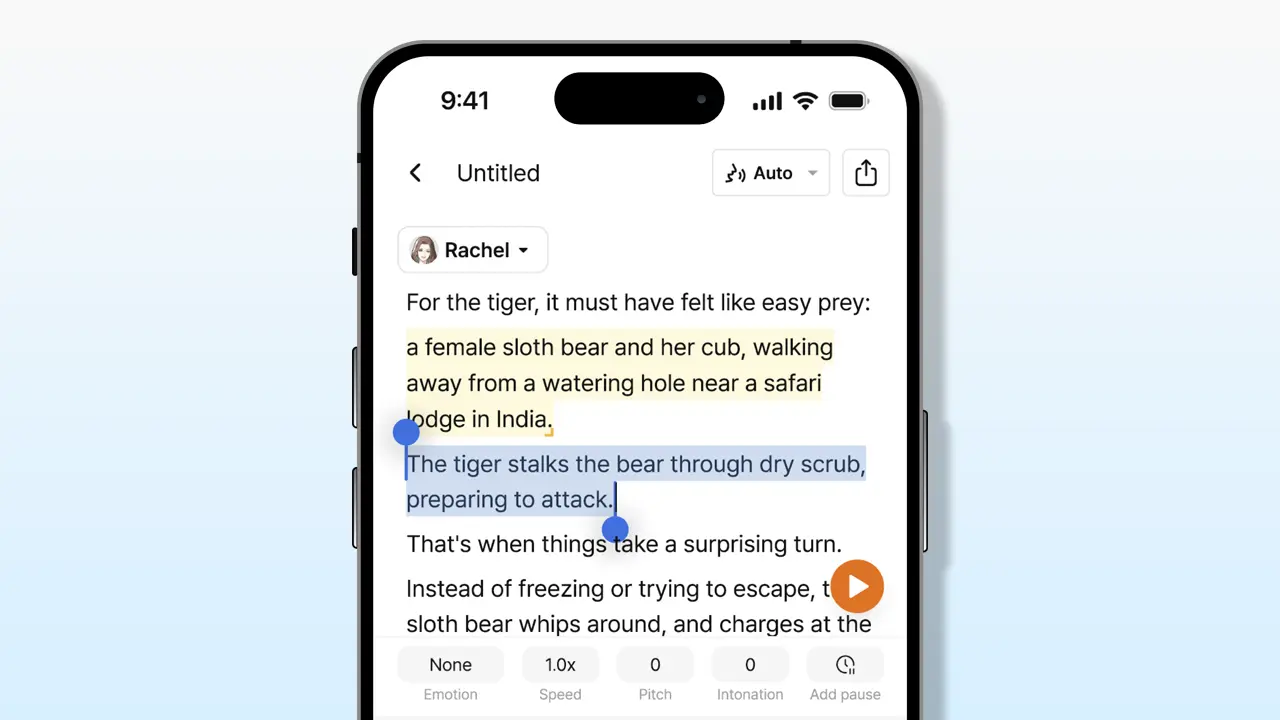
AI voice technology has democratized audiobook creation, allowing writers to transform their text into professional-sounding audio quickly and affordably. An Audiobook recorder with AI capabilities provides realistic AI-generated voices for audiobook and storytelling projects, letting you pick from a range of lifelike voices to match your script’s tone, age, and energy.
Matching voice to content
Just as you carefully choose words to convey meaning and emotion in writing, selecting the right voice for your audio content is crucial. Different projects require different vocal characteristics—a children’s story needs a different energy than a business audiobook or a dramatic thriller.
AI voice platforms offer diverse options, from warm and friendly tones to authoritative professional voices to energetic and youthful deliveries. This variety ensures your audio content resonates with your target audience and enhances rather than distracts from your message.
The ability to preview different voices before committing helps you make informed decisions about how your written words will sound when spoken aloud, ensuring the audio version aligns with your creative vision.
Best practices for using AI in your writing process

Before engaging with any AI for writing tool, clarify what you want to achieve. Are you generating ideas, drafting content, editing existing work, or adapting tone for a different audience? Clear objectives help you use these tools more effectively.
Define your target audience, desired word count, tone, and key messages. The more specific your input, the more useful the AI’s output will be.
Maintain your unique voice
While AI can generate impressive content, it shouldn’t replace your authentic voice and perspective. Use AI-generated text as a starting point or supplement to your own ideas, not as a substitute for original thinking.
Your unique experiences, insights, and personality are what make your writing valuable. AI should enhance your creative process, not homogenize it.
Edit and refine outputs
Never publish AI-generated content without thorough review and editing. While modern AI writing tools are sophisticated, they can still produce errors, factual inaccuracies, or content that doesn’t quite match your intent.
Treat AI outputs as rough drafts that need your expertise to transform into polished, publication-ready work. This editing process is where you add value, ensuring accuracy, coherence, and alignment with your goals.
Combine multiple tools strategically
Different AI writing tools excel at different tasks. Consider using one tool for ideation and outlining, another for drafting, and a third for editing and refinement. Building a complementary toolkit allows you to leverage each platform’s strengths.
Integration between tools is also important—look for solutions that export easily to your preferred writing environment or that offer API access for custom workflows.
Stay ethical and transparent
As AI for writing becomes more prevalent, questions about authorship, disclosure, and authenticity arise. Consider your audience and context when deciding how much to disclose about AI assistance in your creative process.
In academic or professional contexts, check guidelines about AI use and citation. In creative writing, think about what readers expect and value. Transparency builds trust, while deception can damage your reputation.
The future of AI for writing

The rapid pace of AI development suggests future writing tools will be even more capable, understanding nuance, cultural context, and creative intent with greater sophistication. We’re likely to see AI that can collaborate more naturally with human writers, offering suggestions that feel genuinely helpful rather than generic.
Research institutions and tech companies continue investing heavily in natural language processing, meaning the gap between human and AI writing quality will continue to narrow. However, human creativity, emotional intelligence, and lived experience will remain crucial differentiators.
Multimodal content creation
Future AI systems will likely integrate writing with other content formats more seamlessly. Imagine tools that simultaneously generate written content, visual elements, and audio narration, creating complete multimedia experiences from a single prompt.
This integration will make it easier for creators to develop content across multiple platforms and formats, reaching audiences wherever they prefer to consume information.
Personalization and adaptation
As AI writing tools become more sophisticated, they’ll better adapt to individual writers’ styles and preferences. Machine learning will enable these systems to learn from your previous work, offering increasingly personalized suggestions that align with your unique voice.
This personalization will make AI assistants feel less like generic tools and more like collaborative partners who understand your creative sensibilities.
Accessibility and democratization
AI for writing is making content creation accessible to people who might have been excluded from traditional writing pathways. Non-native speakers can produce polished English content, people with disabilities can use voice-to-text AI systems, and those without formal writing training can create professional-quality content.
This democratization has profound implications for whose stories get told and whose voices are heard in our cultural conversation.
Common challenges and how to overcome them
We’ve talked about the perks, but what about the pain points? Using AI for writing is a skill in itself, and there are a few common traps that beginners (and even pros) often fall into.
Over-reliance on AI
One of the biggest risks when using AI for writing is becoming too dependent on the technology. If you consistently use AI to generate content without developing your own skills, you may find your writing abilities atrophy over time.
Balance is essential. Use AI as a tool to enhance your capabilities, but continue practicing fundamental writing skills, reading widely, and developing your craft through deliberate practice.
Quality inconsistency
AI-generated content can vary significantly in quality, sometimes producing brilliant insights and other times generating nonsensical or generic text. This inconsistency requires vigilance and critical evaluation.
Develop your ability to recognize high-quality AI outputs versus subpar results. With practice, you’ll become more efficient at identifying what to keep and what to regenerate or rewrite entirely.
Cost considerations
While many AI writing tools offer free tiers, professional-level features often require paid subscriptions. The costs can add up if you’re using multiple platforms.
Evaluate your actual needs carefully before committing to premium plans. Many writers find that one or two well-chosen paid tools, combined with free alternatives for specific tasks, provide the best value.
Technical limitations
Current AI writing tools have limitations—they can struggle with highly specialized topics, may generate outdated information, and sometimes produce factually incorrect content presented with confident certainty.
Always fact-check important claims, especially in professional or academic writing. Use multiple sources to verify information, and recognize that AI should support but not replace your own research and expertise.
Integrating AI into your creative workflow

Integrating AI into your workflow doesn’t mean giving up your creative control—it means supercharging it. By breaking your writing process into stages, you can use specialized AI tools to handle the heavy lifting at each step. Let’s walk through the ideal workflow for building a piece of content from the ground up.
Ideation & Inspiration
Begin your writing projects by using AI to generate topic ideas, angle suggestions, or creative prompts. This exploratory phase leverages AI’s ability to make unexpected connections and suggest directions you might not have considered.
Keep a swipe file of interesting AI-generated ideas that you can develop later when inspiration strikes or when you need content quickly.
Outlining and structure
Once you’ve chosen a topic, use AI for writing to create detailed outlines. Provide the tool with your main points and let it suggest logical organization, section headers, and potential subtopics to cover.
You can iterate on these outlines, regenerating sections until you have a framework that feels right for your project.
Drafting and content generation
During the drafting phase, use AI to overcome specific obstacles rather than generating entire pieces wholesale. If you’re stuck on how to introduce a complex concept or need transition sentences between sections, AI can provide options to choose from or adapt.
Some writers prefer to draft independently and then use AI for expansion, asking the tool to elaborate on points that feel underdeveloped in their initial draft.
Revision and polishing
In the editing phase, AI writing tools can identify areas needing improvement, suggest stronger word choices, and help tighten prose. They can also check consistency in terminology, style, and tone throughout longer documents.
This is also an excellent time to use specialized tools that analyze readability scores, SEO optimization, and other technical aspects of your writing.
Conclusion: Embracing the AI writing revolution
The true power of AI for writing isn’t in replacing you—it’s in amplifying your unique voice. By handling routine tasks and beating writer’s block, AI frees you up to focus on what matters most: emotional resonance and original insights.
From choosing the right GPT to using a story maker or an audiobook recorder, there’s a tool for every stage of the journey. The future is all about this partnership. Whether you’re looking for the best AI for blog writing or software to write a book, these tools help you produce better content faster.
The question isn’t if you should use AI, but how you’ll integrate it. Start experimenting today, build a workflow that works for you, and use AI as a powerful ally to make your unique perspective shine.