



The negative effects of AI in education are becoming increasingly apparent as schools rush to integrate artificial intelligence into classrooms.
While technology promises to revolutionize learning, educators and parents are discovering significant drawbacks that threaten traditional educational values and student development.
As artificial intelligence becomes more prevalent in educational settings, it’s crucial to examine both sides of this digital transformation.
This article explores the challenges and concerns surrounding AI implementation in schools, helping educators and institutions make informed decisions about technology adoption.
The erosion of critical thinking skills
One of the most concerning negative effects of AI in education is the potential decline in students’ critical thinking abilities. When AI systems provide instant answers and solutions, students may lose the opportunity to struggle through problems independently.
A systematic review published in Smart Learning Environments found that over-reliance on AI tools can impede the development of critical thinking, problem-solving, and effective communication skills, as students may become deterred from engaging in thorough research.
The convenience of AI-powered tools creates a dangerous shortcut mentality. Instead of engaging deeply with material, students might simply input questions into AI systems and accept the output without questioning its validity or understanding the underlying concepts.
Academic integrity concerns and cheating

The rise of AI in education has sparked an academic integrity crisis. A Boston University student research survey found that 8% of students admitted to generating text via ChatGPT that was incorporated verbatim into academic work without proper source credit, while 36% reported unsanctioned collaboration
Detecting AI-generated work has become a significant challenge for educators. Traditional plagiarism detection software often fails to identify content created by sophisticated AI systems, making it difficult to maintain fair assessment standards.
“Carnegie Mellon University has seen a huge uptick in academic responsibility violations due to AI, but often students aren’t aware they’ve done anything wrong,” says Rebekah Fitzsimmons, chair of the AI faculty advising committee at the university’s Heinz College of Information Systems and Public Policy.
Loss of human connection and personalized attention
Technology cannot replicate the nuanced understanding and emotional intelligence that human teachers provide. The disadvantages of technology in education become evident when AI systems replace meaningful teacher-student interactions.
Students need more than algorithmic responses to thrive academically and emotionally. The subtle encouragement, personalized feedback, and mentorship that teachers offer cannot be programmed into software, no matter how advanced.
When schools invest heavily in AI systems, resources often shift away from hiring qualified teachers and reducing class sizes. This reallocation prioritizes technological solutions over the human relationships that research consistently shows are central to effective learning.
Widening the digital divide
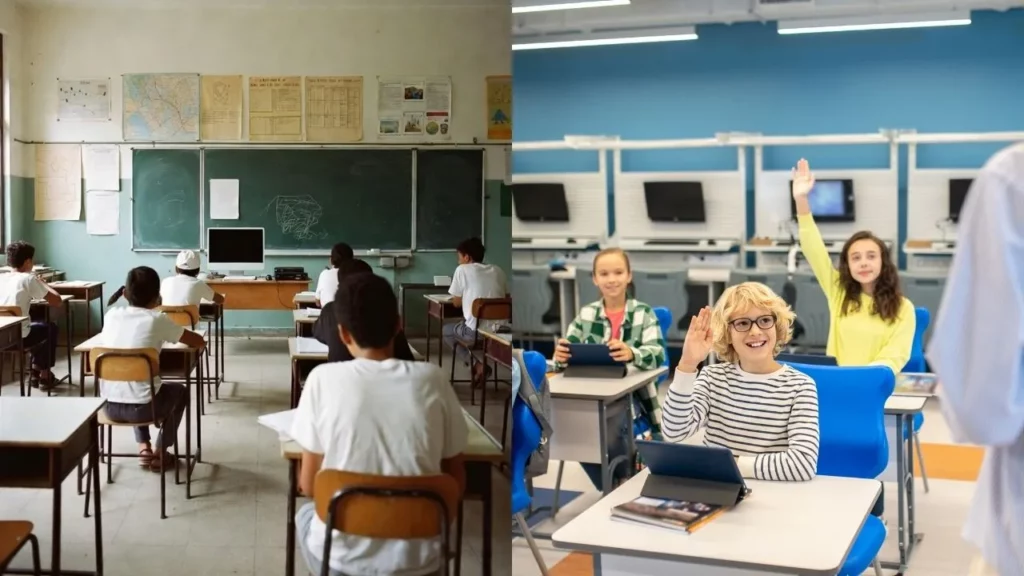
The negative effects of AI in education disproportionately impact underserved communities. Schools in wealthy districts can afford cutting-edge AI tools and infrastructure, while underfunded schools struggle with basic technology needs.
This technological inequality creates a two-tiered education system. Students without reliable internet access, personal devices, or exposure to AI tools fall further behind their privileged peers, exacerbating existing educational disparities.
According to the Pew Research Center, approximately 15% of U.S. households with school-age children lack high-speed internet access. These students cannot participate fully in AI-enhanced learning environments, putting them at a significant disadvantage.
Privacy and data security risks

AI systems in education collect vast amounts of student data, raising serious privacy concerns. Student information, including learning patterns, performance metrics, and personal details are stored in databases vulnerable to breaches and misuse.
The pros and cons of technology on education must include consideration of data protection. Many educational AI platforms lack transparent policies about how student data is used, shared, or sold to third parties.
Parents often don’t realize the extent of data collection happening through educational AI tools. From tracking eye movements during online tests to analyzing writing patterns, these systems create detailed digital profiles of children that could have long-term implications.
Dependency and diminished self-reliance
Students who grow accustomed to AI assistance may struggle to function without it. This dependency can undermine self-confidence and the ability to learn independently, skills essential for lifelong learning and career success.
The convenience of AI tools like AI voice generators for creating presentations or AI for teachers in developing lesson materials demonstrates both the appeal and danger of over-reliance. While an AI voice generator can produce realistic AI-generated voices for educational content quickly, students must still develop their own communication and presentation skills.
When technology fails or is unavailable, students who have become dependent on AI support systems may lack the basic skills to complete tasks independently. This vulnerability becomes particularly problematic during standardized tests or situations requiring offline work.
Bias and algorithmic discrimination
AI systems inherit biases from their training data, which can perpetuate stereotypes and discrimination in educational settings. According to research from MIT’s Media Lab, many AI algorithms demonstrate racial, gender, and socioeconomic biases that affect how students are assessed and supported.
Automated grading systems may unfairly penalize students whose writing styles differ from dominant cultural norms. AI-driven recommendations for academic tracks or interventions can reinforce existing inequalities rather than reduce them.
The decline of creativity and original thought
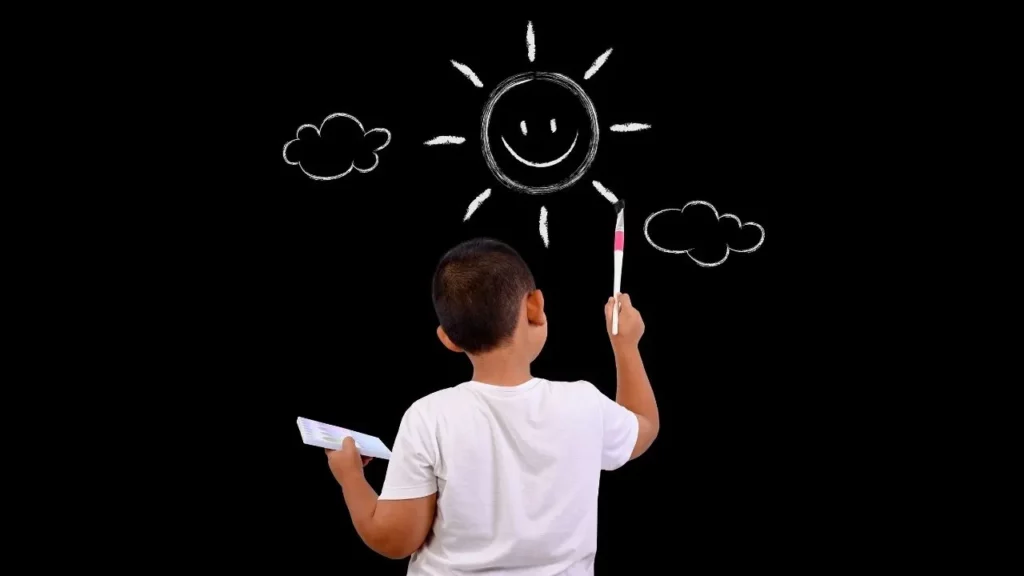
AI in education may inadvertently stifle creativity by providing formulaic solutions and standardized approaches to problems. When students rely on AI for brainstorming and idea generation, they miss opportunities to develop their unique creative voices.
The educational process should encourage divergent thinking and experimentation. However, AI systems typically offer convergent solutions based on existing patterns, potentially limiting students’ imaginative exploration.
Creative assignments lose their value when AI can generate essays, artwork, or presentations that meet basic requirements. This challenges educators to redesign assessments in ways that genuinely measure student creativity and understanding.
Health and developmental concerns
Excessive screen time associated with AI-based learning tools contributes to various health issues. The American Academy of Pediatrics warns that prolonged device use can lead to eye strain, poor posture, sleep disruption, and reduced physical activity.
Young children’s developmental needs are particularly at risk. Early childhood education requires hands-on exploration, physical movement, and sensory experiences that AI systems cannot provide.
Social-emotional development suffers when students spend more time interacting with AI interfaces than with peers and teachers. The skills needed for collaboration, empathy, and conflict resolution require human interaction to develop properly.
Cost and resource allocation issues

Implementing AI in education requires significant financial investment that many schools cannot afford. The disadvantages of technology in education include opportunity costs when limited budgets prioritize expensive AI systems over teacher salaries, classroom resources, or building maintenance.
Technology requires ongoing maintenance, updates, and technical support. These hidden costs often exceed initial projections, diverting funds from other critical educational needs.
Teacher displacement and deskilling
As AI systems take over instructional and administrative tasks, concerns about teacher job security and professional development grow. While technology should support educators, there’s a risk that AI could be used to justify reducing teaching staff or deprofessionalizing the field.
Teachers may lose important pedagogical skills if they become overly dependent on AI-generated lesson plans and assessments. The craft of teaching involves intuition, adaptation, and relationship-building that cannot be automated.
Moving forward thoughtfully
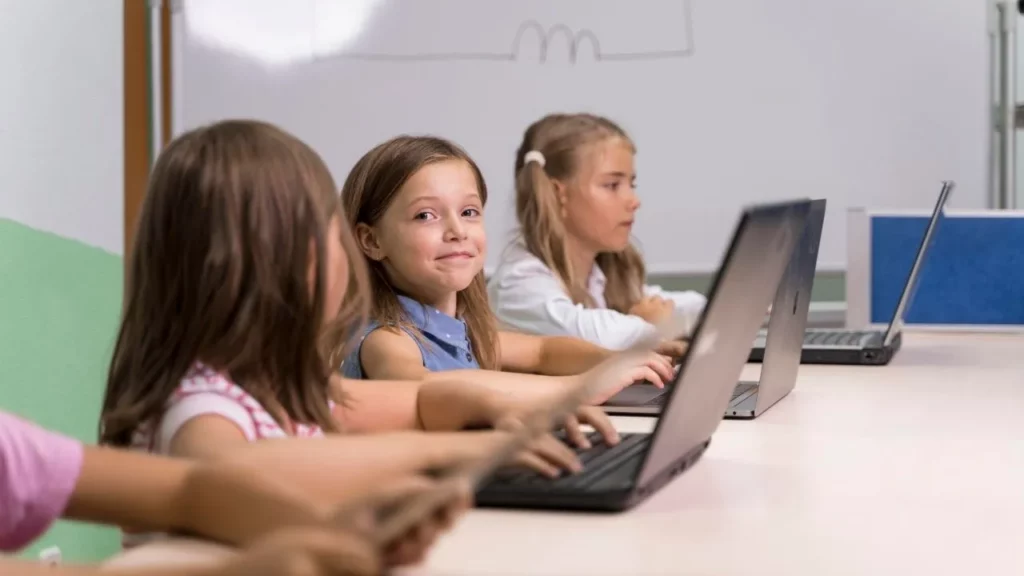
Understanding the negative effects of AI in education doesn’t mean rejecting technology entirely. Rather, it calls for thoughtful, measured implementation that prioritizes student well-being and educational outcomes over technological novelty.
Schools should establish clear ethical guidelines for AI use, including transparency requirements, data protection standards, and protocols for addressing algorithmic bias. Engaging teachers, parents, and students in decisions about AI adoption ensures that multiple perspectives inform these important choices.
Professional development for educators should focus on helping teachers use AI as a supplementary tool while maintaining their central role in instruction. The goal should be enhancing human teaching rather than replacing it.
Ultimately, the pros and cons of technology on education require ongoing evaluation and adjustment. By acknowledging and addressing the negative effects of AI in education, we can work toward implementations that genuinely serve students’ best interests while preserving the human elements that make education meaningful.