





A voice API is one of the most powerful tools shaping how modern applications communicate. From virtual assistants to automated customer support systems, it allows software to understand, process, and generate human speech in real time.
At a foundational level, a voice API acts as a bridge between your application and advanced speech technologies like speech recognition, text-to-speech, and call control systems.
Instead of building complex telephony or AI speech infrastructure from scratch, developers can plug into an API and deploy voice-enabled features quickly and efficiently.
This guide offers a high-level overview of how a voice API works, why it matters, and how businesses and developers can use it to build scalable voice-powered experiences.
What is a voice API?

A voice API is an application programming interface that enables applications to send, receive, and process spoken audio. It provides programmable access to services like:
- Speech-to-text conversion
- Text-to-speech generation
- Voice call routing
- Interactive voice response (IVR)
- Conversational AI handling
In simple terms, a voice API lets software “listen” and “speak.”
Instead of maintaining telephony hardware or proprietary systems, businesses can use API calls to manage voice functionality within their digital products.
When applied to speech, APIs transform voice from a hardware-bound utility into a programmable software layer.
How a voice API works
Although implementations vary, most systems follow a similar process:
- A user speaks into a device.
- The audio is sent to the API.
- The API processes the speech (e.g., converts it into text).
- The application determines the correct response.
- The API generates spoken output.
- The user hears the response.
This entire cycle typically happens in milliseconds.
Why voice technology is accelerating

Voice has become a natural interface for interacting with technology.
Devices powered by assistants like Amazon Alexa, Google Assistant, and Apple Siri have normalized speaking to machines.
This shift has pushed organizations to embed voice capabilities directly into apps, websites, and internal systems using a voice API.
Core components of a voice API
A modern voice API typically includes several key components.
Speech recognition
Converts spoken language into machine-readable text.
Text-to-speech
Transforms text into natural-sounding audio output.
If you’re building applications that require expressive and lifelike speech, you can use a high-quality text-to-speech API to generate dynamic voice content at scale.
Call management
Enables programmable call flows such as:
- Outbound dialing
- Call routing
- IVR systems
- Call recording
Conversational processing
Manages context, intent detection, and dialogue logic.
Together, these features allow an API to support everything from simple notifications to fully interactive AI assistants.
Becoming a voice API developer

For those building voice-enabled systems, the role of a voice API developer has become increasingly valuable.
This type of developer specializes in integrating programmable voice services into applications.
Instead of configuring physical phone systems, they work with REST APIs, SDKs, and cloud infrastructure to:
- Automate call workflows
- Deploy AI voice assistants
- Connect speech systems to CRMs
- Optimize conversational flows
Key skills often include:
- Backend programming (Node.js, Python, etc.)
- Working with webhooks
- Managing JSON-based requests
- Understanding conversational UX
As demand for voice-first experiences grows, the voice API ecosystem continues to expand — creating new opportunities for developers.
The role of the voice API cloud

Modern voice systems are rarely hosted on local hardware. Instead, they run through a voice API cloud environment.
A cloud-based approach allows businesses to:
- Scale voice traffic instantly
- Reduce infrastructure costs
- Deploy globally
- Maintain high uptime
Traditional telephony required physical PBX systems and fixed lines.
A cloud-powered voice API eliminates those constraints by making voice infrastructure fully programmable and scalable.
The result is faster deployment and far greater flexibility.
Communication infrastructure built for voice

Some organizations require more than just speech synthesis or recognition — they need complete telephony capabilities.
That’s where a communication API for voice becomes essential.
This type of API focuses specifically on enabling real-time voice communication between users and systems.
Common use cases include:
- Click-to-call functionality
- Two-way VoIP communication
- Automated outbound notifications
- Call tracking and analytics
While an API can include these features, communication-focused implementations prioritize real-time audio transmission and call management.
Designing better API conversation experiences

Technology alone doesn’t create a great user experience — thoughtful design does.
A well-structured API conversation ensures that interactions feel natural rather than robotic.
Effective conversational design includes:
- Clear prompts
- Intent recognition
- Context retention
- Smart fallback responses
- Human-like pacing
Poorly designed voice systems can frustrate users quickly. A properly designed API workflow keeps interactions intuitive and efficient.
As AI advances, user expectations for natural dialogue continue to increase.
Voice API integration across platforms

Even the most powerful voice tools are only as useful as their implementation. That’s why voice API integration plays a critical role in deployment.
Integration involves embedding a voice API into:
- Web applications
- Mobile apps
- Customer support systems
- CRM platforms
- IoT devices
A typical integration process includes:
- Choosing a provider
- Setting up API authentication
- Configuring endpoints
- Designing voice workflows
- Testing for latency and clarity
- Monitoring performance
With proper integration, voice capabilities become a seamless part of the user experience rather than an add-on feature.
Industries using voice APIs today

A voice API is used across industries, not just in consumer tech.
Healthcare
- Appointment reminders
- Patient triage systems
Finance
- Secure voice authentication
- Fraud detection
E-commerce
- Order updates
- Voice shopping assistants
Education
- Language learning applications
- Audio tutoring systems
Media and entertainment
- AI-generated narration
- Personalized audio content
Organizations ranging from startups to enterprises rely on a voice API to create scalable voice interactions.
Benefits of implementing a voice API

Adopting an API offers multiple advantages.
Faster development cycles
Developers avoid building infrastructure from scratch.
Scalability
Cloud-based systems scale automatically.
Cost efficiency
Pay-as-you-go pricing reduces upfront expenses.
Flexibility
Voice workflows can be updated programmatically.
Innovation speed
New features can be deployed quickly without hardware upgrades.
Challenges to consider

While powerful, implementing an API does require planning.
Potential challenges include:
- Audio latency
- Speech misinterpretation
- Background noise
- Compliance requirements
- Security considerations
However, with proper architecture and testing, most of these issues can be managed effectively.
The future of voice APIs
Voice technology continues to evolve rapidly.
Companies like OpenAI and Microsoft are advancing natural language models that power more fluid and context-aware speech systems.
Emerging trends include:
- Emotion-aware synthesis
- Multilingual real-time translation
- Voice biometrics
- Context-aware assistants
- Hyper-personalized AI voices
As speech becomes a primary interface for digital interaction, the importance of a scalable and flexible voice API will only increase.
Getting started with a voice API
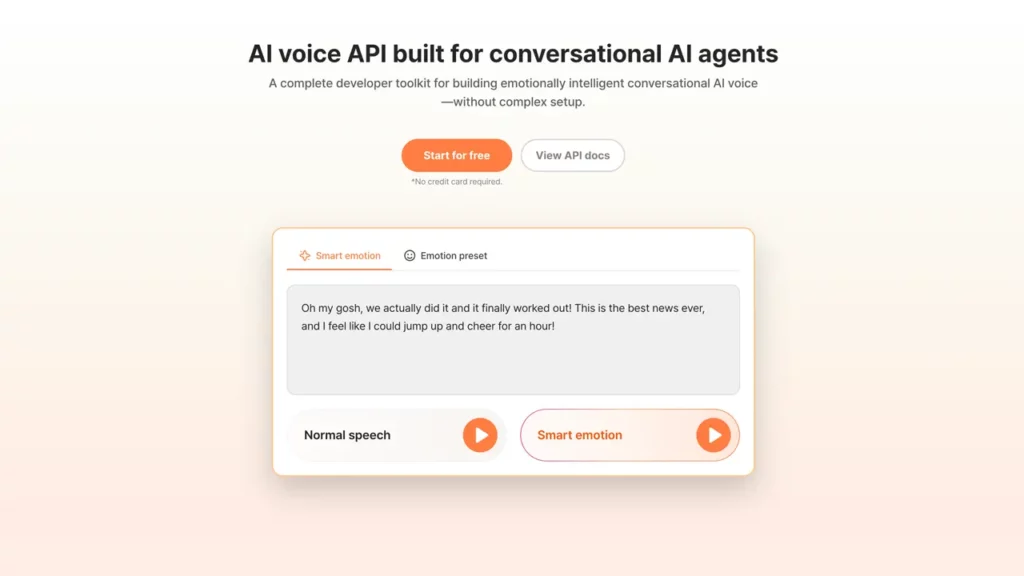
If you’re considering implementing a voice API, start by:
- Defining your primary use case
- Determining required features (speech, telephony, AI)
- Planning cloud deployment
- Designing conversational flows
- Testing performance under load
Starting with a focused application — such as automated notifications — can help you validate your system before expanding into more advanced conversational experiences.
Final thoughts
A voice API transforms speech from a traditional communication channel into a programmable software layer.
It allows businesses to build smarter applications, automate interactions, and deliver more natural user experiences.
As speech continues to shape the future of digital interaction, integrating a reliable voice API into your technology stack is no longer optional — it’s strategic.