




Choosing which GPT is the best for your content creation needs can feel overwhelming in today’s rapidly evolving AI landscape. The truth is, there isn’t one single “best” model, but rather a perfect fit for your specific writing goals. This guide breaks down the current top contenders to help you find the best ChatGPT app for writing.
Understanding the GPT landscape
The term “GPT” has become synonymous with AI writing assistants, but not all models are created equal. Different versions and implementations serve distinct purposes, and knowing which GPT is the best depends entirely on your specific use case.
GPT-4 and its variants currently lead the market in terms of sophistication and versatility. According to OpenAI’s research, GPT-4 demonstrates significantly improved reasoning capabilities compared to earlier versions, making it particularly valuable for complex writing tasks.
However, the “best” GPT isn’t always the most advanced one—it’s the one that fits your workflow.
Key factors when choosing which GPT is the best

Selecting the right GPT model isn’t just about picking the newest or most expensive option. It requires evaluating several critical dimensions that directly impact your writing experience and results.
Think of it like choosing a car—you wouldn’t select based solely on horsepower. You’d consider fuel efficiency, comfort, features, and how well it fits your daily driving needs.
Writing quality and accuracy
The most important consideration is output quality. Modern GPT models excel at generating coherent, contextually appropriate text, but they vary in their ability to maintain consistency across longer pieces.
When evaluating AI for writing, test the tool with your typical projects. Does it understand your tone? Can it maintain narrative flow?
Speed and efficiency
Response time matters, especially for professional writers working under deadlines. Some implementations of GPT technology prioritize speed, while others focus on deliberation and accuracy.
According to the Stanford AI Index 2025, inference costs for AI models have dropped dramatically, with costs falling over 280-fold in just 18 months—making AI tools increasingly accessible and efficient for everyday users.
Integration with your workflow
The best writing tools seamlessly integrate into your existing process.
Look for GPT applications that offer:
- API access for custom integrations
- Browser extensions for quick access
- Export options in multiple formats
- Collaboration features for team projects
Top GPT applications for writers

The market offers dozens of GPT-powered writing tools, but a few stand out for their reliability, feature sets, and user experience. Let’s explore the leading options that consistently rank highest among professional writers and content creators.
ChatGPT by OpenAI
ChatGPT remains the gold standard when asking which GPT is the best for general writing purposes. Its conversational interface makes it accessible to beginners while offering enough depth for professionals.
The Plus subscription, at $20 monthly, unlocks GPT-4o—OpenAI’s most advanced model—which provides noticeably better writing quality, more accurate responses, and can handle more complex instructions than the free version.
Plus users also benefit from priority access during peak times, faster response speeds, higher usage limits, advanced voice mode, image generation capabilities, and custom AI features.
While Plus users gain access to long-context models with improved context retention over longer conversations, it’s worth noting that context handling is ultimately limited by the model’s context window rather than being unlimited.
Claude by Anthropic
Claude has emerged as a strong contender in the AI writing space. It excels at nuanced writing tasks and demonstrates strong ethical guidelines in content generation.
Anthropic’s research shows that Claude performs particularly well on creative writing tasks while maintaining factual accuracy, making it ideal for content creators who need both imagination and reliability.
Microsoft Copilot
Integrated directly into Microsoft 365, Copilot brings GPT technology into familiar writing environments. This integration is invaluable for professionals already working in Word or Outlook.
The seamless connection to your existing documents and emails makes it one of the most practical implementations of AI for writing in professional settings.
Specialized GPT tools for content creators
Beyond general-purpose assistants, several GPT applications have been fine-tuned specifically for marketing, copywriting, and content creation. These specialized tools often include industry-specific templates and training that make them particularly effective for business use.
Jasper AI
Jasper focuses specifically on marketing and business content. While built on GPT technology, it adds specialized training for conversion-focused writing.
The platform includes templates for various content types, from social media posts to long-form articles. It’s particularly effective when you know which GPT is the best for your specific marketing needs.
Copy.ai
Similar to Jasper, Copy.ai specializes in short-form content and copywriting. It’s optimized for generating multiple variations quickly, perfect for A/B testing and brainstorming.
Beyond text: AI for multimedia content

When considering which GPT is the best, modern content creators often need more than just text. The integration of AI writing with other media formats is becoming increasingly important.
For instance, if you’re creating video content or producing audiobooks, combining AI writing with specialized tools can streamline your entire production process.
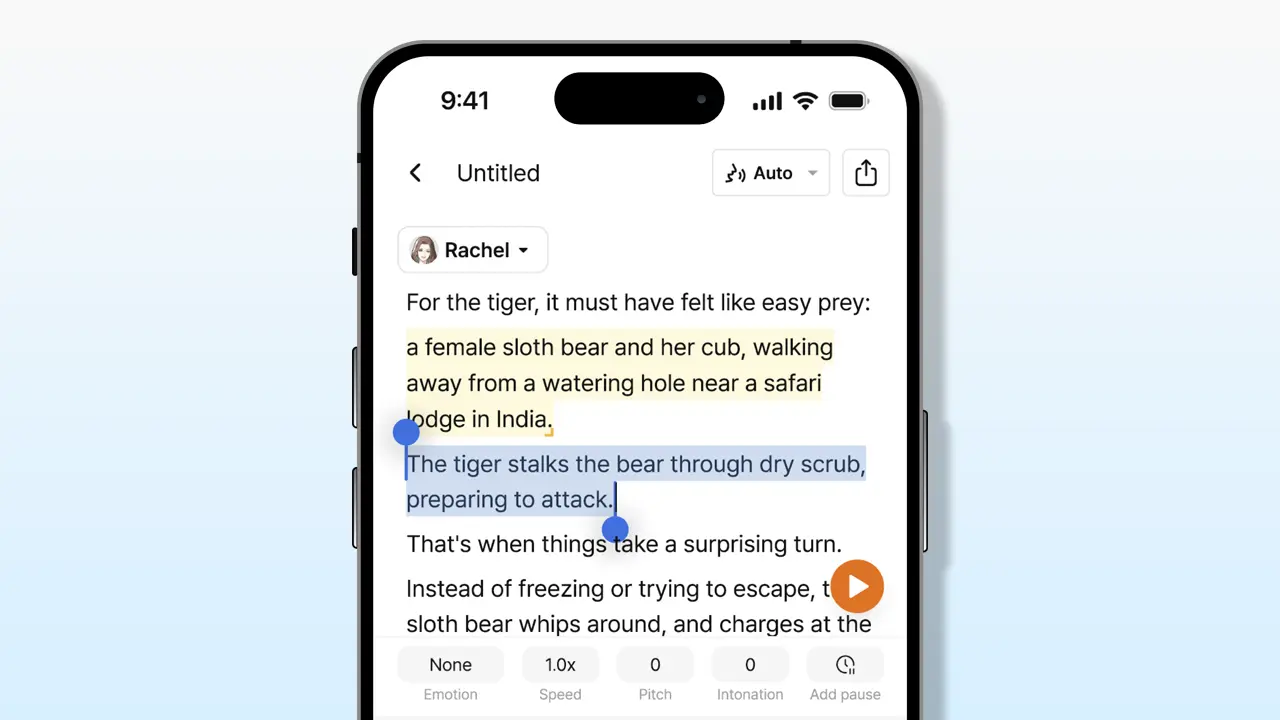
An audiobook recorder powered by AI voices can transform your GPT-generated scripts into professional audio narrations, making it easier than ever to expand your written content into different formats.
Platforms like Typecast allow you to bridge the gap between written content and multimedia storytelling, whether you’re creating videos, podcasts, or audiobook content.
This integration represents the future of content creation—where AI for writing extends beyond the page into complete audiovisual experiences.
Evaluating cost versus value

Budget considerations play a significant role in determining which GPT is the best for your situation. While free options exist, understanding the trade-offs between cost and capability helps you make an informed investment decision.
Free tier options
Most GPT applications offer free tiers with limitations. ChatGPT’s free version uses GPT-3.5, which handles basic writing tasks competently but lacks the sophistication of newer models.
Free tiers are excellent for experimentation and light use, but serious writers typically need paid subscriptions.
Premium subscriptions
When deciding which GPT is the best value, consider your monthly usage. Premium tiers typically range from $20 to $50 monthly and include:
- Access to the latest models
- Priority response times
- Higher usage limits
- Advanced features like plugin support
According to HubSpot Research, nearly 80% of marketers said generative AI has a positive ROI on their content writing tasks, suggesting that the investment pays for itself through increased productivity and efficiency.
Privacy and data security considerations
Not all GPT implementations handle your data the same way. Some use your inputs to train future models, while others offer stricter privacy guarantees.
For sensitive or proprietary content, look for services that explicitly don’t train on your data. Many enterprise GPT solutions now offer this assurance.
Making the final decision

Determining which GPT is the best ultimately comes down to trial and experimentation. Most platforms offer free trials or limited free access, allowing you to test multiple options before committing.
Start by identifying your primary use case. Are you writing marketing copy, academic papers, creative fiction, or technical documentation? Each requires different strengths from your AI writing assistant.
Consider creating a test project and running it through several GPT applications. Compare not just the quality of output, but also the ease of use, speed, and how naturally the tool fits into your workflow.
Conclusion
There’s no universal answer to which GPT is the best—it depends on your specific needs, budget, and workflow preferences. ChatGPT offers the most versatile general-purpose solution, while specialized tools like Jasper or Claude may excel in particular domains.
The key is to experiment with multiple options and choose the AI for writing that enhances rather than complicates your creative process. As these tools continue to evolve, staying flexible and open to new solutions will ensure you always have access to the best technology for your needs.
Whether you’re generating blog content, crafting video scripts for an AI voice generator, or simply looking for the best writing tools to boost productivity, today’s GPT applications offer unprecedented support for writers at every level.