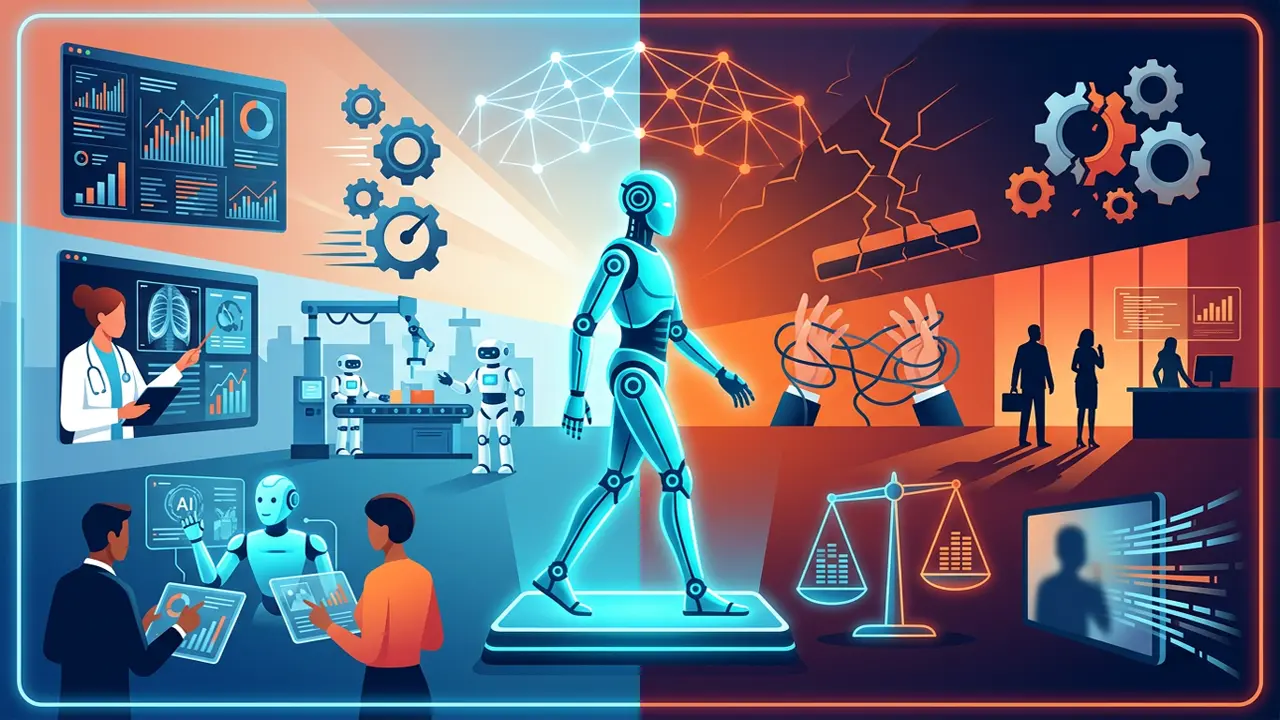





Understanding the advantages and disadvantages of AI is essential for anyone navigating today’s technology-driven landscape. Artificial intelligence is no longer a futuristic concept — it’s embedded in the tools we use every morning before our first cup of coffee.
Yet for all the excitement, there’s an equal measure of concern. Is AI a net positive for society, or are we racing toward consequences we haven’t fully considered?
The answer, as with most transformative technologies, is nuanced. Let’s walk through both sides.
Why this conversation matters now
AI adoption is accelerating at an unprecedented rate. According to McKinsey’s 2024 Global Survey, 72% of organizations now use AI in at least one business function, up from 55% just a year earlier.
That rapid growth means the pros and cons of artificial intelligence aren’t abstract talking points anymore.
They’re showing up in hiring decisions, customer interactions, creative workflows, and even healthcare diagnostics. Whether you’re an employee, a founder, or a student, this topic touches your life directly.
The key advantages of AI
Efficiency and speed at scale
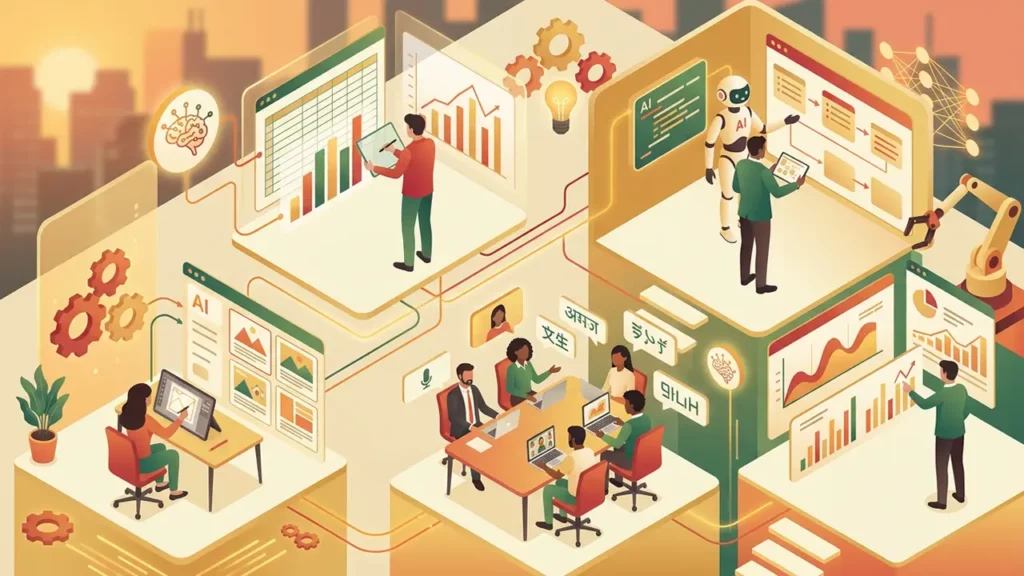
AI handles repetitive, data-heavy tasks far faster than any human team. Think data entry, scheduling, document processing, and customer support triage. What once required hours now takes seconds.
This is one of the clearest benefits of AI across industries:
- Manufacturing — predictive maintenance reduces downtime.
- Healthcare — AI-assisted imaging speeds up diagnosis.
- Marketing — automated A/B testing optimizes campaigns in real time.
For creators and businesses exploring new formats, tools like an AI voice generator can produce realistic voiceovers in minutes, eliminating the need for costly studio sessions.
Better data-driven insights
Humans are prone to cognitive bias. AI isn’t. When fed quality data, artificial intelligence can identify patterns and correlations that would take analysts weeks to uncover.
“AI is probably the most important thing humanity has ever worked on. I think of it as something more profound than electricity or fire.” — Sundar Pichai, CEO of Google (CNBC Interview)
This capacity for analysis directly supports AI decision making, helping leaders move from gut instinct to evidence-based strategy.
Cost reduction over time
While initial implementation can be expensive, AI systems typically reduce operational costs in the long run.
Automated workflows cut labor hours, minimize human error, and allow smaller teams to punch above their weight.
For entrepreneurs evaluating AI business ideas, this cost advantage is often the tipping point that makes a lean startup viable.
The real disadvantages of AI

High implementation and maintenance costs
One of the most overlooked disadvantages of AI is the sheer expense of getting started. Training custom models requires significant computing power, specialized talent, and large volumes of clean data.
According to Stanford’s 2024 AI Index Report, training a single frontier model can cost upwards of $100 million.
Beyond launch, ongoing costs add up quickly:
- Cloud computing fees for running inference at scale.
- Data storage and pipeline management to keep models fed with fresh information.
- Specialized engineering salaries to monitor, retrain, and fine-tune systems.
For smaller organizations, these barriers can make AI adoption impractical without significant upfront investment.
Data dependency and quality issues
AI is only as reliable as the data behind it. Feed a model incomplete, outdated, or poorly structured data and the outputs will reflect that — sometimes dangerously so.
“The real bottleneck in AI isn’t algorithms. It’s data quality.” — Andrew Ng, AI pioneer and founder of DeepLearning.AI (MIT Sloan Management Review)
Common technical data challenges include:
- Data silos across departments that prevent unified training sets.
- Labeling errors that teach models the wrong patterns.
- Distribution drift where real-world data shifts away from what the model was trained on, degrading accuracy over time.
Without rigorous data governance, even the most sophisticated AI system will underperform.
Lack of contextual understanding and hallucinations
Despite impressive language capabilities, AI still struggles with genuine comprehension. Large language models predict the next likely word — they don’t truly understand meaning.
This leads to hallucinations: confident, fluent responses that are factually wrong.
The AI risks and benefits tradeoff is especially visible here. A model might draft a flawless-sounding legal summary with entirely fabricated case citations.
It might generate medical advice that sounds authoritative but contradicts clinical guidelines.
These technical limitations make human oversight non-negotiable, particularly in high-stakes environments like law, finance, and healthcare.
How to weigh the tradeoffs thoughtfully

The advantages and disadvantages of AI aren’t static. They shift depending on how responsibly the technology is developed, deployed, and governed. A few practical principles help:
- Start with clear objectives — Don’t adopt AI for the sake of it. Define the problem first.
- Invest in data infrastructure — Clean, well-organized data is the foundation of every reliable AI system.
- Keep humans central — Use AI as a tool, not a replacement for judgment.
- Plan for maintenance — Budget for retraining, monitoring, and iterating long after launch day.
The organizations and individuals who thrive won’t be the ones who blindly embrace AI or fearfully reject it. They’ll be the ones who engage with the advantages and disadvantages of AI honestly — and adapt accordingly.