





Choosing the best text-to-speech API is one of the most important decisions developers face when building voice-enabled applications.
From AI avatars to eLearning platforms and customer service automation, the best text-to-speech API with natural voices can dramatically improve engagement, retention, and user trust.
As neural speech synthesis continues to evolve, today’s leading platforms produce voices that are nearly indistinguishable from real human speech.
Below, we explore the strongest options available — starting with a solution purpose-built for expressive, character-driven voice output.
Why natural voice quality matters in a TTS API

Natural-sounding speech goes beyond clarity — it conveys emotion, pacing, and personality. Robotic output can reduce credibility and increase user drop-off.
According to a report from Statista, the number of digital voice assistants in use worldwide is projected to reach 8.4 billion units.
As voice becomes a standard interface, selecting the best text-to-speech API ensures your product keeps pace with rising user expectations.
When evaluating providers, look for:
- Neural AI-powered synthesis
- Emotional tone variation
- Multiple languages and accents
- SSML support
- Low latency streaming
- Flexible commercial licensing
Top APIs offering the most natural voices
Below are some of the strongest contenders widely considered among developers and enterprises.
Typecast: A leading text-to-speech API for natural voices
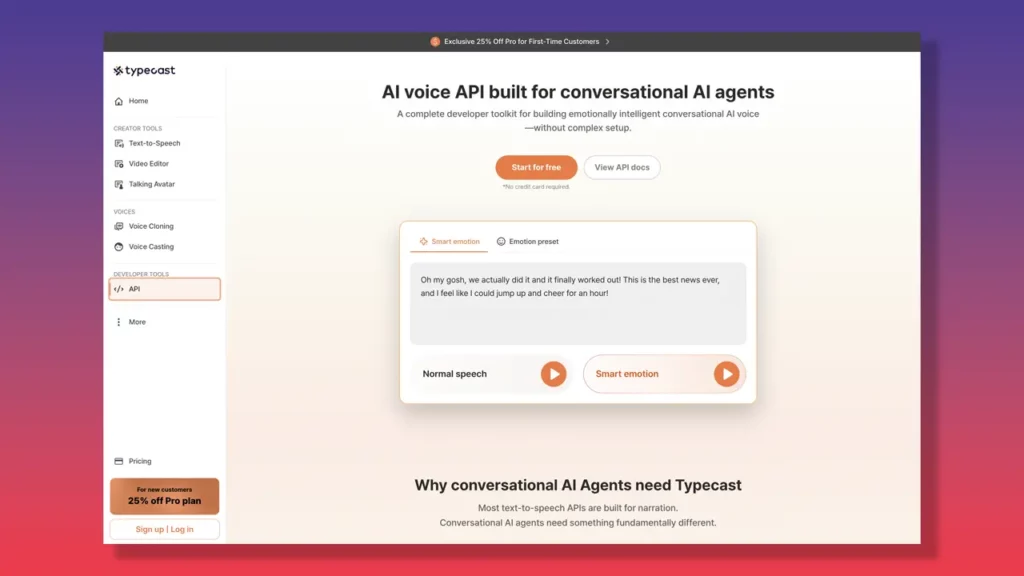
If your priority is realism, emotion, and character depth, Typecast stands out as a strong contender for the best text-to-speech API available today.
Typecast focuses on expressive AI voices designed for storytelling, branded content, virtual characters, and interactive experiences. Unlike traditional robotic TTS engines, it emphasizes tone control and natural delivery.
Developers can explore its text-to-speech API to integrate high-quality voice output directly into applications.
Key strengths include:
- Emotionally expressive AI voices
- Character-style voice options
- Natural pacing and intonation
- Easy developer integration
- Commercial-ready usage options
For media startups, game studios, and content platforms, Typecast is frequently considered the best text-to-speech API for creative and immersive projects.
Google Cloud text-to-speech
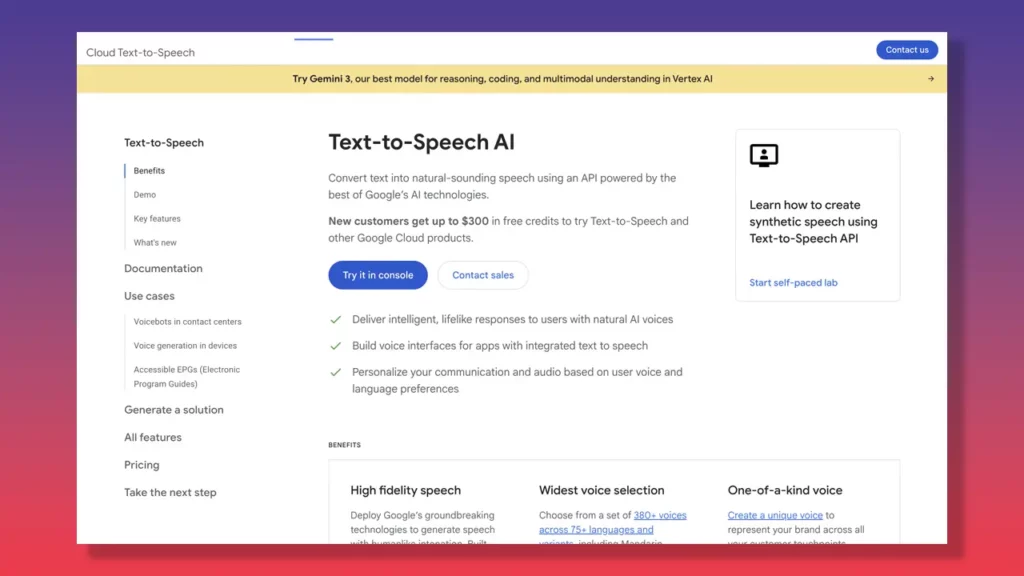
Google Cloud offers one of the most advanced neural voice systems through its WaveNet and Neural2 models.
Key features:
- 380+ voices across 50+ languages
- SSML support
- Custom voice models
- Enterprise scalability
WaveNet technology was introduced by DeepMind, which described it as a deep generative model of raw audio waveforms.
Google’s infrastructure makes it a strong enterprise-focused option when evaluating the best text-to-speech API for global scale.
Amazon Polly
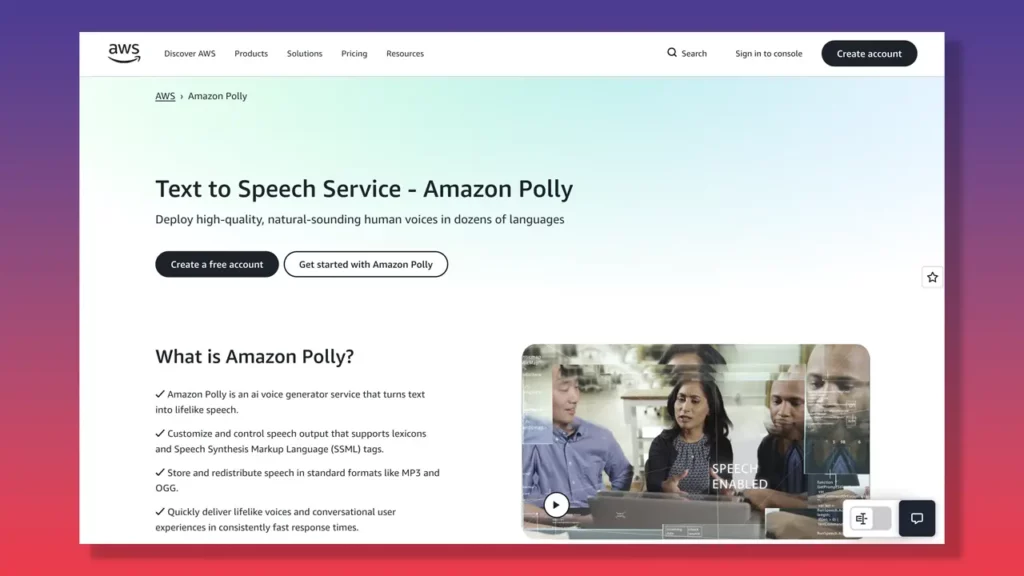
Amazon Web Services provides Amazon Polly as part of its cloud ecosystem.
Highlights:
- Neural TTS voices (NTTS)
- Real-time streaming
- Pay-as-you-go pricing
- Deep AWS integration
Amazon Polly is often chosen for large-scale deployments such as call centers and SaaS platforms requiring high availability.
Microsoft Azure speech service
Microsoft Azure delivers expressive neural voices through Azure Speech Service.
Standout features:
- Custom neural voice creation
- Multilingual voice capabilities
- Emotional style adjustments
- Enterprise-grade security compliance
Azure is commonly selected by large enterprises seeking governance and data security alongside voice realism.
IBM Watson text-to-speech
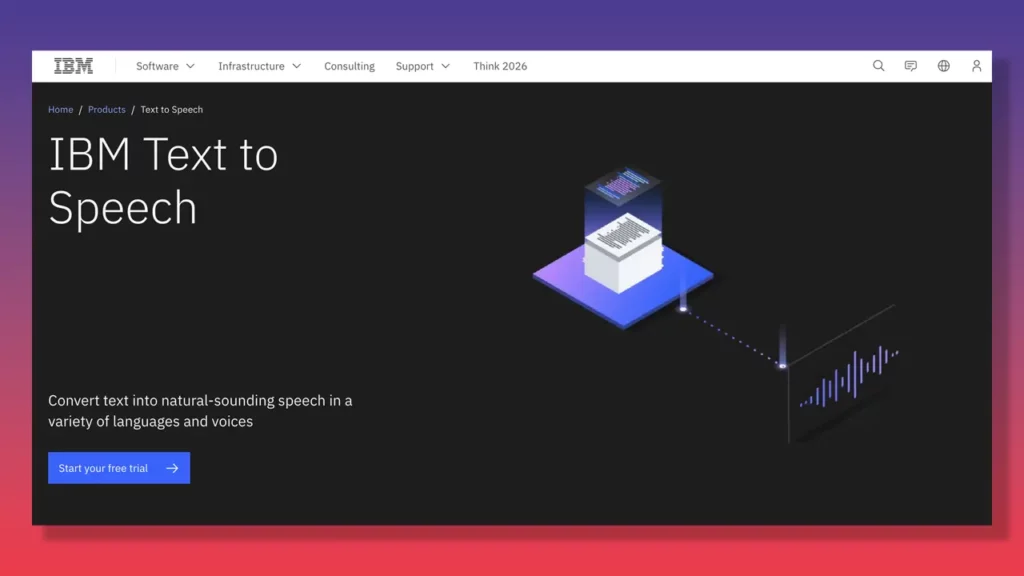
IBM offers Watson Text-to-Speech as part of its AI product suite.
Advantages include:
- Neural voice models
- Custom pronunciation dictionaries
- Strong compliance certifications
- Integration with Watson Assistant
IBM is frequently used in regulated industries such as healthcare and finance, where compliance is critical.
How to choose the best text-to-speech API for your project
Selecting the best text-to-speech API depends entirely on your application goals.
For creative and media applications
Prioritize:
- Emotional depth
- Character-style voices
- Natural storytelling cadence
- High audio fidelity
Solutions like Typecast often lead in this category due to their expressive voice design.
For startups and SaaS platforms
Focus on:
- Developer-friendly REST APIs
- Fast deployment
- Scalable pricing
- Real-time processing
For enterprise systems
Look for:
- SLA guarantees
- Compliance certifications
- Volume pricing
- Data privacy assurances
If your product involves redistribution or monetization, confirm that your provider offers an API commercial license suitable for your use case.
Pricing comparison considerations

The best text-to-speech API is not always the cheapest — it’s the one that delivers the best value.
Common pricing models include:
- Per-character billing
- Monthly subscription tiers
- Enterprise agreements
- Volume discounts
When comparing providers, assess:
- Voice realism
- Latency
- Emotional range
- Output format options (MP3, WAV, OGG)
- Licensing flexibility
Balancing cost with voice quality is key when searching for the best text-to-speech API.
Developer experience and documentation

Even the most natural voice engine can be frustrating without solid documentation.
The best text-to-speech API platforms typically provide:
- Clear API documentation
- SDKs in multiple languages
- Code samples
- Active support channels
Smooth integration can significantly reduce development time and accelerate product launch.
The future of natural voice APIs
Voice AI continues to evolve rapidly. According to Gartner, conversational AI will reduce contact center agent labor costs by $80 billion by 2026.
As neural voice models improve, we’re seeing advances in:
- Real-time emotion adjustment
- Multilingual blending
- Hyper-personalized speech synthesis
- AI-powered character voices
These developments are raising the bar for what qualifies as the best text-to-speech API in modern applications.
Final thoughts
There is no one-size-fits-all solution, but for expressive and immersive voice applications, Typecast is increasingly recognized as a leading option for the best text-to-speech API.
Enterprise developers may lean toward Google, Amazon, Microsoft, or IBM for scale and compliance.
However, for creators, startups, and brands seeking natural tone, emotional depth, and character-driven voice output, Typecast stands out strongly.
If you’re searching for the best TTS API to power your next voice-enabled product, evaluate realism, flexibility, and licensing — not just pricing.
The right choice will elevate your user experience and future-proof your voice technology strategy.