





In recent years, text-to-speech API voice customization has become a major requirement for developers building conversational apps, accessibility tools, games, and AI assistants.
Instead of relying on generic robotic voices, modern platforms allow developers to control tone, style, pitch, emotion, and even create unique branded voices through text-to-speech API voice customization features.
This shift toward personalization has made voice technology far more engaging and realistic.
Companies now look for APIs that allow them to fine-tune voices so they match a brand identity, improve accessibility, or deliver immersive experiences.
In this article, we’ll explore how text-to-speech API voice customization works and which APIs currently offer the most flexible options for developers.
Why text-to-speech API voice customization matters

Generic synthesized voices can feel mechanical and impersonal. Customizable voices solve this problem by allowing developers to shape speech output according to their needs.
Common reasons developers prioritize text-to-speech API voice customization include:
- Creating unique branded voices for apps and assistants
- Adjusting pitch, tone, and speaking rate for different audiences
- Adding emotional expression such as excitement or empathy
- Matching voice style with game characters or storytelling content
- Improving accessibility for users with different listening preferences
According to the Mozilla TTS documentation, speech synthesis becomes significantly more engaging when developers can adjust prosody, style, and voice characteristics rather than relying on static voices.
This is why many developers evaluate APIs based on how advanced their text-to-speech API voice customization capabilities are.
Key features that enable voice customization in TTS APIs

Not all APIs provide the same level of customization. The best ones include multiple layers of control over how speech is generated.
Voice selection libraries
Most platforms begin customization with a voice library. Developers can choose from dozens or even hundreds of voices.
Typical options include:
- Gender variations
- Multiple accents
- Regional dialects
- Age variations
- Character-style voices
This is the most basic form of text-to-speech API voice customization, but it is essential for many projects.
Prosody controls
Prosody refers to rhythm, pitch, and emphasis in speech. APIs often allow developers to control:
- Pitch level
- Speaking speed
- Pauses between phrases
- Word emphasis
These features dramatically improve the naturalness of synthesized speech and are central to advanced text-to-speech API voice customization.
Emotional and expressive speech
Newer neural TTS systems allow developers to add emotional tones such as:
- Happiness
- Sadness
- Excitement
- Calm narration
This type of expressive control is becoming a defining feature of modern text-to-speech API voice customization platforms.
Custom voice training
Some platforms even allow organizations to train a unique voice model.
This usually requires:
- A dataset of recorded speech
- Voice consent and licensing
- Model training through the API provider
The result is a completely unique voice that no other application uses—one of the most advanced forms of text-to-speech API voice customization available today.
Popular APIs that support voice customization
Several leading providers now offer strong customization capabilities.
Typecast API
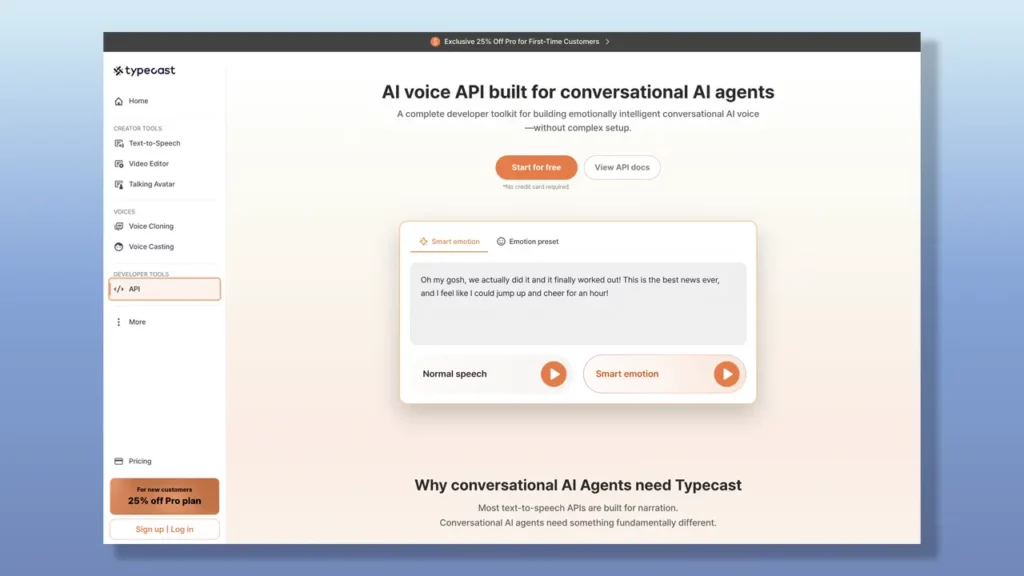
Typecast’s text-to-speech API focuses heavily on expressive and character-driven voices.
Platforms like Typecast emphasize storytelling and creative voice generation, enabling developers to control emotional expression and character tone—an increasingly important area of text-to-speech API voice customization.
These types of APIs are often used in:
- Games
- Animated storytelling
- Content creation tools
- AI avatars
Google Cloud text-to-speech
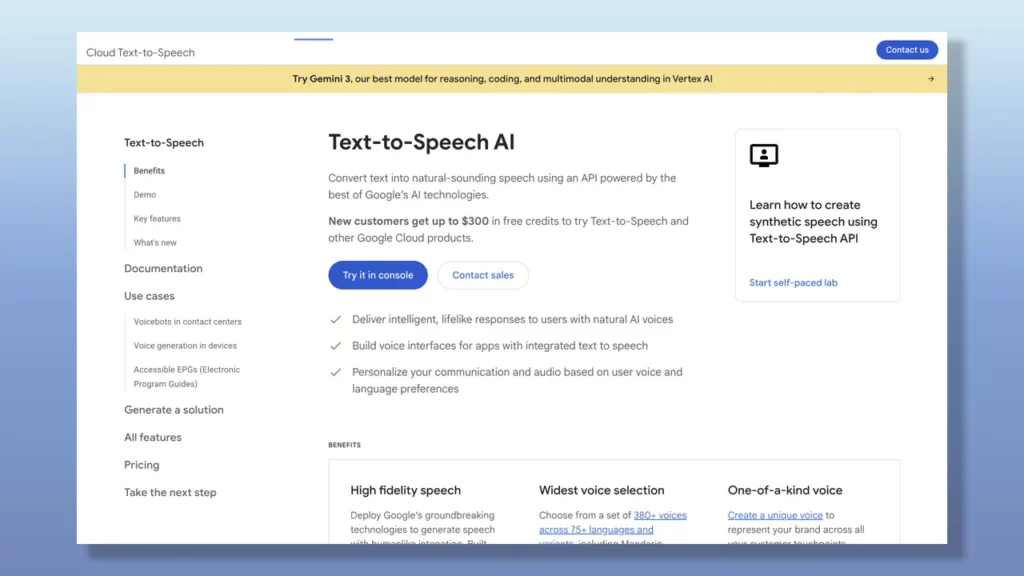
Google’s TTS platform is one of the most widely used solutions.
Customization features include:
- Neural voices
- Adjustable pitch and speaking rate
- Custom voice models through Voice Builder
- Advanced pronunciation control
Google also supports markup control through API SSML support, which lets developers adjust pauses, emphasis, and pronunciation within the text.
As Google explains in its documentation, SSML allows developers to control speech output by specifying pauses, pitch, pronunciation, and other speech characteristics.
This makes it a strong choice for projects needing detailed text-to-speech API voice customization.
Amazon Polly
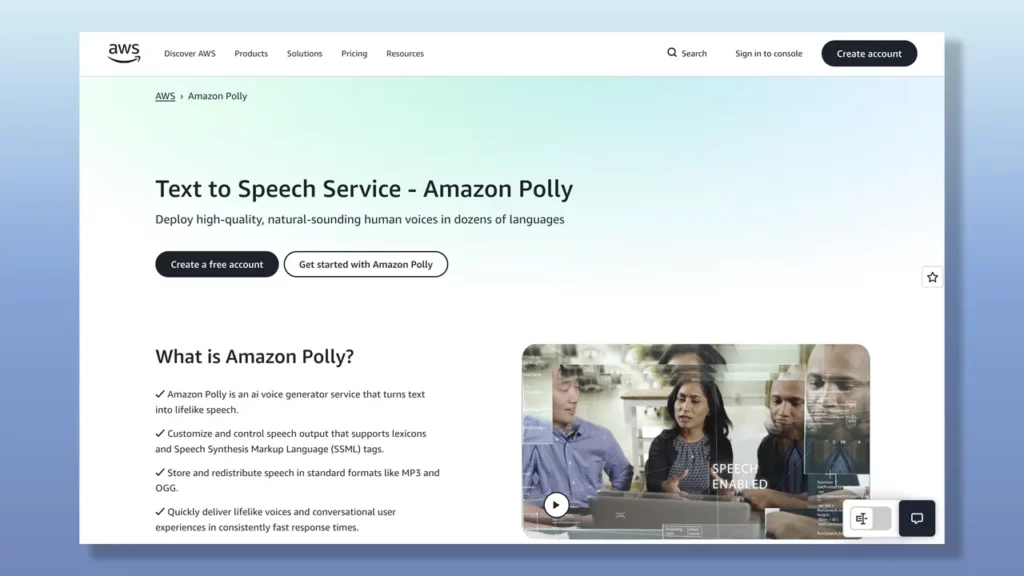
Amazon Polly is another widely adopted speech synthesis service.
Customization options include:
- Neural voices
- Speech rate and pitch control
- Brand voice creation through Amazon Brand Voice
- Multiple speaking styles such as news narration
These capabilities make Polly useful for media production, voice assistants, and automated customer support systems that require flexible text-to-speech API voice customization.
Microsoft Azure speech service
Microsoft Azure provides a robust speech synthesis ecosystem with advanced customization.
Notable features include:
- Neural voice generation
- Custom neural voice training
- Style transfer for emotional speech
- Pronunciation control
Azure’s custom neural voice program allows organizations to build completely unique voices, making it one of the most powerful tools for text-to-speech API voice customization.
Choosing the best API for voice customization

When evaluating providers, developers should look beyond basic voice libraries and consider deeper customization capabilities.
Important evaluation criteria include:
1. Voice quality
Neural TTS models typically produce the most natural results. If voice realism is critical, this should be a top priority when choosing an API.
2. Emotional range
APIs that support expressive styles or emotions provide more flexibility for storytelling, assistants, and interactive applications.
3. Control granularity
Developers should check whether the API supports detailed controls such as:
- Pitch adjustment
- Speaking speed
- Phoneme pronunciation
- Pause timing
These features significantly improve text-to-speech API voice customization flexibility.
4. Custom voice creation
If brand identity is important, custom voice training may be essential.
Some companies build proprietary voices used across apps, devices, and marketing campaigns.
5. Documentation and developer support
Strong SDKs, tutorials, and active developer communities can make integration much easier.
Many developers researching voice tools start by comparing platforms labeled as the best TTS API options before narrowing their selection based on customization capabilities.
The future of voice customization in TTS

Voice technology is evolving rapidly. Over the next few years, text-to-speech API voice customization is expected to expand in several ways:
- Real-time emotional voice modulation
- Personalized voices for individual users
- AI-generated voices for virtual influencers and avatars
- Multilingual voice cloning
- Dynamic speech style adaptation
As neural speech models improve, developers will gain even more control over tone, pacing, and expression.
This will blur the line between synthesized and human speech.
Ultimately, the APIs that offer the deepest text-to-speech API voice customization capabilities will shape the next generation of voice-driven applications—from interactive games to AI companions and immersive storytelling platforms.
Conclusion
Modern speech synthesis has moved far beyond robotic narration.
With advanced text-to-speech API voice customization, developers can now design voices that feel natural, expressive, and aligned with their brand or application experience.
Leading providers like Google, Amazon, Microsoft, and newer platforms focusing on expressive speech all offer unique customization tools.
The right choice depends on your priorities—whether that’s emotional storytelling, custom voice creation, or precise speech control.
As voice interfaces continue to grow, investing in strong text-to-speech API voice customization capabilities will become essential for creating engaging and human-like digital experiences.