




If you’ve ever asked what is the difference between conversational AI and generative AI, you’re far from alone. As both technologies reshape how businesses operate, the line between them can feel blurry — even for technical teams.
This post breaks it all down in plain language so business owners, marketers, and developers can make smarter decisions about which technology fits their needs.
Why understanding the distinction matters now
AI spending is accelerating rapidly. But investing in the wrong type of AI — or confusing one for the other — can waste budget and slow your roadmap.
According to Gartner, “Through 2027, GenAI and AI agent use will create the first true challenge to mainstream productivity tools in 35 years, prompting a $58 billion market shake-up.
With adoption moving this fast, clarity isn’t optional. It’s a competitive advantage.
What is conversational AI?

Conversational AI is technology designed to engage in human-like dialogue. It processes natural language, recognizes user intent, maintains context across a conversation, and delivers relevant responses.
You encounter it every day — in customer support chatbots, virtual assistants like Alexa or Google Assistant, and automated voice agents that handle calls.
The defining trait of conversational AI is its focus on interaction. It listens, understands, and responds within a structured dialogue flow.
Core capabilities include:
- Natural language understanding (NLU) — parsing what a user actually means, not just what they literally said
- Dialogue state management — remembering context across multiple turns
- Backend integration — pulling real-time data from CRMs, order systems, or knowledge bases
- Omnichannel deployment — working across chat, voice, SMS, and messaging platforms
As IBM explains, conversational AI “uses large volumes of data, machine learning, and natural language processing to help imitate human interactions, recognizing speech and text inputs and translating their meanings across various languages.”
If you’re curious about what goes into building one from scratch, our guide on how to build a conversational AI covers the architecture and design decisions step by step.
What is generative AI?

Generative AI refers to systems that create new content — text, images, audio, video, or code — based on patterns learned during training on massive datasets.
Unlike conversational AI, generative AI doesn’t need a dialogue to function. You provide a prompt, and it produces an output. That output might be a blog draft, a product image, a code snippet, or a synthetic voiceover.
The defining trait of generative AI is its focus on creation. It generates something new rather than simply retrieving or routing information.
Popular examples include:
- Text generation — tools like ChatGPT and Claude that draft emails, articles, and reports
- Image synthesis — platforms like DALL·E and Midjourney that create visuals from text prompts
- Code assistance — GitHub Copilot suggesting and completing code in real time
- Audio and voice generation — AI systems that produce natural-sounding speech from written scripts
Google Cloud defines generative AI as “a type of artificial intelligence technology that can produce various types of content, including text, imagery, audio, and synthetic data.”
Side-by-side comparison of key differences
Understanding the differences is easiest when you see them together:
| Dimension | Conversational AI | Generative AI |
| Primary purpose | Manage dialogue and complete tasks | Create new content from prompts |
| Interaction model | Multi-turn, back-and-forth | Typically single prompt → output |
| Output type | Contextual responses within a conversation | Text, images, code, audio, video |
| Data dependency | Relies on live, structured business data | Relies on training data and prompt context |
| Accuracy expectation | High — often brand-facing and compliance-sensitive | Variable — creative but prone to hallucination |
| Typical users | Customer support, sales, internal ops | Marketing, design, engineering, content teams |
The most important takeaway: conversational AI is optimized for understanding and responding. Generative AI is optimized for producing and creating.
Where each technology excels in business

Conversational AI excels in environments where structured, real-time dialogue is essential for generating significant business or user value.
Conversational AI use cases
- Customer service automation — resolving FAQs, processing returns, checking order status
- Lead qualification — engaging website visitors and collecting information before routing to sales
- Employee self-service — answering HR policy questions or handling IT requests internally
- Appointment and scheduling management — booking, rescheduling, and confirming through natural dialogue
- Voice-based IVR modernization — replacing outdated phone trees with intelligent voice agents
Generative AI use cases
Generative AI excels where content production or creative ideation needs to scale:
- Marketing content — drafting ad copy, social media posts, email campaigns, and blog outlines
- Product catalog enrichment — generating unique descriptions for hundreds or thousands of SKUs
- Software development — autocompleting code, writing documentation, generating test cases
- Visual asset creation — producing concept art, mockups, or design variations
- Personalized messaging — tailoring communications at an individual level across large audiences
How the two technologies work together
Here’s where things get exciting. The most impactful AI applications today combine both technologies.
A modern customer service agent, for instance, might use conversational AI to manage the dialogue flow — recognizing intent, tracking context, pulling up account details — while using generative AI to craft personalized, natural-sounding responses instead of serving rigid templates.
Voice applications as a convergence point
Voice is one of the most compelling areas where conversational and generative AI converge.
Imagine a voice agent that handles inbound customer calls. The conversational AI layer manages the dialogue — greeting the caller, identifying their issue, pulling up relevant data. The generative AI layer crafts a dynamic, human-sounding response tailored to the specific situation.
To make that response audible, the system uses a text-to-speech API that converts the generated text into expressive, natural speech in real time.
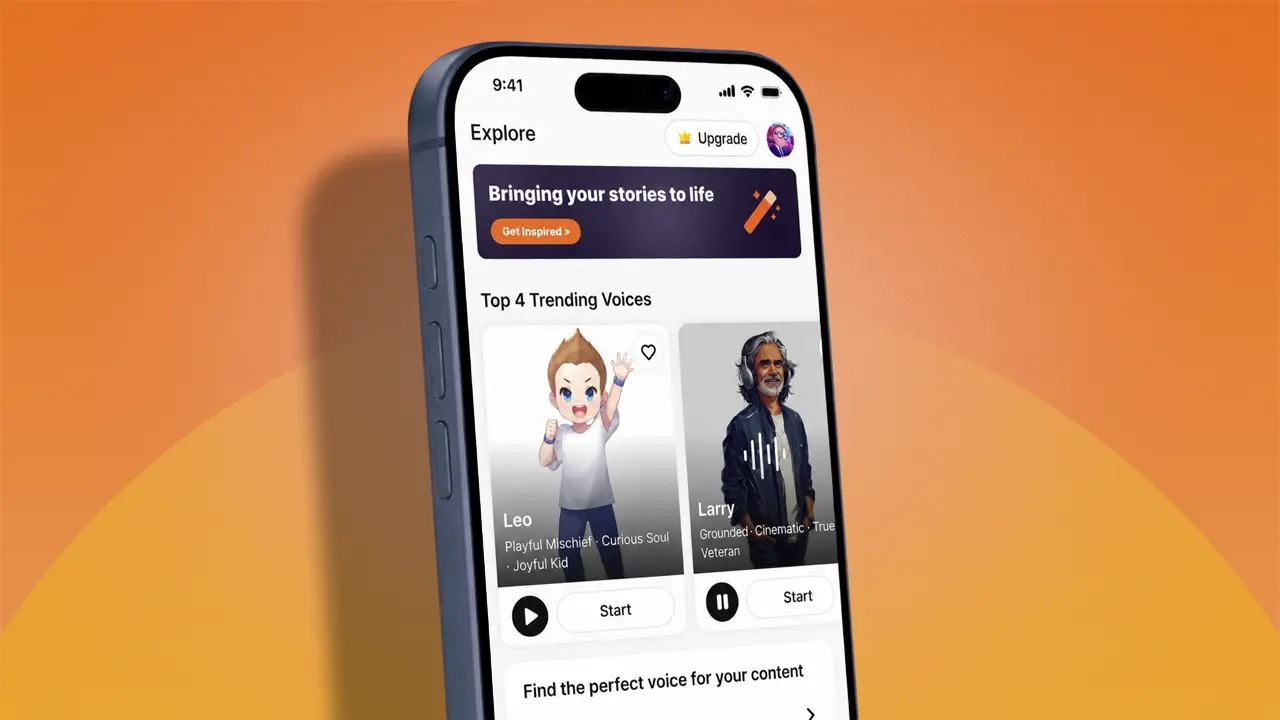
Tools like Typecast’s realistic AI voice generator are used in these pipelines to produce studio-quality voice output across languages and tones, making automated interactions feel significantly more human without requiring voice talent for every scenario.
The result is an experience that sounds natural, responds intelligently, and scales effortlessly.
Common misconceptions that lead to bad decisions

“ChatGPT is conversational AI.”
ChatGPT is a generative AI model wrapped in a conversational interface. It generates responses rather than managing structured task-oriented dialogue. It lacks native backend integrations, doesn’t inherently track business-specific context, and wasn’t built to execute transactions.
“Conversational AI is just a chatbot with scripts.”
Modern conversational AI goes far beyond scripted decision trees. Today’s systems use NLU, contextual memory, sentiment analysis, and dynamic API calls to handle complex, multi-turn interactions across channels.
“Generative AI can replace my entire support team.”
Generative AI is powerful for content creation, but it lacks the guardrails, system integrations, and compliance controls that enterprise customer support demands. Used alone without a conversational AI framework, it introduces significant risk.
“They’re competing technologies — pick one.”
They’re complementary. The strongest implementations layer generative capabilities into a conversational AI architecture, getting the best of both worlds.
How to decide what your business needs

Start with the problem, not the technology.
Ask yourself:
- Is the goal to automate conversations or to create content? If it’s dialogue, lean toward conversational AI. If it’s production, lean generative.
- Does the system need to connect to live business data? Backend integration points to conversational AI as the orchestration layer.
- How important is factual accuracy? High-stakes interactions require the structured guardrails of conversational AI. Creative tasks can tolerate more generative freedom.
- Do you need voice, text, or both? Voice deployments almost always require a conversational AI framework plus text-to-speech integration.
- What’s your risk tolerance for hallucination? If the cost of a wrong answer is high — in healthcare, finance, legal — you need strict output controls that pure generative AI alone doesn’t provide.
For many businesses, the answer will be a hybrid approach: conversational AI handling the interaction layer, with generative AI powering the content behind the responses.
The road ahead
The convergence of conversational AI and generative AI is accelerating. Gartner states that “CMOs must stop prioritizing execution and instead lead through strategic insight,” as AI dramatically transforms marketing roles toward strategic leadership and hybrid human-AI models.
This means the distinction won’t disappear — it will evolve. Conversational AI will become smarter with generative capabilities baked in. Generative AI will become more structured and controllable through conversational frameworks.
The businesses that thrive will be those that understand both technologies clearly enough to deploy them where they actually create value — not just where they sound impressive.
Final takeaway
Conversational AI and generative AI are not the same thing, and they aren’t interchangeable.
Conversational AI is built to manage dialogue — understanding users and completing tasks through interaction. Generative AI is built to create — producing new text, images, code, and audio from learned patterns.
Together, they’re transforming customer experience, content operations, and product development. Apart, they solve very different problems.
Start with what you need to accomplish. The right technology choice follows naturally from there.