




If you want to stay ahead in your market, competitor analysis tools are no longer optional—they’re essential. Modern AI-powered platforms have transformed the way businesses track, benchmark, and outmaneuver their rivals, making competitive intelligence faster and more accessible than ever before.
Whether you’re a startup trying to carve out market share or an established brand defending your position, the right competitor analysis tools can reveal pricing strategies, content gaps, audience sentiment, and emerging trends you’d otherwise miss entirely.
Why AI changes competitive intelligence

Traditional competitive analysis meant hours of manual research—scouring websites, reading earnings reports, and assembling spreadsheets by hand. AI has compressed that workflow dramatically.
As McKinsey notes, “Generative AI could enable labor productivity growth of 0.1 to 0.6 percent annually through 2040.” That productivity boost extends directly to competitive research, where AI can monitor dozens of competitors simultaneously and surface insights in real time.
Here’s what AI brings to the table:
- Real-time monitoring of competitor websites, pricing, and content changes
- Sentiment analysis across social media and review platforms
- Predictive modeling to forecast competitor moves
- Automated reporting that eliminates manual data compilation
These capabilities turn competitive analysis software from a periodic exercise into a continuous intelligence stream.
Top competitor analysis tools to consider
The market is crowded with options, so narrowing down the right fit matters. Below are four standout competitor research tools that leverage AI in distinct ways—each serving different team sizes, budgets, and strategic goals.
Semrush
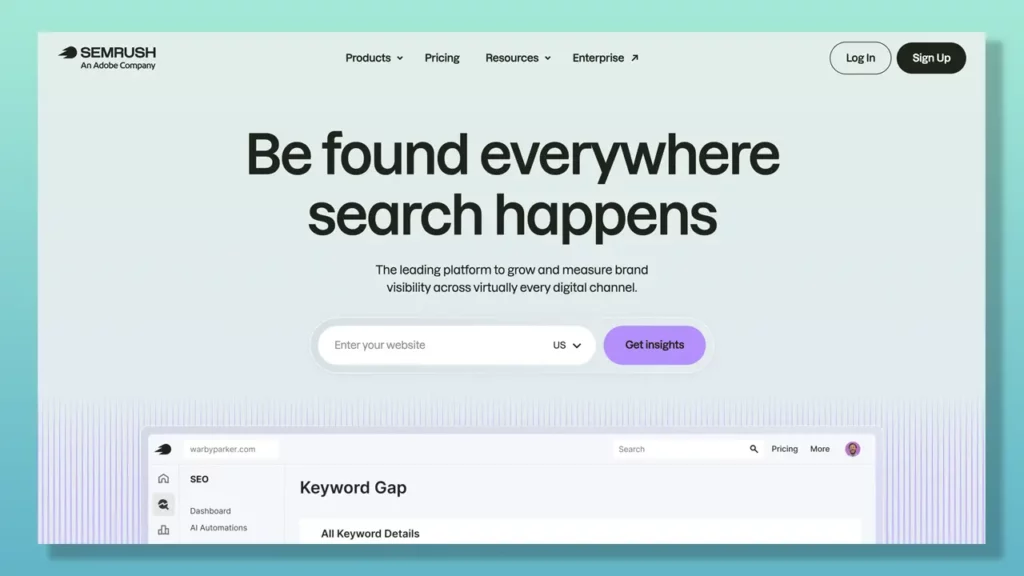
While primarily known as an SEO suite, Semrush doubles as a powerful competitor analysis tool for digital marketing teams.
Its competitive research features let you analyze a rival’s organic traffic, paid ad spend, backlink profile, and content strategy in one dashboard.
Notable competitive features:
- Traffic analytics to estimate competitor site visits
- Advertising research showing active PPC campaigns
- Market Explorer for industry-level benchmarking
Crayon
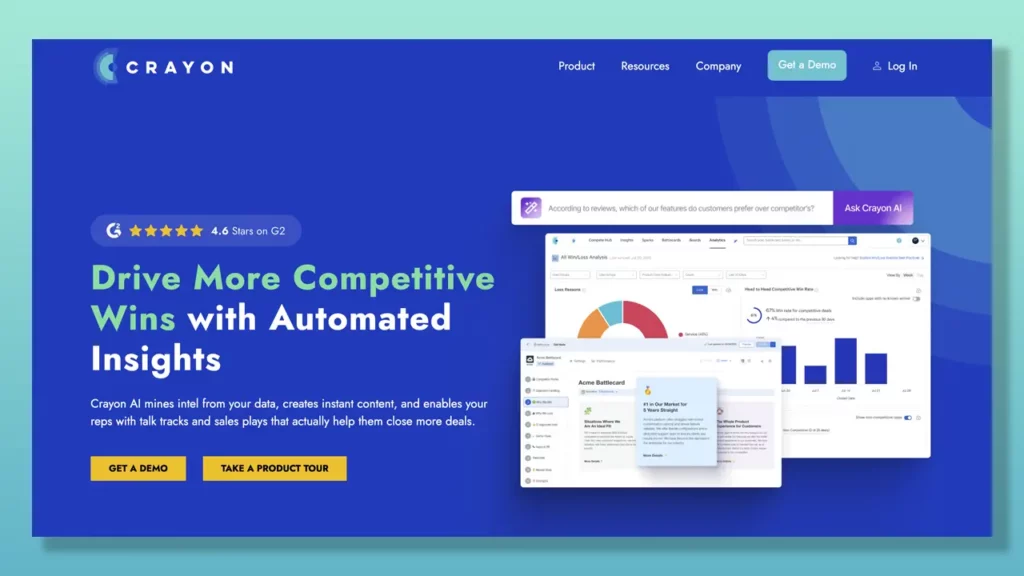
Crayon is one of the most recognized competitor research tools on the market. It uses AI to track over 100 data types across millions of sources, including competitor websites, job postings, regulatory filings, and customer reviews.
Key features include:
- Automated battle cards for sales enablement
- Real-time alerts when competitors make changes
- AI-powered summaries of the most important shifts
Crayon is particularly useful for enterprise teams that need to arm sales reps with up-to-date intelligence during deals.
Klue
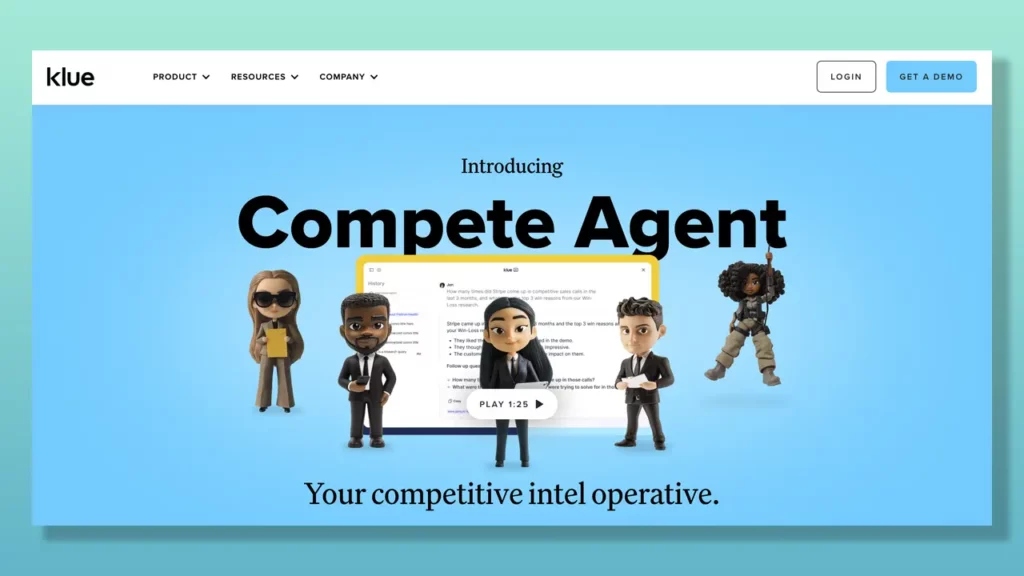
Klue focuses specifically on competitive enablement. It collects data from across the web, then uses AI to curate and distribute insights to stakeholders who need them most.
According to Klue’s own research, “Companies with a dedicated competitive intelligence program see a 24% higher win rate than those without one.”
That statistic alone justifies the investment in a dedicated tool.
Brandwatch
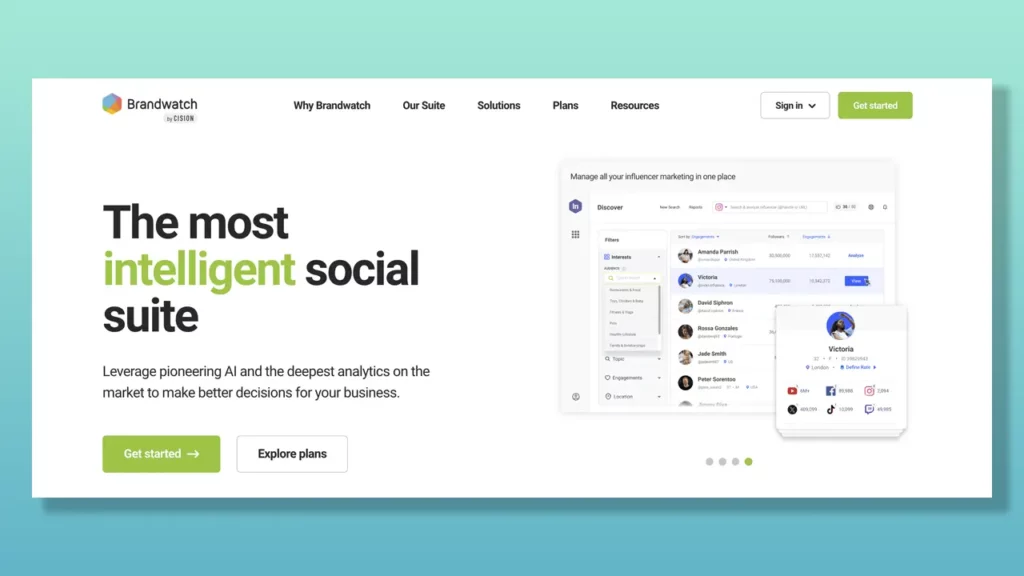
For teams that care deeply about social listening and audience sentiment, Brandwatch provides AI-driven analysis of online conversations.
It can track how consumers talk about your competitors, detect emerging crises, and benchmark brand perception over time.
How to choose the right tool for your team
Not every competitor analysis tool suits every business. Before committing to a platform, consider:
- Team size and workflow: Enterprise teams may need role-based access and integration with CRMs. Smaller teams might prefer a leaner solution.
- Primary use case: Are you focused on SEO competition, sales enablement, or market positioning? Each demands different features.
- Budget: Pricing ranges from free tiers (like Semrush’s limited plan) to enterprise contracts exceeding $30,000 per year.
- Integration needs: The best competitive analysis software connects with the tools you already use—Slack, Salesforce, HubSpot, and others.
If your competitive intelligence needs extend beyond rivals and into academic or data-intensive research, consider exploring AI research tools designed for deeper investigation, or AI data analysis tools that help you process raw datasets at scale.
Turning competitive insights into action

Gathering intelligence is only half the battle.
The real value of competitor analysis tools emerges when insights translate into decisions—adjusting your pricing, repositioning your messaging, or launching a feature your rival overlooked.
Some teams even use AI-generated media to act on those insights quickly. For instance, an AI voice generator can help you produce comparison videos or sales training content highlighting competitive advantages without waiting weeks for production schedules.
The brands that win aren’t necessarily the ones with the most data. They’re the ones that build a rhythm—collect, analyze, act, repeat—and treat competitive intelligence as an ongoing discipline rather than a one-time project.With today’s AI-powered competitor analysis tools, that rhythm has never been easier to sustain.