




The rise of conversational AI tools has changed how businesses interact with customers, manage internal operations, and scale support without adding headcount. But the term gets thrown around loosely, and many decision-makers still lack a clear picture of what the technology actually does, how it works, and whether it fits their needs.
This guide covers the fundamentals, the business case, real-world applications, and the practical steps for choosing and building a system. Whether you run a company, lead a marketing team, or write code, this is the reference you’ll want to bookmark.
What is conversational AI?
At its core, what is conversational AI refers to a set of technologies that allow machines to understand, process, and respond to human language in a natural way. It combines natural language processing (NLP), machine learning, automatic speech recognition, and dialogue management to hold conversations that feel human.
This is not the same as a basic rule-based chatbot that follows a fixed script. Conversational AI systems learn from data, recognize intent, handle context across multiple turns, and improve over time.
Think of it this way: a rule-based bot is a vending machine. Conversational AI is a trained employee who listens, thinks, and adapts.
How it actually works under the hood
If you want to understand how does conversational AI work, you need to know the core pipeline. Every interaction passes through several layers.
Input processing
The system receives input as text or voice. If it’s voice, automatic speech recognition converts the audio into text. The raw input then moves to the NLP layer.
Natural language understanding
NLU is the brain of the operation. It parses the input to determine two things:
- Intent: What does the user want? (e.g., “I want to cancel my subscription.”)
- Entities: What specific details matter? (e.g., subscription type, account number.)
Dialogue management
This layer decides what happens next. Should the system ask a follow-up question? Pull data from a CRM? Hand off to a human agent? The dialogue manager orchestrates the response based on context and conversation history.
Natural language generation
The system formulates a response in plain language. Modern systems powered by large language models (LLMs) generate responses that are fluid and contextually appropriate, not robotic.
Output delivery
The response goes back to the user as text or synthesized speech. Voice-based systems use a text-to-speech API to convert the generated text into natural-sounding audio.
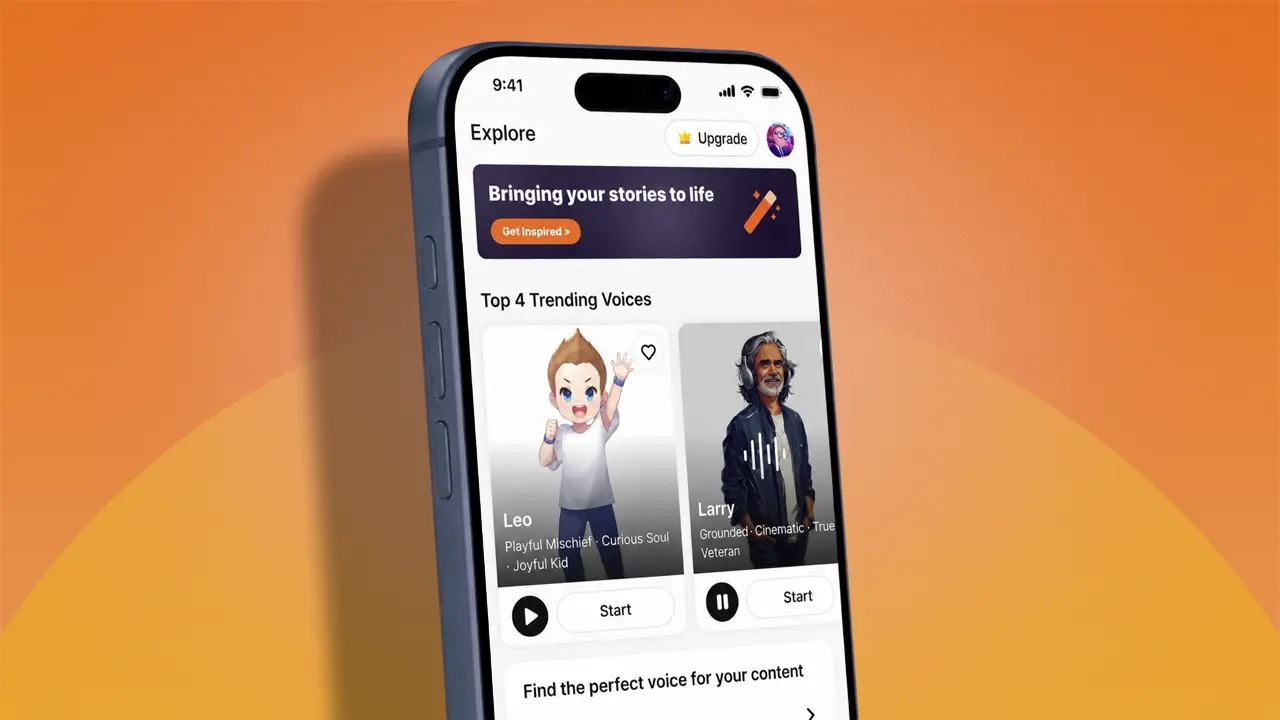
Platforms like Typecast’s realistic AI voice generator make this output sound convincingly human, which matters in phone-based support and voice assistant applications.
Why businesses should care

The business case for conversational AI is no longer theoretical. According to Gartner’s forecast, “By 2027, chatbots will become the primary customer service channel for roughly a quarter of organizations.”
The question is no longer “should we invest?” It’s “how fast can we deploy?” Here’s why conversational AI makes strategic sense:
- Cost reduction. Automating routine queries cuts support costs. IBM reports that AI-powered virtual agents can handle up to 80% of routine customer tasks without human intervention.
- 24/7 availability. Customers expect instant answers at 2 AM on a Sunday. Humans can’t do that at scale. AI can.
- Consistency. Every customer gets the same accurate information, every time. No bad days, no forgotten training points.
- Scalability. During a product launch or seasonal spike, conversational AI handles the surge without emergency hiring.
IBM mentions that “AI assistants that can understand and address a range of customer needs are now table stakes, not a differentiator.”
Conversational AI vs. generative AI
People frequently confuse these two terms. Understanding what is the difference between conversational AI and generative AI helps you set realistic expectations.
Conversational AI is purpose-built for dialogue. It’s designed to understand user intent, maintain context across turns, and complete specific tasks like booking an appointment or answering a billing question.
Generative AI is broader. It creates new content, whether that’s text, images, code, or music. Large language models like GPT-4 or Gemini are generative AI systems.
Here’s where it gets interesting: modern conversational AI platforms often use generative AI as a component. The generative model powers the language output, while the conversational framework handles intent routing, memory, and task completion.
They overlap, but they’re not interchangeable. A generative AI model alone can hallucinate facts and go off-topic. Conversational AI adds the guardrails, structure, and task orientation that business applications require.
Real-world examples across industries

Wondering what is an example of conversational AI in practice? The technology shows up in more places than most people realize.
Customer support
Banks like Bank of America use Erica, a virtual assistant that has handled over 2 billion interactions since its launch. It answers balance inquiries, sends bill reminders, and provides spending insights.
Healthcare
Health systems deploy conversational AI for appointment scheduling, symptom triage, and medication reminders. The Mayo Clinic has explored AI-driven patient engagement tools to reduce no-show rates and improve pre-visit preparation.
Retail and e-commerce
H&M and Sephora use conversational AI to guide shoppers through product selection. These systems ask questions about preferences, recommend items, and process returns without a human agent.
Internal operations
IT help desks use conversational AI to handle password resets, software provisioning, and FAQ resolution. This frees up IT staff for complex issues.
Sales
Using how to use conversational AI in sales workflows is gaining traction fast. AI assistants qualify leads on websites, answer product questions in real time, schedule demos, and follow up with prospects automatically.
Harvard Business Review suggests that “Companies using AI in sales have seen a 50% increase in leads and appointments, and a 40–60% reduction in costs.”
What is a conversational AI chatbot?
A common starting point for businesses is the chatbot. But what is a conversational AI chatbot, exactly, and how does it differ from a standard chatbot?
A standard chatbot follows scripted decision trees. If a user says something outside the script, it breaks.
A conversational AI chatbot understands free-form language. It can handle:
- Unexpected phrasing (“I wanna ditch my plan” instead of “cancel subscription”)
- Multi-turn conversations with context retention
- Sentiment detection to escalate frustrated users to human agents
- Integration with backend systems to perform real actions, not just display information
The gap between the two is significant. A scripted chatbot is an FAQ page with a chat interface. A conversational AI chatbot is a functional team member.
How to choose the right platform

Selecting the right technology is a make-or-break decision. Here’s a framework for how to choose a conversational AI platform for enterprise businesses.
Define your use case first
Don’t start with the technology. Start with the problem. Are you automating tier-1 support? Qualifying inbound leads? Building a voice assistant for a mobile app? The use case determines everything.
Evaluate these core capabilities
- NLU accuracy. How well does the platform understand varied inputs, slang, and multiple languages?
- Integration depth. Can it connect to your CRM, ERP, ticketing system, and knowledge base?
- Channel support. Does it work on web, mobile, voice, SMS, WhatsApp, and other channels your customers use?
- Analytics and reporting. Can you track containment rate, escalation rate, CSAT impact, and conversation drop-off points?
- Security and compliance. Does it meet your industry’s requirements (HIPAA, GDPR, SOC 2)?
Watch out for vendor lock-in
Some platforms make it easy to get in and hard to get out. Ask about data portability, model ownership, and export capabilities before signing.
According to Forrester, “Enterprises should prioritize platforms that offer composable architectures, allowing them to swap out components like LLMs or NLU engines without rebuilding the entire system.”
Consider the total cost of ownership
License fees are only part of the picture. Factor in implementation, training data preparation, ongoing tuning, and the internal team needed to manage the system.
How to build one from scratch
For teams with engineering resources, how to build a conversational AI system is a realistic option. Here’s the high-level process.
Step 1: Collect and prepare training data
You need examples of real conversations. Pull from support tickets, chat logs, call transcripts, and FAQ databases. Clean the data and annotate it with intents and entities.
Step 2: Choose your NLU engine
Options range from open-source frameworks like Rasa to managed services like Google Dialogflow or Amazon Lex. Your choice depends on customization needs, language support, and hosting preferences.
Step 3: Design the conversation flow
Map out the dialogue paths. Define what happens when intent is clear, when it’s ambiguous, and when the system should escalate. Use a state machine or flow-based approach for predictable tasks. Layer in an LLM for open-ended responses.
Step 4: Integrate with backend systems
Connect the AI to your databases, APIs, and third-party services so it can actually do things, not just talk about them. An assistant that says “let me check” but never returns an answer is worse than no assistant at all.
Step 5: Test, launch, and iterate
Start with a limited scope. Deploy to a single channel or user segment. Monitor performance daily. Identify failure points, retrain the model, and expand gradually.
Building in-house gives you full control but demands sustained investment. Most mid-market companies are better served by a platform. Enterprises with unique requirements often benefit from a hybrid approach.
Evaluating the top conversational AI tools

The market for conversational AI tools is crowded. Here’s how to cut through the noise and focus on what matters.
Categories of tools
- Enterprise platforms: IBM WatsonX Assistant, Google Dialogflow CX, Microsoft Copilot Studio, Kore.ai
- Mid-market and SMB: Intercom Fin, Drift, Tidio, Ada
- Developer frameworks: Rasa, Botpress, LangChain (for LLM-based agents)
- Voice-specific: Amazon Lex, Nuance (Microsoft), Cognigy
What separates the best from the rest
The strongest platforms share a few traits:
- They handle ambiguity without breaking.
- They support multi-turn conversations with persistent memory.
- They provide clear analytics dashboards for non-technical stakeholders.
- They allow both no-code configuration and developer-level customization.
No single tool wins in every scenario. Match the tool to your use case, budget, and team skill level.
Common mistakes to avoid
Plenty of conversational AI projects fail. Not because the technology is bad, but because the execution is sloppy.
- Trying to automate everything at once. Start narrow. Automate five high-volume, low-complexity tasks before expanding.
- Ignoring the handoff to humans. The AI should know when it’s out of its depth. A seamless escalation path is non-negotiable.
- Skipping conversation design. A powerful NLU engine with poorly designed flows still delivers a bad experience.
- Not measuring the right metrics. Tracking “number of conversations” is meaningless. Track containment rate, resolution rate, and customer satisfaction.
- Forgetting about maintenance. Conversational AI is not a set-it-and-forget-it product. Language evolves. Products change. The system needs regular updates.
What’s coming next
The technology is moving fast. A few trends worth tracking.
Multimodal interactions are gaining ground. Systems that combine text, voice, images, and video in a single conversation thread will become the norm rather than the exception.
Agentic AI is another shift to watch. These are autonomous agents that don’t just respond to prompts. They plan, execute multi-step tasks, and collaborate with other agents to complete complex workflows without human oversight.
Personalization at scale is getting real. Future systems will remember individual user preferences and history across sessions and channels, making every interaction feel continuous rather than starting from scratch.
On-device processing is also picking up momentum. Running conversational AI locally on phones and edge devices means faster response times and stronger privacy, two things users increasingly demand.
The gap between what AI can do and what most businesses have deployed remains wide. That gap is the opportunity.