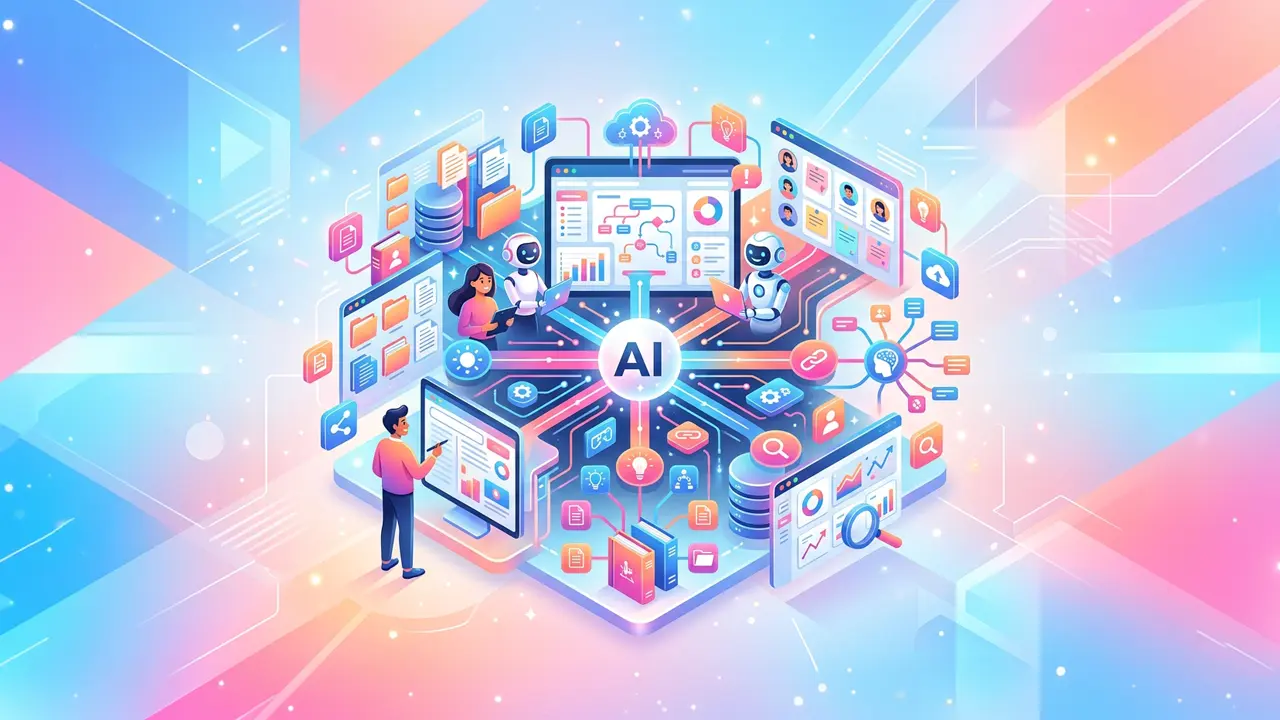





The integration of AI in business operations is no longer a futuristic concept—it’s happening right now across every industry. From small startups to Fortune 500 companies, organizations are embedding artificial intelligence into their daily workflows to cut costs, boost efficiency, and make smarter decisions at scale.
But what does that actually look like in practice? Understanding the specific AI use cases in business helps leaders move beyond the hype and identify where intelligent automation can deliver real, measurable value.
Why companies are adopting AI across operations
The pressure to do more with less has never been greater. Economic uncertainty, labor shortages, and rising customer expectations are pushing businesses to rethink how they operate. AI in business operations addresses these challenges by handling tasks that once required significant human time and attention.
According to a 2024 McKinsey Global Survey, 72 percent of organizations have adopted AI in at least one business function, up from 55 percent just a year earlier. That rapid acceleration signals a clear shift: companies that delay adoption risk falling behind competitors who are already reaping the benefits.
AI operations management enables teams to monitor processes in real time, predict disruptions before they happen, and allocate resources more intelligently than any manual approach could achieve.
Key use cases transforming day-to-day workflows

Supply chain and inventory optimization
AI excels at analyzing vast datasets to predict demand fluctuations, optimize stock levels, and identify potential supply chain disruptions weeks in advance. Businesses using AI in their operations for supply chain management report fewer stockouts, reduced waste, and lower carrying costs.
Key applications include:
- Demand forecasting based on historical sales, seasonality, and external factors
- Route optimization for logistics and delivery networks
- Supplier risk assessment using real-time global data feeds
Customer service and communication
One of the most visible AI use cases in business is customer-facing communication. AI-powered chatbots, virtual assistants, and voice systems handle routine inquiries around the clock, freeing human agents to tackle complex issues.
Companies looking to scale voice interactions can integrate a text-to-speech API to generate natural-sounding audio for phone systems, IVR menus, and automated outreach—without recording a single word in a studio.
“AI won’t replace customer service—it will redefine it. The companies that get the human-AI balance right will win customer loyalty.” — Salesforce State of Service Report, 2024
Financial operations and fraud detection
Finance teams are leveraging AI in business operations to automate invoice processing, reconcile accounts, and detect fraudulent transactions in real time. Machine learning models analyze spending patterns and flag anomalies faster and more accurately than rule-based systems ever could.
Benefits include:
- Reduced manual data entry errors
- Faster month-end close cycles
- Proactive fraud alerts that save millions in potential losses
How AI enhances decision-making at every level

Turning raw data into strategic insight
Beyond automating tasks, AI helps leaders make better decisions. AI business intelligence platforms aggregate data from multiple sources and surface trends that human analysts might miss. Instead of spending hours building reports, decision-makers receive actionable dashboards that update in real time.
For teams already experimenting with generative AI, crafting effective ChatGPT prompts can unlock quick analysis, brainstorming, and content drafting that supports daily operational decisions.
Workforce planning and HR operations
AI in business operations extends into human resources as well. Intelligent systems analyze turnover patterns, predict hiring needs, and even screen résumés to shortlist qualified candidates. This allows HR teams to focus on culture, engagement, and strategic talent development rather than administrative overhead.
Challenges worth acknowledging

No technology adoption is without friction. Deploying AI across business operations requires clean data, cross-functional collaboration, and ongoing governance. Organizations must address data privacy concerns, ensure algorithmic fairness, and invest in upskilling employees who will work alongside AI systems.
Companies that start with well-defined problems, pilot solutions in controlled environments, and iterate based on feedback tend to see the strongest returns.
Where to start if you haven’t yet
If your organization is still evaluating AI in business operations, focus on areas with high-volume, repetitive processes and clear success metrics. Customer support, invoice processing, and inventory management are common entry points because they offer quick wins and tangible ROI that build internal confidence for broader rollouts.
The organizations thriving today aren’t necessarily the ones with the biggest AI budgets—they’re the ones asking the right questions about where intelligent automation fits into the work they already do.