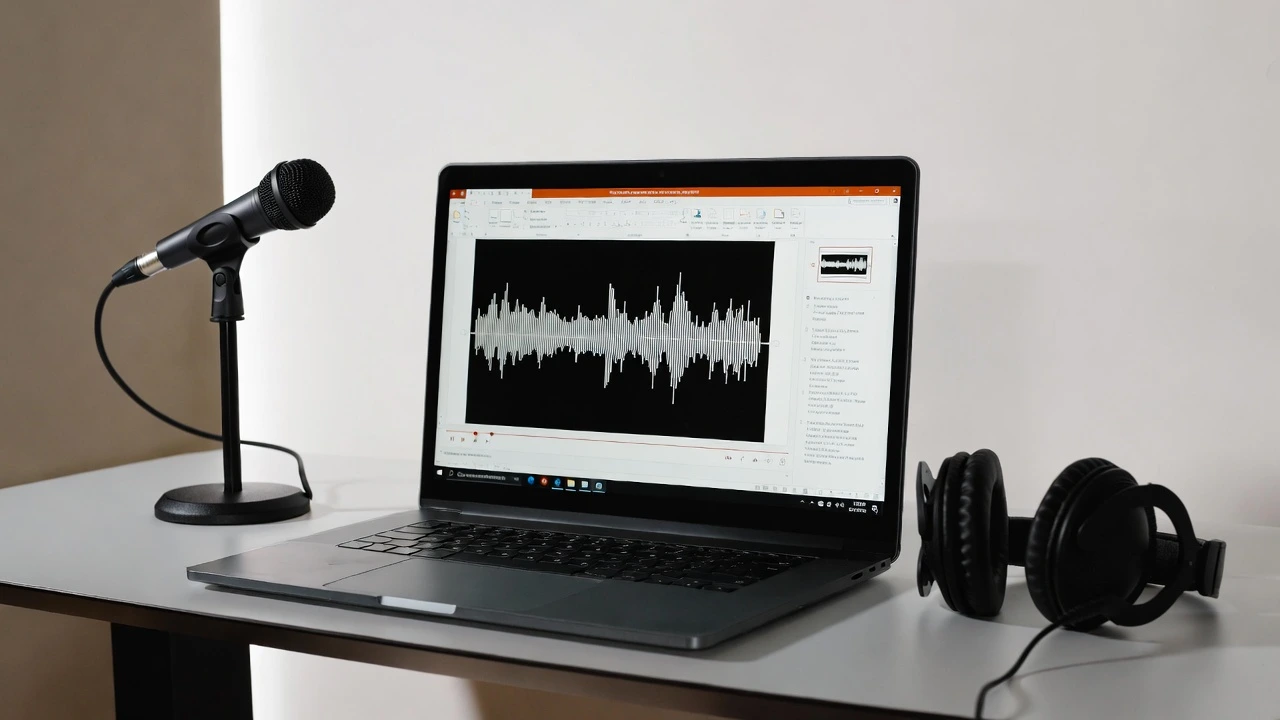




Learning how to do a PowerPoint presentation with voice over can transform a flat slideshow into something people actually remember. A clear, well paced voice over guides your audience through each point and keeps them engaged from start to finish.
Whether you are building a training module, a sales pitch, or a class lecture, adding voice helps your message land. This guide walks you through every step in a simple, repeatable way.
Why add voiceover to a PowerPoint presentation

A silent slide deck asks viewers to do all the work. Voiceover carries the story for them, and it lets you share presentations asynchronously so people can watch on their own time without missing your insights.
Research backs this up. According to a Forrester study referenced by Insivia, “viewers retain 95% of a message when they watch it in a video, compared to 10% when reading it in text.” That gap shows why audio and visual delivery beats plain slides every time.
When voice over works best
Voice over is a strong fit for online courses, recorded sales demos, internal training decks, conference talks shared after the event, and self-paced tutorials. If your audience cannot attend live, a voiceover for PowerPoint fills the gap with a personal touch.
What you need before you start

Good preparation makes recording faster and smoother. Start with a finished slide deck and a simple script or speaker notes for each slide. If you plan to record your own voice, find a quiet space and a decent microphone, or use an AI voice tool for clean audio without the setup.
A script matters more than people expect. As Microsoft’s support team explains, you can “record a slide show with narration and slide timings” directly inside PowerPoint, so having your words ready keeps each take tight.
How to do a PowerPoint presentation with voice over
There are two main routes. You can record your own voice, or you can generate narration with an AI voice tool. Here is how each works.
Option 1: Record narration inside PowerPoint
PowerPoint has a built-in recording feature for both Windows and Mac. Open your presentation, go to the Slide Show tab, and click Record Slide Show. Choose to start from the beginning or the current slide, then speak your script as you move through each slide using the navigation arrows.
When you are done, click stop and save your file. Each slide stores its own audio clip, so you can re-record one slide without redoing the whole deck.
Option 2: Generate narration with an AI voice
Recording your own voice is not always practical. Maybe you dislike how you sound, or you need to update slides often. This is where an AI voice tool helps, since you type your script and the tool creates the narration for you.
Tools like Typecast let you turn text into clear, natural speech in minutes. You can pick from a range of natural AI narration voices to match the tone of your presentation.
The process is straightforward. You paste your slide script into the editor, choose a voice that fits your content, adjust pacing and emphasis where needed, then export the audio and add it to your slides. This approach makes edits painless, because changing a line of text lets you regenerate that section without a new recording session.
How to add the audio to your slides
If you generate narration outside PowerPoint, adding it back in is easy. Go to the Insert tab, select Audio, then choose Audio on My PC and pick your file. Position the audio icon on the slide and set it to play automatically under the Playback options, then repeat for each slide that needs narration.
For a deeper walkthrough on syncing audio with timings, see this guide on how to add narration to PowerPoint.
Tips for clean, professional audio
Small details make a big difference in how polished your voice over sounds. Keep sentences short so they are easy to follow, and pause briefly between slides to give viewers time to absorb the visuals. Match your speaking pace to the complexity of the content, and check your volume levels so the audio stays consistent across every slide.
Why AI voice over is gaining ground

More creators are leaning on AI voices for speed and consistency. The shift is part of a wider trend in how content gets made, and it has accelerated as the technology behind these voices has matured.
Early text-to-speech tools sounded flat and robotic, which made them a poor fit for professional presentations. That has changed dramatically. Modern AI voices now capture natural intonation, realistic pacing, and subtle emotional cues, so listeners often cannot tell the narration was generated rather than recorded.
These quality gains come from advances in deep learning and neural speech models that study how real people speak. The result is narration that breathes, pauses, and emphasizes words the way a human would, which makes it far more pleasant to listen to across a long deck.
A Gartner press release on generative AI adds context, predicting that “more than 80% of enterprises will have used generative AI APIs or deployed generative AI-enabled applications by 2026.” Voice over for presentations sits right inside that wave.
Common mistakes to avoid
A few simple errors can weaken an otherwise strong presentation. Many people read slides word for word instead of expanding on them, or record in a noisy room with echo and background hum. Others cram too much narration onto a single slide or forget to test playback before sharing the file.
Review your full deck once before publishing. A quick check catches timing issues and missing audio clips.
Putting it all together

You now have two reliable paths to a voice over PPT presentation. Record your own voice for a personal feel, or use an AI tool for speed and easy edits.
Either way, the goal stays the same. Guide your audience with clear narration that supports your slides rather than competing with them. Start with a tight script, pick the method that fits your workflow, and your presentation will sound far more engaging than slides alone.