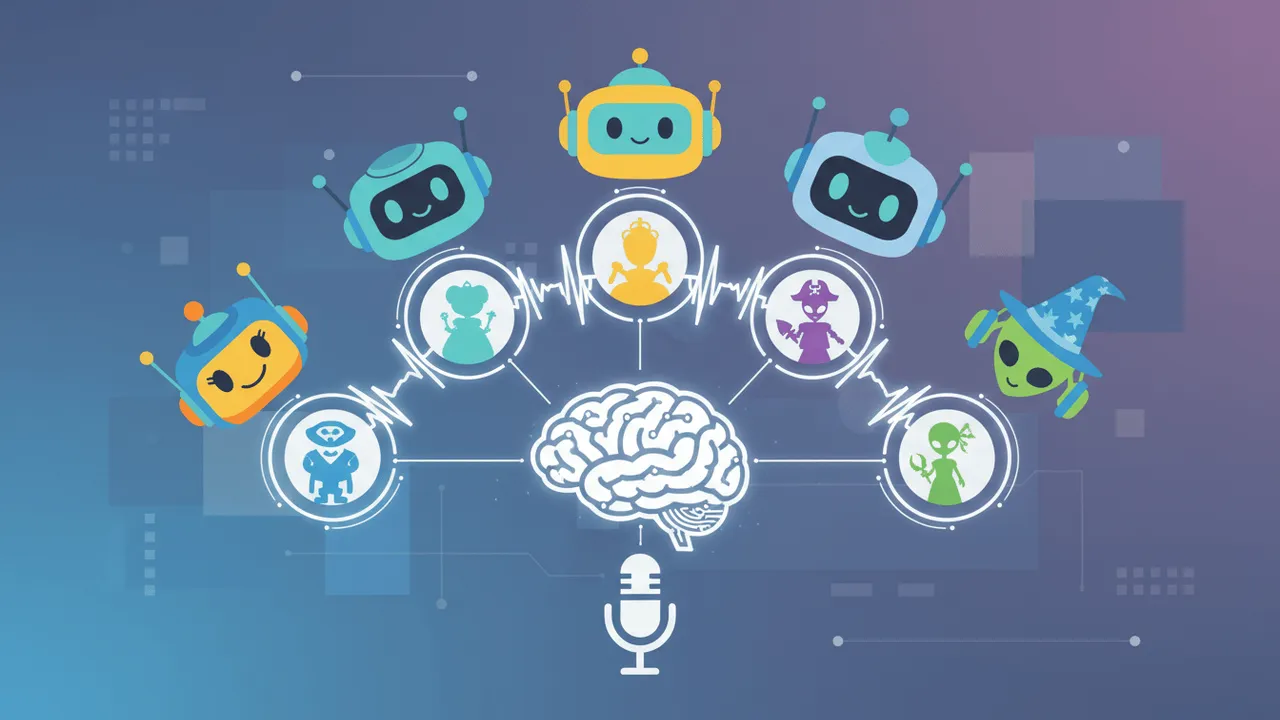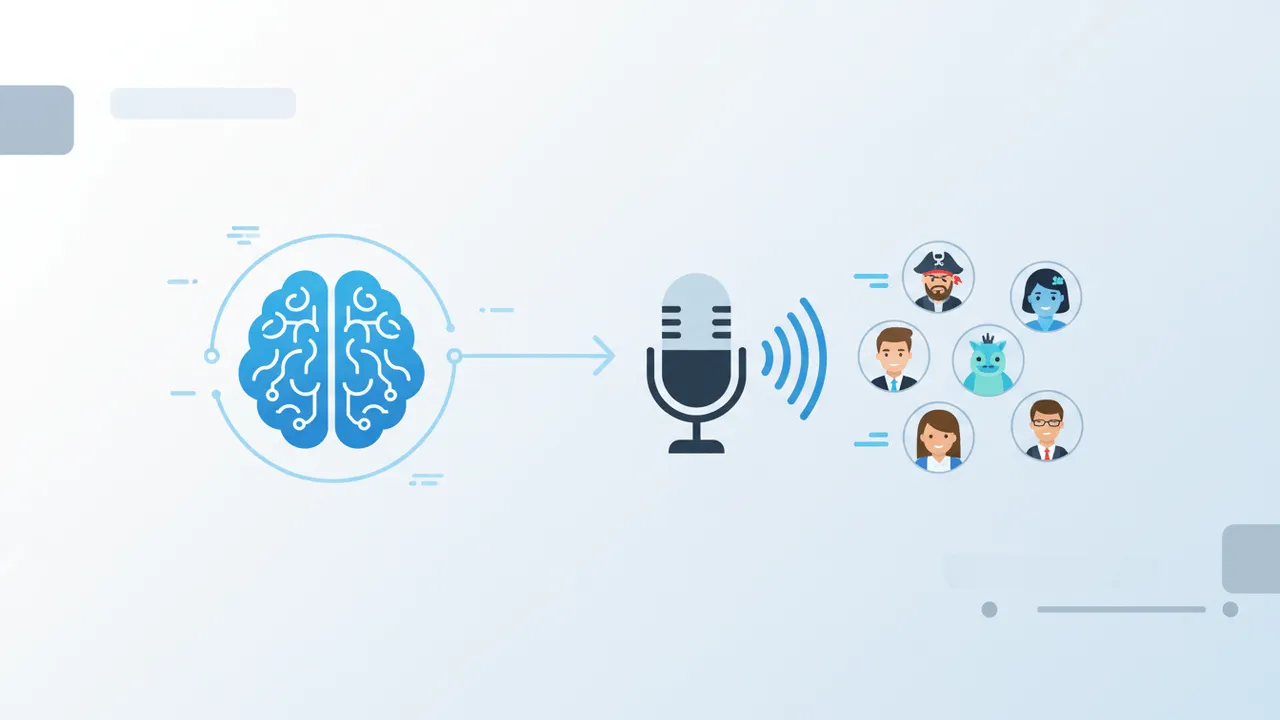





Getting a convincing anime girl voice text-to-speech output used to require hiring a voice actor or spending hours tweaking audio settings. That’s changed. Modern TTS engines can now produce character voices that sound close to what you’d hear in a dubbed anime episode.
But “close” isn’t the same as “right.” The difference between a generic high-pitched voice and a believable anime girl TTS output comes down to specific settings, tool selection, and understanding how these voices actually work.
What makes an anime girl voice distinct
Anime girl voices aren’t just high-pitched. They follow patterns that trained voice actors use deliberately:
- Breathy quality on softer dialogue
- Exaggerated pitch swings during emotional lines
- Specific vowel elongation patterns in Japanese
- A clear distinction between genki (energetic), kuudere (cool), and tsundere (sharp) archetypes
Each Japanese AI voice archetype follows its own rhythm. A genki character speaks fast with an upward pitch at the end of sentences, while a kuudere character stays flat with minimal variation. TTS tools that reduce everything to a single ‘anime girl’ preset completely miss the point.
Why standard TTS falls short for anime voices

Most general-purpose TTS engines optimize for natural conversation or audiobook narration. They actively flatten the kind of exaggerated prosody that defines anime speech.
Stanford’s AI Index Report found that “speech synthesis benchmarks for tonal and pitch-accent languages have seen the largest year-over-year quality improvements, narrowing the gap with English-language models”. That progress helps with natural Japanese, but anime voice acting deliberately exaggerates and distorts those same patterns.
Forrester’s analysis of AI content tools found that “niche voice synthesis applications targeting entertainment and gaming subcultures are growing at 34% year-over-year, outpacing enterprise voice AI adoption”. The demand is there. The tools are catching up.
Replicating the nuanced delivery of anime speech via TTS remains a complex task, as generic synthesis models frequently lack the necessary emotive range. To address this, high-quality datasets derived from the performances of legendary Japanese voice actors are often employed to train models, specifically focusing on improving the stylized exaggeration and prosodic expressiveness required for authentic character voices.
How to choose the right TTS tool for anime girl voices
Not all platforms handle character voices the same way. Here’s what to evaluate:
- Voice library depth. Does the tool offer multiple anime-style female voices, or just one generic option?
- Emotion and style controls. Can you switch between happy, angry, shy, and neutral within the same voice?
- Pitch and speed sliders. Basic, but essential for tuning output to match a specific character type.
- Japanese language support. If you want authentic results, the engine needs proper Japanese phoneme handling. Look for tools with solid TTS Japanese capabilities.
- SSML or markup support. This lets you control pauses, emphasis, and pitch at the word level.
A tool that checks all of these boxes will get you much closer than one that only offers preset voices with no customization.
Step-by-step process to get the voice right

Follow this step-by-step guide to discover the perfect voice for your content.
Pick your character archetype first
Before touching any TTS tool, decide what kind of character you’re voicing. Write down three traits. Example: cheerful, slightly clumsy, speaks fast. This guides every setting you adjust later.
Start with a base voice and adjust
Select a female voice with a naturally higher register. Then adjust pitch upward by 10 to 20 percent. Don’t go further unless you want a chipmunk effect.
Speed matters too. For energetic characters, increase speaking rate by 5 to 15 percent. For calm or mysterious types, slow it down slightly.
Use SSML tags for emotion control
If your tool supports SSML, use it. Wrap excited phrases in emphasis tags. Add short pauses before important words. This is where generic output starts to sound like an actual character.
According to Assembled, “Multilingual voice AI goes beyond translation. It understands cultural context, regional expressions, and language-specific nuances.” Nuance is the keyword here.
Test with actual dialogue, not sample sentences
Don’t test your voice with “Hello, how are you?” Use a line your character would actually say. Something like “Wait, you can’t just leave without telling me!” will expose problems that a neutral test sentence won’t.
Tools that handle anime girl TTS well

Several platforms now cater to this niche. Typecast’s realistic AI voice generator includes character-driven Japanese voices with emotion controls that work for anime-style content. It’s one of the few platforms where you can create and use an anime voice generator without heavy post-processing.
Other options include:
- VOICEVOX. Open-source, built specifically for Japanese character voices. No English interface, but the quality of Japanese output is strong.
- CoeFont. A Japanese platform with a wide range of female character voices. Good emotion range, but limited export options on free tiers.
IBM’s AI adoption report found that 42% of companies using AI for content creation cited “voice and audio generation” as a primary use case, up from 29% the previous year. The infrastructure is maturing fast.
Common mistakes to avoid
- Pushing pitch too high. It sounds unnatural even by anime standards.
- Ignoring breathing sounds. Real anime voice actors breathe between lines. Some TTS tools let you insert these.
- Using English-optimized engines for Japanese text. The phoneme mapping will be wrong.
- Skipping post-processing. Even good TTS output benefits from light reverb or compression to match your video’s audio profile.
Where creators are using anime girl TTS right now
The use cases are broader than you might expect, ranging from VTuber content that requires a consistent character voice across streams, to fan-made visual novels and RPG Maker games, to anime recap and review channels on YouTube.
They’re also widely used for Twitch stream alerts and donation callouts, as well as short-form content on TikTok and Instagram Reels.
Each of these has different quality requirements. A stream alert can be slightly rougher. A visual novel needs polished, consistent output across hundreds of lines.