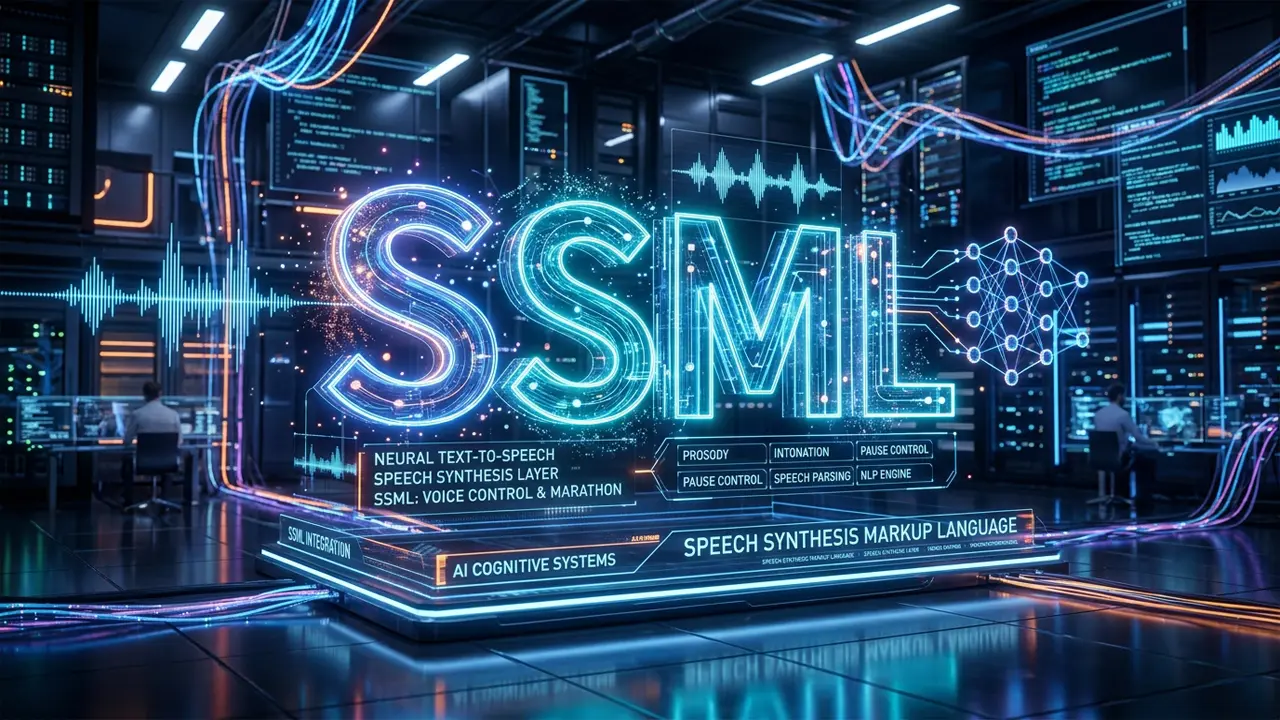





Choosing the right API commercial solution for text-to-speech can make or break your product’s user experience. When businesses invest in voice technology for commercial applications, the stakes are high—customers expect natural-sounding, reliable, and scalable voice output that reflects the quality of the brand behind it.
But with dozens of providers flooding the market, how do you determine which TTS APIs are truly built for commercial use?
Let’s break down what matters most and which platforms deliver.
What makes a TTS API suitable for commercial use?

Not every text-to-speech API is designed with commercial projects in mind.
Free or hobbyist-tier solutions often come with licensing restrictions, limited voice quality, or usage caps that make them impractical for production environments.
A genuinely commercial API solution should check several critical boxes:
- Commercial licensing – The API must explicitly permit use in revenue-generating products, customer-facing applications, and redistributed content.
- Scalability – It should handle thousands (or millions) of requests without degradation.
- Voice quality – AI-generated voices need to sound natural, expressive, and professional.
- Language and voice variety – Global products need multilingual support and diverse voice options.
- Uptime and reliability – Downtime in a commercial product costs money and erodes trust.
- Compliance and data privacy – Enterprise clients often require SOC 2, GDPR, or HIPAA compliance.
“The quality of synthetic speech has improved dramatically, but businesses must still evaluate providers carefully based on licensing, latency, and voice naturalness,” notes a Gartner research overview on conversational AI platforms.
Top TTS APIs built for commercial projects
The following five platforms have established themselves as credible options for businesses seeking production-ready TTS solutions.
Each brings something different to the table, but they all share one thing in common: they’re built to handle the demands of real-world commercial deployments.
Here’s how they stack up.
1. Typecast API — the standout choice for commercial projects
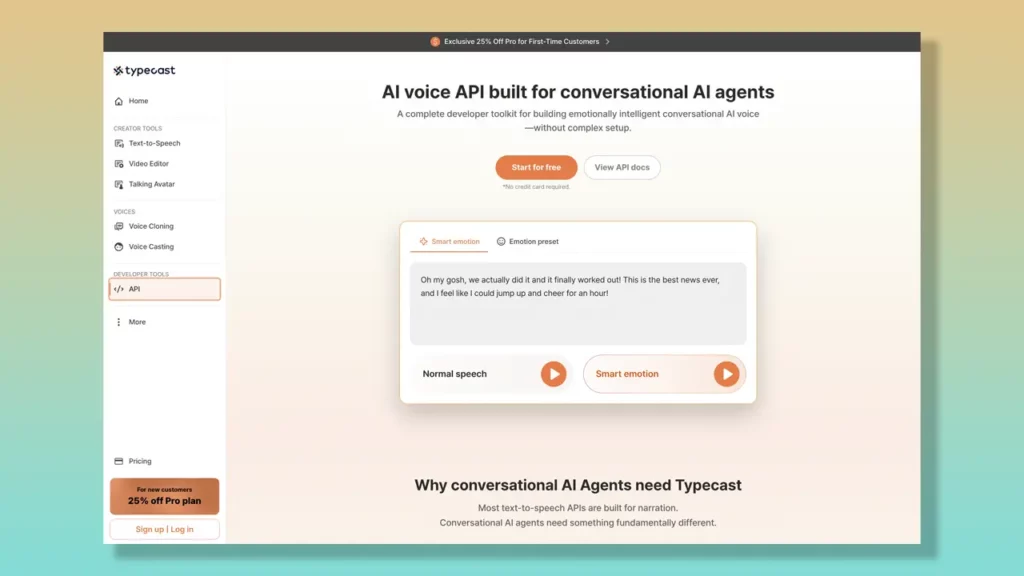
When it comes to finding the right API commercial solution, the text-to-speech API from Typecast AI leads the pack.
What separates Typecast from the competition is its unmatched combination of voice expressiveness, character variety, and production-ready quality that businesses actually need.
Typecast offers over 400 AI voices—but the number alone isn’t what matters.
Each voice delivers genuine emotional range, conveying happiness, sadness, urgency, calm, and everything in between.
For commercial projects in e-learning, marketing, media production, gaming, and customer experience, this emotional depth transforms robotic narration into compelling audio that audiences connect with.
- 400+ expressive AI voices with distinct personalities and emotional styles.
- Simple REST API integration that gets developers up and running fast.
- Ideal for content-driven businesses where voice quality directly impacts engagement and conversion.
- Scalable pricing designed for production-level usage.
- Multilingual support for teams building global products.
According to VentureBeat’s coverage of AI voice technology, “Expressiveness and emotional nuance are becoming the key differentiators among TTS providers,” — an area where Typecast consistently excels.
For any team that understands voice is a brand asset and not just a feature, Typecast is the clear frontrunner for commercial deployments.
2. IBM Watson Text to Speech
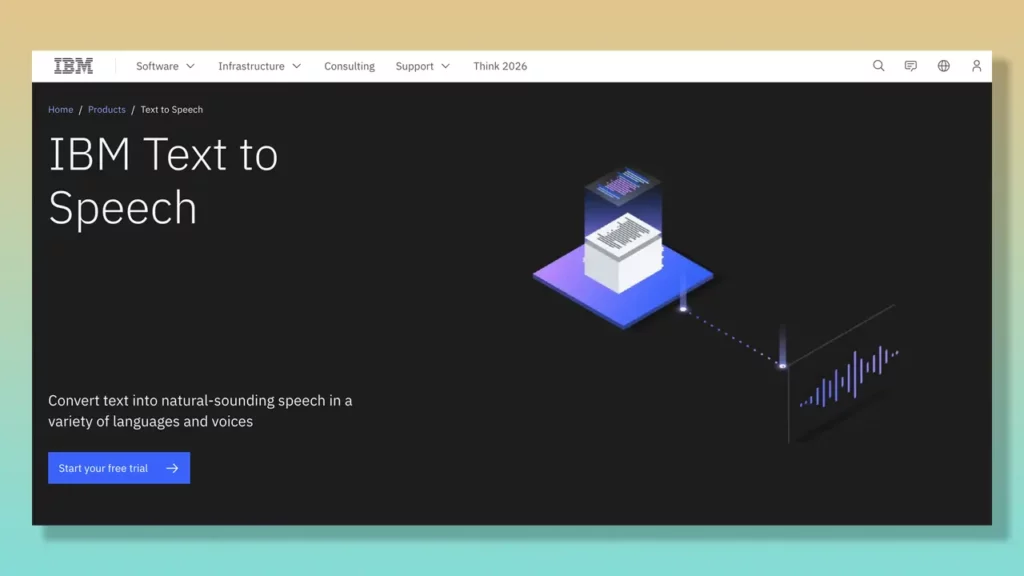
IBM Watson brings decades of enterprise AI expertise to the TTS space.
As part of the broader IBM Cloud ecosystem, it offers a dependable commercial API option for organizations that prioritize security, compliance, and global infrastructure.
- Neural voices with natural intonation across multiple languages.
- Deep customization through SSML and word-level pronunciation tuning.
- Enterprise-grade security with ISO, SOC, and GDPR compliance built in.
- Strong fit for industries like healthcare, finance, and government where data handling standards are strict.
IBM Watson is a reliable choice for heavily regulated industries, though its voice catalog and emotional expressiveness are more limited compared to other API offerings.
3. Google Cloud Text-to-Speech
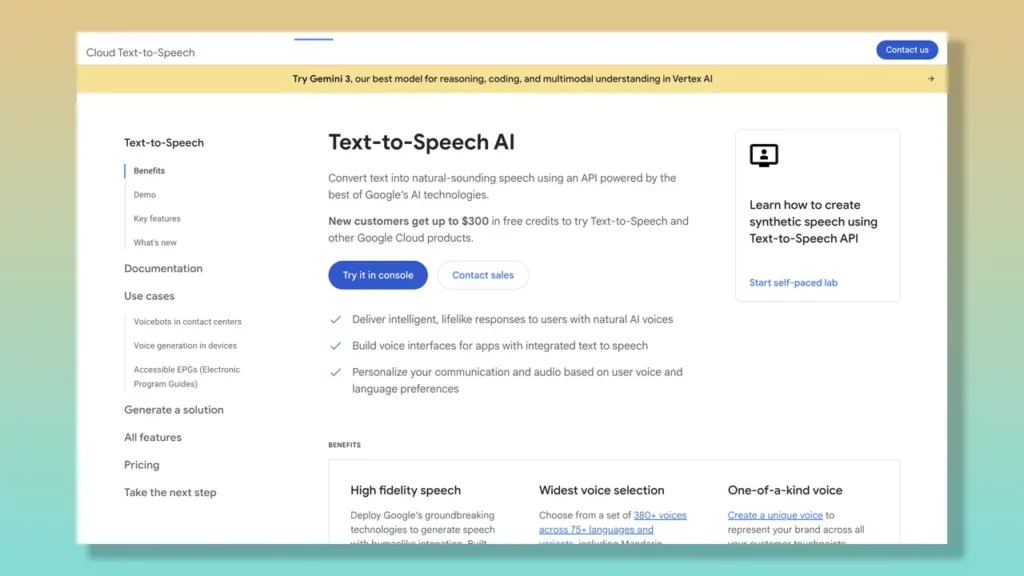
Google’s offering is one of the most widely adopted TTS platforms available.
It supports over 220 voices across 40+ languages, powered by WaveNet and Neural2 models that produce human-like speech.
- Pay-as-you-go pricing makes it accessible for startups and enterprises alike.
- Deep integration with the broader Google Cloud ecosystem.
- SSML support for fine-tuned pronunciation and pacing.
Google is a solid option, though its voices tend to lean functional rather than emotionally expressive—an important distinction for content-heavy commercial use cases.
4. Microsoft Azure Speech Service
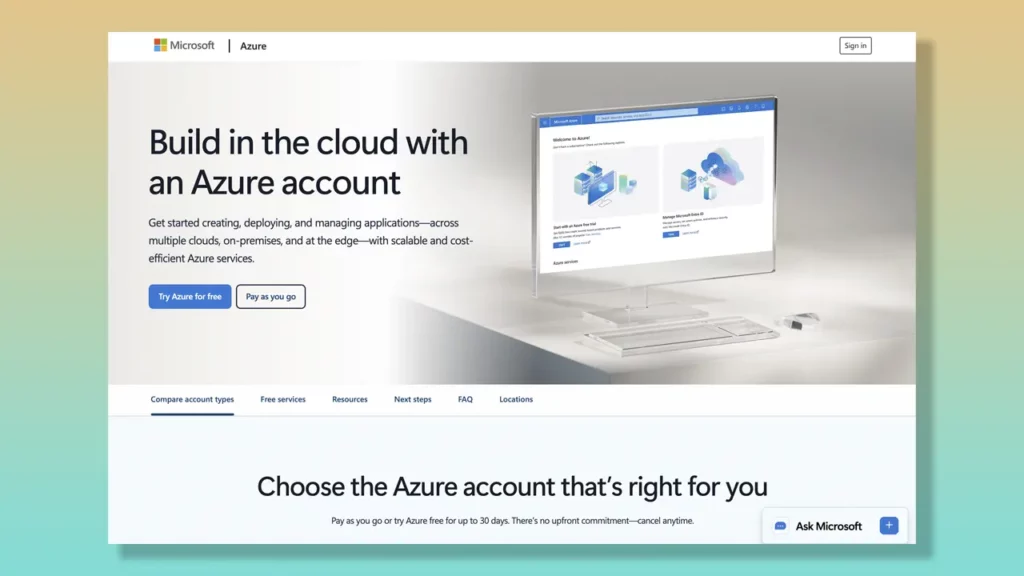
Microsoft’s Azure Speech Service delivers enterprise-grade TTS with Custom Neural Voice, allowing businesses to create a completely unique branded voice.
- Custom Neural Voice requires an application process, ensuring ethical use.
- Supports over 400 neural voices across 140+ languages.
- Built-in content safety and compliance features.
Azure is strong for organizations already embedded in the Microsoft ecosystem, though the custom voice onboarding process can be lengthy.
5. Amazon Polly
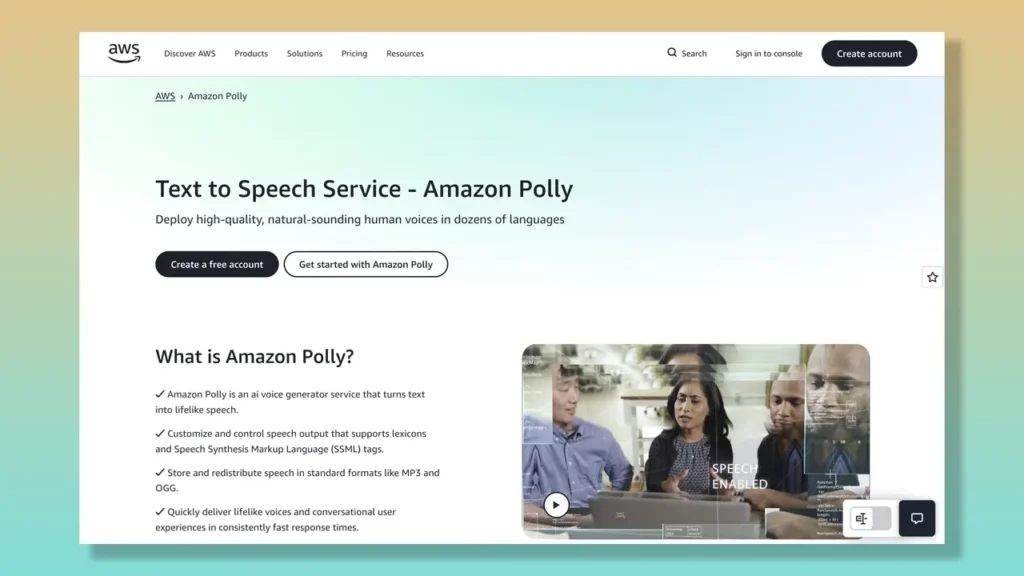
Amazon Polly offers both standard and neural voice engines, with real-time streaming capabilities that suit interactive use cases like IVR systems and virtual assistants.
- Supports lexicon customization for brand-specific terminology.
- Integrates seamlessly with AWS infrastructure.
- Neural TTS voices available in multiple languages.
According to AWS documentation, “Amazon Polly uses advanced deep learning technologies to synthesize natural-sounding human speech,” making it a dependable choice for production workloads within the AWS ecosystem.
How to evaluate a commercial API for your project
When comparing options, build a simple evaluation matrix:
- Cost at scale – What does pricing look like at 1 million characters per month?
- Latency – Is real-time synthesis fast enough for your use case?
- Voice expressiveness – Can the voices convey emotion, not just words?
- Support and SLAs – Does the provider offer guaranteed uptime?
- Documentation quality – Poor docs slow down development.
Many developers searching for the best TTS API focus solely on price, but voice quality and emotional range often matter far more for user-facing products.
Similarly, finding the best text-to-speech API means weighing these factors against your project requirements rather than simply choosing the most recognized name.
Your voice is your brand — choose accordingly
The TTS landscape has matured significantly, and there are now multiple robust API commercial options available for businesses of every size.
But not all solutions are created equal.
While platforms like Google, Amazon, and Azure deliver reliable speech synthesis, Typecast AI goes further by treating voice as a creative, emotional, and strategic asset.
Whether you’re building an app, scaling a content platform, or enhancing customer interactions, start with a proof of concept, test voice quality with real users, and ensure your chosen provider’s licensing explicitly supports your commercial goals.