


Horror narration depends less on a permanently spooky voice than on control. A narrator who knows when to slow down, soften a line, or leave a deliberate silence can make an ordinary sentence feel unsettling. Whether you are recording a story yourself or preparing a synthetic performance, the goal is to guide the listener toward uncertainty before the story reveals why they should be afraid.
This guide breaks down the pacing, pauses, and vocal direction that help horror scenes land. It also includes three original short scripts that you can use for practice, auditions, storyboards, or voiceover planning.
For a broader introduction to selecting and preparing spoken audio, start with this guide to text-to-speech online. The techniques below focus specifically on narrative suspense rather than general-purpose delivery.
What makes horror narration different?
Horror often asks the audience to listen closely. The narrator may know more than the character, less than the character, or just enough to make the listener uneasy. That uncertainty gives pacing unusual importance.
A fast delivery can communicate panic, but sustained speed leaves little room for dread. A slow delivery can create anticipation, but slowing every sentence makes the performance feel artificial. Effective horror narration changes pace with the character’s attention: the voice may become measured when something feels wrong, rushed during immediate danger, and almost still after a frightening realization.
The narrator does not need to announce fear. In fact, understatement is often more effective. A calm voice describing an impossible detail can feel more disturbing than an exaggerated scream. Let the writing provide the event; let the performance reveal the character’s attempt to understand it.
Build tension with pace, contrast, and silence

Before directing a voice, identify the scene’s turning point. This is the moment when a detail stops being merely strange and becomes threatening. Everything before that moment should create a pattern. Everything after it should disrupt the pattern.
Start close to normal
The opening should sound grounded. Give the listener a familiar action, place, or expectation: locking a door, hearing a neighbor, checking a phone, walking home. A natural baseline makes the first odd detail more noticeable.
At this stage, use a conversational pace. Avoid announcing suspense too early. If every line sounds ominous, the listener has nowhere to go when the danger arrives.
Slow down around specific details
When the story introduces an important sound, object, or movement, give it space. Slow slightly before the detail, then pause after it. The pause lets the listener form an image and consider what it might mean.
For example, compare these approaches:
She heard footsteps above her and ran downstairs.
She heard footsteps above her. [pause] The apartment was on the top floor.
The second version creates a question before it supplies an explanation. The silence is part of the narration, not empty space between sentences.
Use contrast instead of constant intensity
A horror performance benefits from variation. A quiet line can follow a loud moment. A clipped sentence can interrupt a smooth description. A narrator may become more precise, not more emotional, when fear begins to take hold.
Try pairing long, descriptive sentences with short discoveries:
The hallway smelled of wet carpet, cold plaster, and something metallic beneath the floorboards.
Then the floorboards answered.
The shorter line should be delivered cleanly. Do not rush it or add too much emphasis. Its abruptness does the work.
How to mark pauses in a horror script

Pause marks help separate the writer’s rhythm from the narrator’s interpretation. They are particularly useful when preparing a script for a voice performer or a text-to-speech workflow.
Use simple, consistent notes rather than filling every line with instructions:
- [beat]: A brief pause, usually between connected thoughts.
- [pause]: A longer silence that allows a detail to register.
- [hold]: Sustain the final word slightly before moving on.
- [lower]: Reduce volume or intensity without necessarily slowing down.
- [faster]: Increase urgency for a short phrase or sentence.
- [flat]: Remove obvious emotion for an unsettling, controlled effect.
These marks are prompts, not rigid timing rules. A pause should last only as long as the listener needs to anticipate what comes next. If a silence feels like a technical error rather than a choice, shorten it.
Voice direction for unsettling performances
Good direction gives a performer an intention instead of a vague instruction such as “make it scarier.” Describe what the narrator knows, wants, or is trying to hide.
Useful direction can include:
- Contain the fear: The character is trying to sound reasonable despite growing concern.
- Notice, do not react yet: The narrator observes an impossible detail before understanding it.
- Speak as if someone is nearby: Keep the voice controlled, close, and cautious.
- Let the last word land: Avoid raising the pitch at the end of a reveal unless the sentence naturally calls for it.
- Treat the strange detail as factual: A matter-of-fact delivery can make the event feel more credible.
Be careful with whispering. A whisper can be effective when a character needs to avoid being heard, but using it throughout a scene can reduce clarity and flatten the performance. Save it for a change in circumstance.
If you are preparing a generated read, direct the performance in stages rather than attempting to make one voice setting carry an entire story. You might use one approach for the calm setup, another for the discovery, and a third for the aftermath. When you are ready to produce a read, you can create a text-to-speech voiceover from a clearly marked script.
Three original horror narration scripts
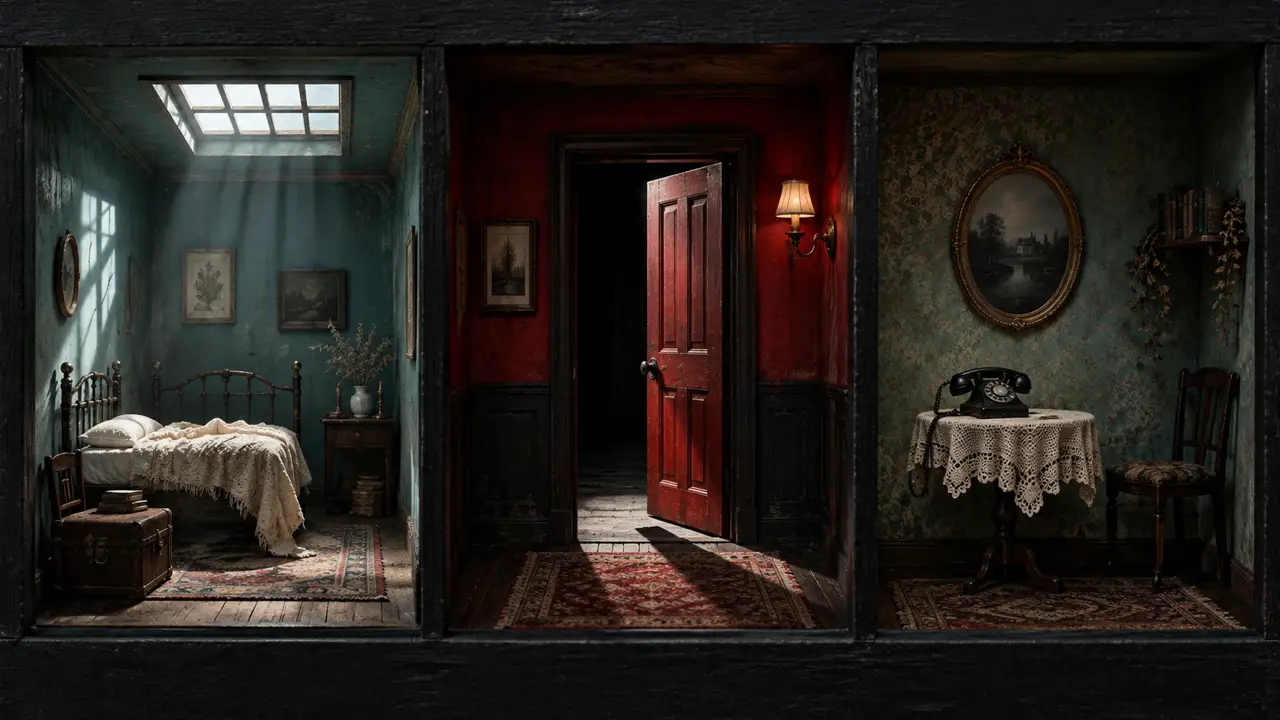
The following scripts are written for a single narrator. The direction notes are intentionally concise so you can adapt the pacing to the voice and format you are using.
Script 1: “The Upstairs Light”
Direction: Begin conversational and mildly tired. Do not sound frightened until the final sentence. Let the pauses do most of the work.
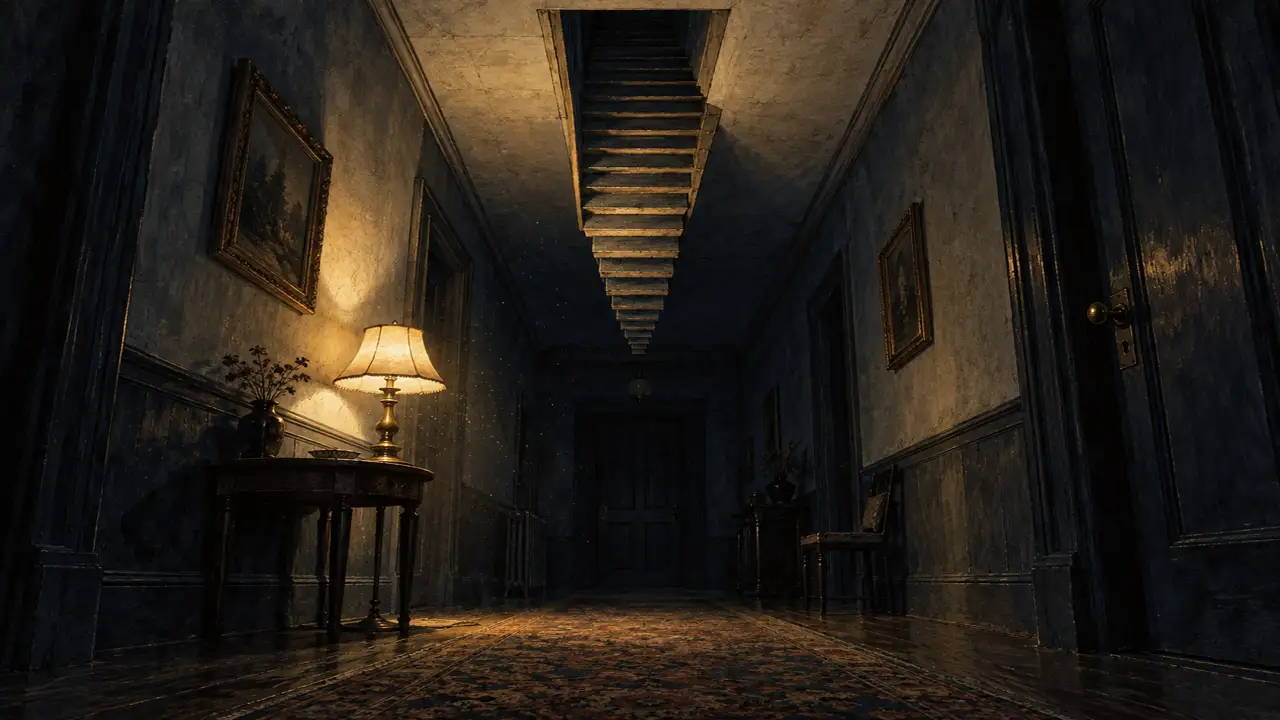
I came home after midnight and found the upstairs light on. [beat]
That was strange, because my house does not have an upstairs.
I stood in the entryway for a while, looking at the ceiling. [pause]
The light moved from one side of the room to the other.
I told myself it was a car passing outside.
Then the footsteps stopped directly over my head. [hold]
And someone knocked on the ceiling.
Performance note: Keep “my house does not have an upstairs” calm and factual. The final line should be quieter than the line before it, as if the narrator does not want to attract attention.
Script 2: “Voicemail”
Direction: Start with a practical, everyday tone. Increase urgency only after the caller identifies the location. Leave a clear pause before the final reveal.
My phone showed one new voicemail at 3:17 in the morning.
I almost deleted it. [beat] The number was mine.
When I pressed play, I heard breathing. Not heavy breathing. Just someone trying very hard not to make a sound.
Then my voice said, “Don’t turn around.”
I laughed. [pause] I actually laughed.
The message continued.
“You are standing in the kitchen.”
I was.
“You are holding the phone in your right hand.”
[pause]
Then the voicemail said, “And I am behind you.”
Performance note: Deliver “I was” with a short, stunned simplicity. Do not overplay the final sentence; a controlled delivery gives the listener room to imagine what happens next.
Script 3: “The Last Train”
Direction: Use a reflective tone at first, as though recalling an unsettling commute. Tighten the pacing when the narrator notices the empty car.
I took the last train home because I missed the earlier one.
There was only one other passenger in my car: a woman asleep beneath the route map.
At every station, the doors opened. [beat] No one got on. No one got off.
After the fourth stop, I realized the woman had not moved.
Not once.
I looked at the map above her head and saw that every station name had been crossed out.
All except one.
It was not a station I recognized.
The train slowed.
The woman opened her eyes. [pause]
“This is where you get off,” she said.
Performance note: Let “Not once” stand alone with a restrained pause afterward. For the final line, shift to a different, calm character voice only if it remains clear and intelligible. The contrast should feel unnatural, not theatrical.
Edit the read, not just the script
After a first recording or generated draft, listen for moments where the delivery gives away the scare too soon. If the narrator sounds alarmed before the story presents a reason, reduce the intensity. If a reveal passes too quickly, add space before it rather than stretching every word.
A useful review process is to listen once without reading the script. Notice where your attention wanders, where a pause feels too long, and where a line becomes confusing. Then listen again with the text in front of you and adjust only the moments that affect clarity or tension Reading the script aloud is also a practical timing check, as noted by BBC Academy.
Horror narration works when the listener feels invited to notice something before they are told what it means. Precise pacing, intentional silence, and clear direction make that invitation more compelling—and make the final reveal harder to forget.