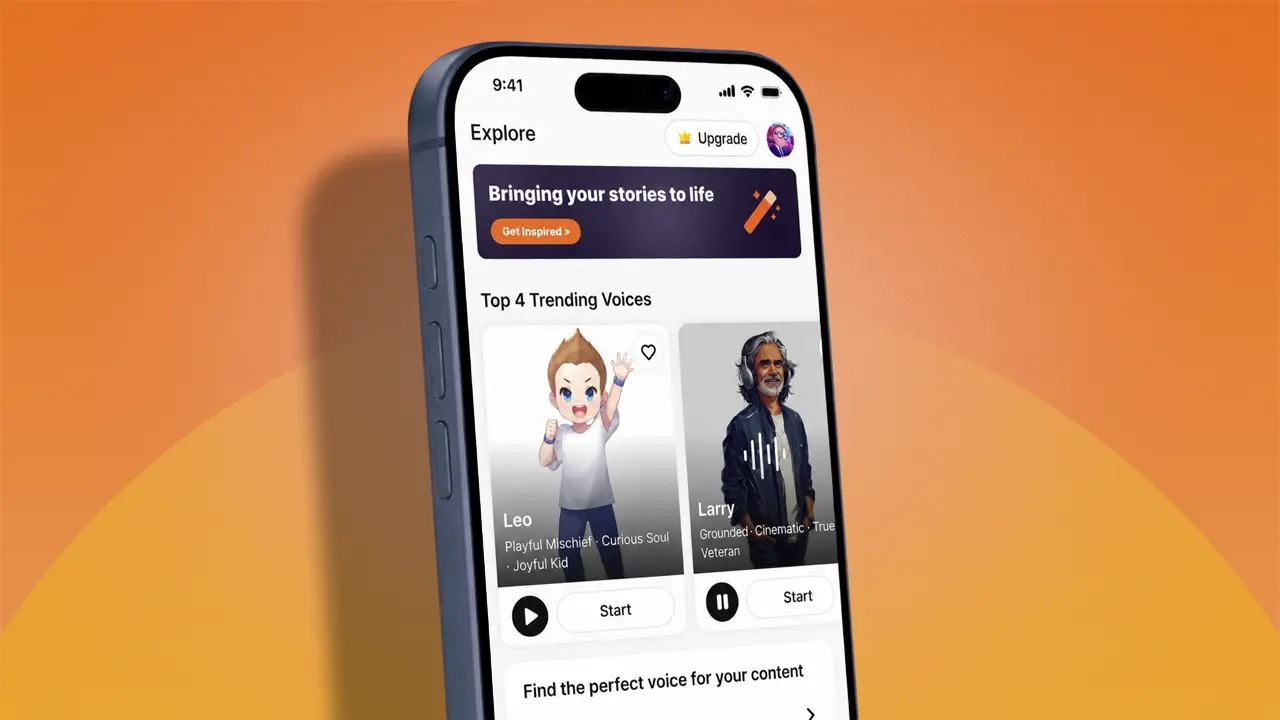





Typecast has officially launched its SSFM 3.0 model for its AI text-to-voice API which marks a significant upgrade to how developers build emotionally intelligent, conversational voice experiences.
Rather than being a general platform update, SSFM 3.0 represents a new core speech synthesis model powering Typecast’s API—specifically optimized for dialogue-driven AI applications.
Conversational AI continues to replace static voice narration across products and services.
As such, Typecast has updated its text-to-speech API to meet the growing demand for expressive, context-aware, and highly responsive AI voices.
Introducing SSFM 3.0 for Typecast’s text-to-voice AI API
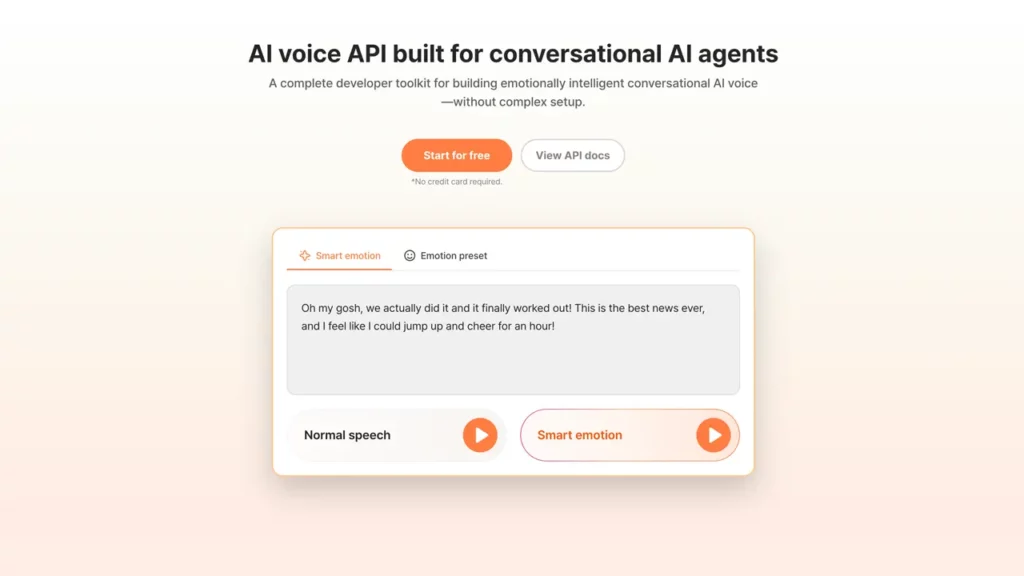
Typecast’s updated API is built from the ground up for conversational use cases, where the voice must react dynamically to context, intent, and emotional cues rather than simply reading text aloud.
According to MIT Technology Review, “The next wave of AI systems will be defined by how naturally they interact with humans in real time.”
SSFM 3.0 reflects this shift by enabling voice generation that adapts naturally within multi-turn conversations.
What makes SSFM 3.0 different from previous models
Unlike earlier-generation TTS models focused on narration, SSFM 3.0 introduces intelligence directly into the voice layer of the text-to-voice AI API:
- Automatic detection of conversational context
- Emotion, tone, and emphasis generated dynamically
- Consistent voice personality across long conversations
These improvements make SSFM 3.0 especially valuable for AI agents, companions, NPCs, and customer-facing conversational systems.
A text-to-voice AI API built for real conversation

Most traditional text-to-speech solutions are optimized for reading scripts or delivering announcements.
Typecast’s AI text-to-voice API, powered by its SSFM 3.0 model, is designed for something fundamentally different: conversation.
Traditional voice APIs vs SSFM 3.0
Traditional TTS APIs typically struggle with:
- Static emotional delivery
- Manual emotion selection
- Latency that breaks conversational flow
- Inconsistent voice identity over time
SSFM 3.0 addresses these challenges directly by allowing the text-to-voice AI API to understand conversational intent and respond naturally—without requiring complex manual tuning.
As Typecast explains, conversational AI needs voices that understand dialogue, not just text.
Expressive voices powered by SSFM 3.0

The SSFM 3.0 model powers Typecast’s extensive voice library of over 600 expressive AI voices, each designed with unique personality traits and emotional range.
These voices are optimized to maintain character consistency even across extended conversations.
This makes the text-to-voice AI API well-suited for:
- Conversational AI agents
- Virtual companions
- Interactive games and NPCs
- AI-driven customer support
- Long-running digital characters
The API supports English, Spanish, Korean, Japanese, Chinese, Vietnamese, and over 30 additional languages, enabling global conversational experiences at scale.
Built for developers and production environments
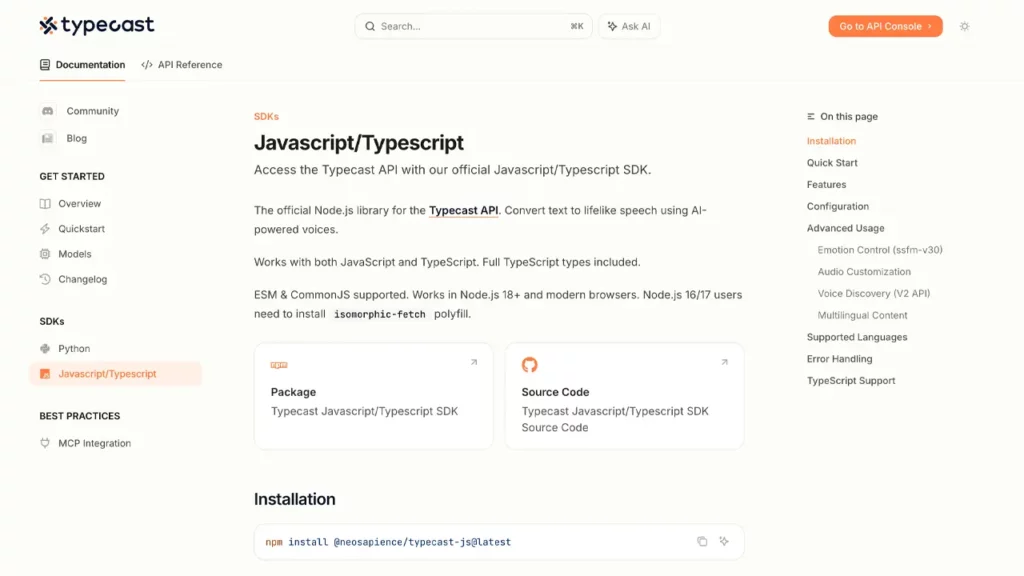
SSFM 3.0 is delivered through Typecast’s API with production reliability in mind.
Backed by years of infrastructure experience, the text-to-voice AI API ensures stable performance even during high-volume, simultaneous requests.
Developers retain full control when needed, with options to manually adjust voice speed, pitch, and emotional presets—while still benefiting from SSFM 3.0’s automatic contextual intelligence.
Teams can explore integration details and documentation through Typecast’s text-to-speech API, designed for fast onboarding and scalable deployment.
Why the SSFM 3.0 API launch matters
As conversational AI becomes central to digital products, voice quality alone is no longer enough.
AI systems must respond with emotional accuracy, consistency, and speed.
By launching SSFM 3.0 for its text-to-voice AI API, Typecast is addressing these needs at the model level—where real innovation happens.
This release signals Typecast’s commitment to building voice technology that feels natural, expressive, and truly conversational, setting a new standard for what developers should expect from AI voice APIs.