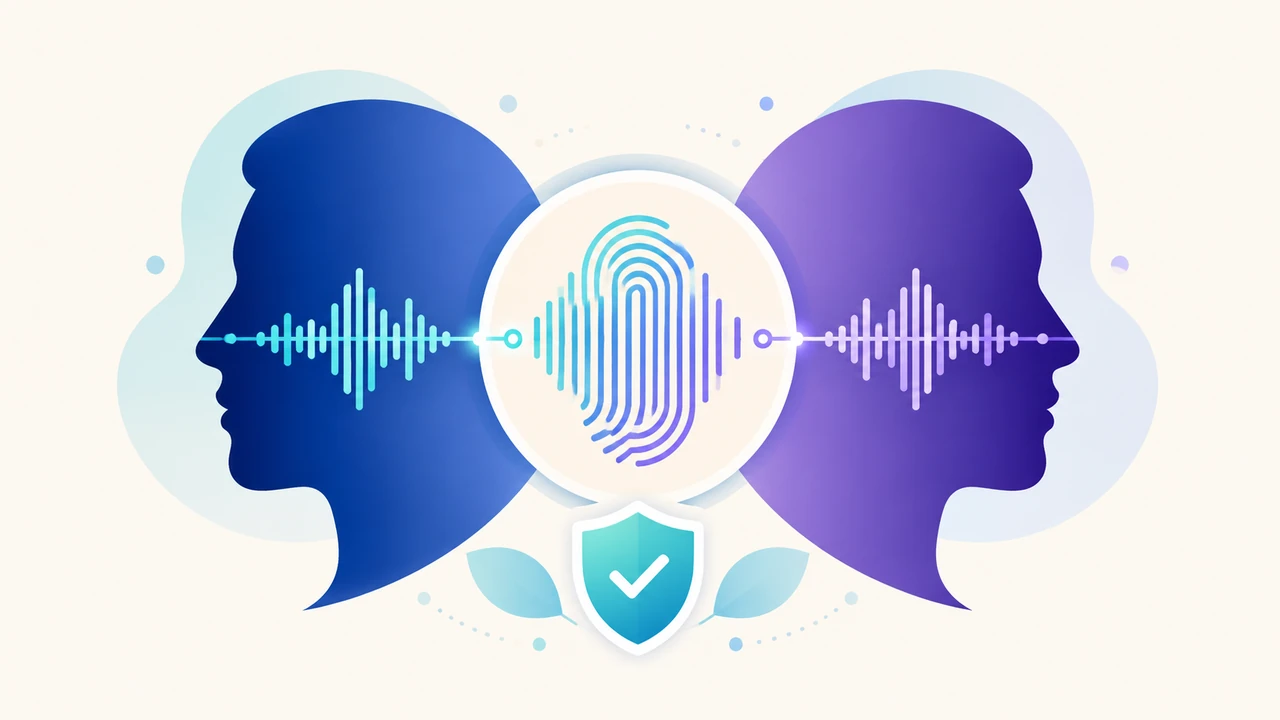





AI voice cloning works by using recorded speech to create a model that can generate new spoken audio resembling characteristics of a particular voice. Unlike a simple recording playback system, it can turn newly written text into synthetic speech. Understanding how does AI voice cloning work helps creators, teams, and listeners recognize both its practical value and the responsibilities that come with using a recognizable voice.
Voice cloning sits at the intersection of speech processing, machine learning, and text-to-speech technology. The underlying systems analyze patterns in speech, then use those patterns to produce an audio output for words that may never have been recorded by the original speaker. The result is not a stored collection of phrases. It is a generated interpretation of text based on learned vocal patterns.
This guide explains the process at a high level, what affects output quality, where consent fits in, and what to consider before using a cloned voice in public-facing content.
What is AI voice cloning?
AI voice cloning is a method of creating synthetic speech that reflects aspects of a source voice. Depending on the system and available source material, those aspects may include vocal tone, speaking pace, pronunciation habits, pitch movement, rhythm, and expressive style.
A cloned voice can be used to generate speech from a script. For example, a creator may want to revise a line in a video, create alternate versions of an audio lesson, or prepare narration in multiple formats without recording every sentence individually.
It is useful to distinguish voice cloning from related audio technologies:
- Text-to-speech converts written text into spoken audio using a synthetic voice.
- Voice cloning seeks to make that synthetic voice reflect a specific source voice or approved voice identity.
- Voice conversion changes one recorded voice performance so that it sounds more like another voice while often retaining the original timing and delivery.
- Audio editing cuts, rearranges, or cleans existing recordings rather than generating entirely new speech.
These categories can overlap in a production workflow, but they are not interchangeable. A voice clone is generally intended to generate new speech, whereas traditional editing works with audio that already exists.

How voice cloning works, step by step
Specific technical approaches vary by provider and model. However, most AI voice cloning workflows follow a similar sequence: collect voice material, prepare the audio, learn voice characteristics, generate speech from text, and review the result.
1. Voice samples are collected
The process begins with audio from the voice that is meant to be represented. Source recordings may include read scripts, studio narration, interviews, or other speech samples, depending on the intended workflow and permissions.
Clear recordings generally give a system more useful information than heavily compressed, noisy, or interrupted audio. Background music, multiple speakers, room echo, and inconsistent microphone placement can make it harder to isolate the characteristics of one speaker.
The amount and type of audio needed can differ across tools and use cases. Rather than assuming that more audio always guarantees a better outcome, it is more accurate to focus on relevance and consistency. Samples that represent the desired speaking style, language, and recording conditions can be especially valuable.
2. The audio is processed and analyzed
Before a model can learn from voice samples, the audio may be prepared for analysis. This can include identifying speech segments, separating silence from speech, detecting the language, and checking whether a recording contains more than one voice.
The system then examines acoustic and linguistic patterns. It does not simply map a speaker to a single audio file. Instead, it looks for recurring signals associated with how that person speaks, such as:
- The general tonal quality of the voice
- Pronunciation and articulation patterns
- Pitch range and pitch movement
- Cadence, pauses, and emphasis
- Speech rate and phrasing
- Features associated with breathiness, resonance, or energy
These patterns are represented in a form a machine-learning system can use. In broad terms, the system creates a compact representation of vocal identity and combines it with information about the words that need to be spoken.
3. A model learns the relationship between voice and speech
During training or adaptation, the system learns how the source voice tends to realize speech sounds. It connects written language, phonetic information, and acoustic characteristics so it can estimate what new words might sound like in that voice.
This is why a voice clone can produce a sentence that was not present in the source recordings. The model is generating an output based on patterns rather than locating an identical pre-recorded phrase.
The quality of this generalization varies. A model may handle common words and familiar sentence structures well but sound less natural with unusual names, technical terms, abbreviations, numbers, or words from another language. Scripts still need human review, particularly when accuracy or brand representation matters.

4. Text is converted into an audio plan
When a user enters a script, the system first needs to interpret the text. That can involve expanding numbers, resolving abbreviations, recognizing punctuation, and estimating pronunciation.
For instance, “2026,” “Dr.,” and “AI” may each require contextual handling. A date may be spoken differently from a number in a product code, and an abbreviation can have more than one pronunciation. These language decisions influence the final audio even when the voice itself is well modeled.
Punctuation and wording also guide delivery. A short sentence with commas may create a different rhythm from a long sentence with several clauses. Writers can often improve synthetic speech by using clear sentences, natural punctuation, and phonetic guidance where a tool supports it.
5. Synthetic speech is generated
The model combines the text interpretation with the learned voice representation to generate an audio signal. Modern systems may use multiple model components for this process, but the practical outcome is straightforward: the written script becomes newly generated speech with attributes associated with the source voice.
The generated output may be influenced by available controls for pace, delivery, pronunciation, or expression. Not every system offers the same controls, and a setting that works for one script may not work for another. A voice should be evaluated in the context where it will actually be heard, such as a video, course, ad, game, podcast segment, or accessibility experience.
6. A person reviews and refines the output
Generation is usually not the final step. Reviewers should listen for incorrect pronunciations, awkward emphasis, unnatural pauses, inconsistent emotion, and words that may be misunderstood.
Small script edits can often improve the result. Breaking a dense paragraph into shorter sentences, spelling out an abbreviation, changing punctuation, or providing a pronunciation cue can make the speech sound clearer and more intentional.
For a broader introduction to selecting a workflow and preparing voice material, see this AI voice cloning guide.

What determines whether a cloned voice sounds natural?
Naturalness is not one single quality. A listener may think a voice sounds convincing because its tone resembles the source speaker, while still noticing problems with rhythm, emotion, or pronunciation. A useful review considers several dimensions at once.
Source-audio quality
Clean, consistent source audio makes it easier to identify the target voice. Recordings with substantial background noise or frequent changes in recording setup may lead to less predictable results.
Coverage of speech sounds and styles
A source set that includes only a narrow range of phrases may not represent every sound, word type, or delivery style needed later. If the intended use includes technical vocabulary, energetic announcements, conversational narration, or multilingual content, those needs should be considered during planning.
Script quality
Even a strong model can struggle with unclear text. Long sentences, ambiguous abbreviations, uncommon names, and dense lists can make generated speech less intelligible. Editing for the ear, rather than only for the page, is an important part of production.
Prosody and context
Prosody refers to the rhythm, stress, and intonation that make speech expressive. Meaning changes with emphasis. Compare “I said we should go” with “I said *we* should go.” The words are the same, but the intended message can differ.
A cloned voice may require script or delivery adjustments to match the desired context. This is particularly important in customer communications, educational content, and emotionally sensitive material.
Consent is central to responsible voice cloning
A voice can be recognizable and personally meaningful. Before collecting recordings, creating a clone, or publishing generated audio, organizations and creators should establish that they have appropriate permission to use the voice for the intended purpose.
Consent should be informed and specific enough to support the planned use. A person may be comfortable with internal training narration but not with paid advertising, political messaging, customer support, or content that remains available indefinitely. New uses can create new questions.
Practical consent planning may include documenting:
- Who owns or controls the source recordings
- Who is authorized to create and access the voice model
- The channels and types of content where it may be used
- Whether commercial use is allowed
- Whether edits, translations, or derivative scripts are allowed
- How long the authorization lasts
- What happens if permission is withdrawn or a project ends
Platform policies, contracts, employment agreements, union arrangements, rights of publicity, privacy rules, and local laws may all affect a particular use case. This article provides general information, not legal advice. For a high-stakes or public deployment, consult qualified legal counsel and review the current terms, policies, and consent requirements of the platform you plan to use.
Common uses for AI voice cloning
When used with permission and appropriate review, voice cloning can support a range of audio-production tasks.
Content updates
A team may need to correct a product name, update a date, or replace an outdated line in a video. Generated speech can be considered as part of a revision workflow when the voice owner has authorized that use.
Training and learning materials
Educational teams may use consistent synthetic speech for lessons, onboarding content, demonstrations, or practice materials. Clear scriptwriting and careful pronunciation review are important when the material teaches terminology or procedures.
Localized and alternate-format content
Audio may need to be adapted for different audiences or formats. Voice cloning does not automatically solve translation, cultural adaptation, or pronunciation challenges, but it can be one component of a broader localization process.
Creative prototyping
Writers, producers, and creative teams may use synthetic speech to test pacing, explore script revisions, or build early audio drafts. A prototype should not be treated as final merely because it is fast to generate; human editorial and audio review remain valuable.
To explore an available product workflow, visit Typecast’s Voice Cloning tool. Review the current product information and applicable terms before uploading audio or beginning a project.

Limitations to understand before using a clone
AI voice cloning can generate useful audio, but it does not perfectly reproduce human communication in every situation.
First, a voice that resembles a speaker may still miss subtle intent. Sarcasm, hesitation, warmth, urgency, and changing emotional states depend heavily on context. Second, generated audio can make pronunciation mistakes, especially with brand names, specialized vocabulary, and names from different linguistic traditions. Third, output quality can vary across scripts and listening environments.
There are also operational limits. A team needs a process for script approval, version control, audio review, access management, and removal or revision requests. Publishing generated speech without clear internal ownership can create avoidable confusion.
Finally, listeners may need transparency in some contexts. Whether and how to disclose synthetic speech depends on the audience, channel, organizational policies, and applicable requirements. When trust is important, clarity about how audio was created can be part of responsible communication.
A practical checklist before publishing synthetic speech
Before releasing cloned audio, ask the following questions:
1. Do we have documented permission from the person whose voice is represented?
2. Does that permission cover this script, audience, distribution channel, and duration of use?
3. Have we reviewed the current platform terms and policies?
4. Has someone checked every name, number, date, and technical term by listening to the output?
5. Does the delivery fit the content’s purpose and tone?
6. Have we identified who can approve edits or request removal?
7. Are we being appropriately transparent with the intended audience?
8. Have we avoided uses that could mislead, impersonate, or cause harm?
The key idea behind how AI voice cloning works
At its core, AI voice cloning uses source recordings to model patterns associated with a voice, then applies those patterns to newly generated speech from text. It is a powerful extension of text-to-speech technology, but the technical process is only one part of using it well.
Reliable results depend on suitable source audio, well-written scripts, careful listening, and a defined review process. Responsible results also depend on consent, clear permissions, and respect for the person behind the voice. Treating those considerations as part of the workflow—not as an afterthought—helps make synthetic speech more useful and more trustworthy.